
 РУССКИЙ
 2:15 17.03.2026 •
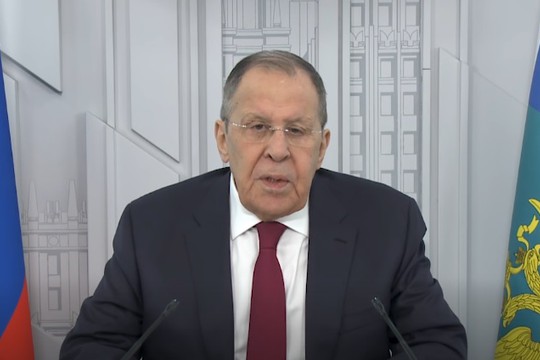
Photo: MFA
Foreign Minister Sergey Lavrov’s address to participants in the Moscow Non-Proliferation Conference:
Colleagues,
I am pleased to welcome the participants of the Moscow Non-Proliferation Conference.
This year, your discussions take place against the backdrop of acute military-political crises in the Middle East and the Persian Gulf. The fate of the nuclear non-proliferation regime is a matter of serious concern. During the armed aggression by Israel and the United States that began on February 28, not only Iran’s political and military leadership, but also civilian infrastructure, including schools and hospitals, were targeted, resulting in numerous casualties, including children. Nuclear facilities under IAEA safeguards were also targeted.
What is particularly cynical is that, as in June 2025, the attacks occurred at the very peak of indirect talks between Tehran and Washington over the resolution of issues surrounding Iran’s nuclear programme. The outcome has dealt a severe blow to the authority of the Treaty on the Non-Proliferation of Nuclear Weapons, as well as to the credibility of diplomacy as a tool for resolving conflicts. Increasingly, countries are coming to the view that only possessing nuclear weapons can reliably guarantee protection against unlawful threats to their security – an assessment that itself carries serious proliferation risks.
Your conference is taking place on the eve of the 11th Review Conference of the NPT. Previous review cycles, in 2015 and 2022, concluded without any final documents. Today, the foremost task is to preserve the Treaty as a key element in maintaining global strategic stability. It is imperative that all States Parties – both nuclear and non-nuclear – fulfil their obligations under the Treaty.
The situation in arms control remains equally challenging. The Russian-US Treaty on Measures for the Further Reduction and Limitation of Strategic Offensive Arms (New START) expired on February 5, 2026. President Vladimir Putin proposed that both sides continue voluntarily to observe its central quantitative limits, but this initiative received no response from the United States.
The Comprehensive Nuclear-Test-Ban Treaty still has no prospects of coming into force. It is well known and widely acknowledged that the main reason is that the United States has yet to ratify the Treaty. In October 2025, the US President publicly instructed the Defence Secretary regarding the resumption of nuclear testing. To date, the US has not provided a clear explanation of what was meant, nor whether it indicates a forthcoming abandonment of the moratorium on full-scale nuclear explosions.
As a result of these destructive actions by the United States and its allies, the risks of the militarisation of space and its transformation into a conflict zone are growing. The implementation of the US Golden Dome global missile defence project, which envisages the deployment of space-based strike interceptors by 2028, poses a significant threat to strategic stability.
The integrity of the chemical weapons non-proliferation regime is also under serious challenge due to the excessive politicisation of the Organisation for the Prohibition of Chemical Weapons. It must be acknowledged that this once authoritative and independent technical body has been turned into an instrument serving the narrow interests of a small group of Western states, which have effectively privatised the Secretariat for their own purposes.
Regarding biological threats, it is well known that research continues in several countries into the creation of artificial microorganisms with tailored characteristics, the enhancement of naturally occurring pathogens, or the introduction of so-called atypical properties. This increases the likelihood of the emergence of a new generation of biological agents that cannot be identified by traditional methods. It underscores the long-standing Russian call: within the framework of the Biological and Toxin Weapons Convention, a legally binding protocol with an effective verification mechanism must be developed.
I want to stress that the challenges I have outlined are perhaps the most dangerous – and indeed, existential – threats to the current non-proliferation regimes for weapons of mass destruction. Despite current difficulties, Russia remains convinced that international peace and security can only be ensured through joint efforts, grounded in the principles of the UN Charter in their full scope and interconnection. We are ready for a substantive dialogue on these issues with all interested states.
I hope that your conference will contribute to finding solutions that stabilise arms control and non-proliferation, preventing further deterioration. I wish you productive discussions and every success.
Thank you.
read more in our Telegram-channel https://t.me/The_International_Affairs

















