РУССКИЙ
 13:28 15.01.2026 •
In the closing days of 2025, the world diplomatic community was stunned by Israel's recognition of the self-proclaimed Republic of Somaliland, followed by Israeli Foreign Minister Gideon Saar’s official visit to this region. The de facto state entities of Somaliland and Puntland in northern Somalia broke off ties with the central government in 1991, declaring their secession from the rest of the country amid a civil war. Despite having relatively functional state proto-structures, they have never received international recognition, although they maintain limited contacts with some countries.
The response to this extraordinary move by Tel Aviv did not take long coming with more than 50 countries issuing condemnations, and the UN Security Council holding an emergency session to discuss the situation. Many regional associations, including the Arab League, the East African Community, the Organization of Islamic Cooperation, and the European Union, underscored the need to respect Somalia's sovereignty and territorial integrity. The chairperson of the African Union Commission described the recognition of Somaliland as going against the organization's fundamental principles and constituting a dangerous precedent for the entire continent.
The participants in the "Abraham Accords" (UAE, Bahrain, Morocco), as well as Lebanon and Syria, did not join the general chorus of condemnation though, and Taiwan openly supported Israel’s move. The foreign ministry of this partially recognized entity, which China considers its inalienable territory, issued a statement describing Taiwan, Israel, and Somaliland as "like-minded partners sharing common values of democracy, freedom, and the rule of law." 1 The reasons for such a statement are transparent and quite understandable.
At the regional level, Ethiopia comes in as a potential beneficiary of Israel’s official recognition of Somaliland. Following Eritrea's secession in 1993, Addis Ababa lost its only access to the Red Sea, and has been forced to seek routes via third countries. Having redirected 90 percent of its foreign trade turnover to Djibouti as a transit link, Ethiopia has retained its interest in the port of Berbera, controlled by Somaliland, with which it had previously signed a deal for sea access only to see it rendered inoperable by Ankara's mediation to stabilize the regional situation.
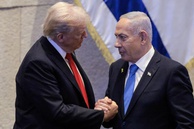
Observers view Israel's recognition of Somaliland as a pathway for the resettlement of Palestinians from the Gaza Strip, which Donald Trump and Israeli Prime Minister Benjamin Netanyahu presented a year ago. According to media reports, Somalia and Sudan are mentioned as possible settlement locations. The Sudanese government said, however, that it had rejected such a request, with Somalia's defense ministry stating that Mogadishu was aware of Israel’s plans to forcibly relocate Palestinians "to the region known as 'Somaliland.'" 2 In its turn, Somaliland's foreign minister emphasized that his government was against the proposed relocation. 3
Furthermore, news reports said, citing the Somaliland foreign ministry that Israel was discussing with the unrecognized Republic of Somaliland the possibility of establishing an Israeli military base there. The port of Berbera is Somaliland's key asset with an outpost under the UAE flag already existing on its territory. Therefore, some domestic experts 4 suggest that this sets the stage for the formation of a regional alliance between Tel Aviv and Abu Dhabi with a clear emphasis on military interaction between the two. It can be argued that it is being set up without much publicity but steadily, and, what is especially noteworthy, against the backdrop of a virtually open military escalation between the UAE and Saudi Arabia in Yemen. Meanwhile, the UAE and Israel have been building up their military-technical cooperation for several years now, with the most recent notable example, according to Western sources, being a deal with the Israeli company Elbit Systems for the supply of 2.3 billion dollars’ worth of weapons over eight years.
Many experts explain Israel's move as a response to the threat posed by Yemen's Houthis. Somaliland is located directly opposite Yemen; therefore, ramping up its presence (primarily military) in this part of the Horn of Africa would provide Israel with access to the Bab el-Mandeb Strait and the Red Sea from East Africa, thus giving it more freedom of hand in this confrontation.
The second goal, according to international observers, is to offset Turkey's influence in the Horn of Africa. Turkey has significantly asserted itself during the past decade, securing a leadership position in Somalia and directing substantial funds to finance the restoration of the country’s political and social infrastructure.
In 2017, Ankara established there the world's largest Turkish overseas military base, TURKSOM, intended not only to contribute to regional stability and the fight against terrorism, but also to train new personnel for the Somali army and police virtually from the ground up. Furthermore, last year, Ankara announced another ambitious project on Somali territory – the construction of a spaceport. According to many analysts, it could be used not only as an independent launch site for Turkish and commercial satellites, but also for testing long-range ballistic missiles (with a range of up to 2000 km). The completion date has not been disclosed yet, but judging by open source information, Turkey plans to achieve a soft landing on the Moon using this facility by 2028. Moreover, just as Recep Tayyip Erdogan confirmed at a news conference in late December following talks with Somalia’s president, in 2026, the Turkish energy company "Cagrı Bey" plans to start drilling in that country’s territorial waters.
Overall, such a diplomatic move by Israel indicates that the Middle Eastern vortex is increasingly affecting neighboring regions, and what previously seemed peripheral is beginning to define the position of the core. This is not only a cause for worry for a number of other countries in the region, whose borders are not so monolithic and the power framework is not strong enough, but also a reflection of the trend towards strengthening alternative regional partnerships. Moreover, some observers reasonably believe that Benjamin Netanyahu's team is quite purposely pursuing a course aimed, on the one hand, at dismembering independent states, and on the other, at provoking disagreements within the Islamic world.
At the same time, despite its global ripple effect, Israel’s decision to recognize Somaliland carries more symbolic than practical significance. At this stage, the mechanisms for implementing Tel Aviv's further strategy are not entirely clear, especially given the highly ambiguous reaction this surprise recognition has generated within Somaliland itself. Israel is generally viewed with a great deal of suspicion by a significant part of local society, where Islam plays an important role, a suspicion that only increased amid the war and destruction in Gaza. Even though the local authorities projected the Israeli flag onto one of the central buildings in Hargeisa, the celebrations themselves were characterized by “an almost complete absence of Israeli symbolism." 5
In Somalia itself, mass-scale demonstrations in support of the country's unity have been taking place for quite some time now. Ultimately, much depends on what is going to happen next. The signal sent by Tel Aviv may trigger a chain reaction in the Middle East and Africa and exacerbate other long-standing problems. Another possible scenario is that the initial "enthusiasm" may fade, especially against the backdrop of increasingly disturbing global developments that call into question the viability of international law, and that political life in the region will get back to where it was before.
The author's opinion may not coincide with the position of the Editorial Board.
------------------------------------------------------------------
[1] https://uz.kursiv.media/2026-01-09/zachem-izrailyu-priznanie-somalilenda-i-komu-eshhe-eto-vygodno/
[2] https://www.turkiyetoday.com/region/somalia-says-it-has-information-of-israel-plan-involving-somaliland-palestinians-3212752
[3] https://vreme.com/ru/svet/kriza-na-rogu-afrike-zasto-je-izrael-priznao-somalilend/
[4] https://www.iimes.ru/?p=128269
[5] https://uz.kursiv.media/2026-01-09/zachem-izrailyu-priznanie-somalilenda-i-komu-eshhe-eto-vygodno/
read more in our Telegram-channel https://t.me/The_International_Affairs