РУССКИЙ
 11:31 02.12.2025 •
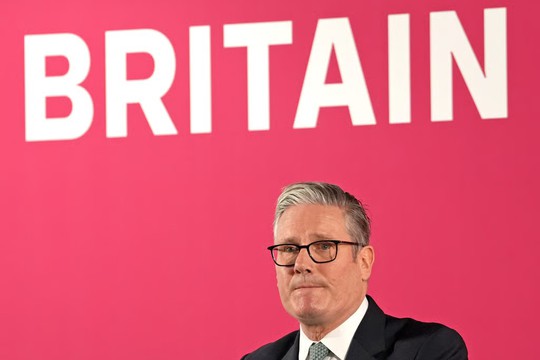
The UK must “confront the reality” that the deal struck with Brussels post-Brexit “significantly hurt our economy,” Keir Starmer said.
Photo: Getty Images
Britons must accept the trade-offs of a closer relationship with the European Union, the U.K. prime minister said Monday.
At a speech in central London, Keir Starmer said Brexit had “significantly hurt our economy,” warning “frictions” with the bloc must be reduced to enable “economic renewal” in the U.K.
It comes days after talks between London and Brussels to allow Britain to participate in the EU’s €150 billion Security Action for Europe loans-for-weapons program broke down, amid a disagreement over how much the U.K. would have to pay to participate.
In his Monday morning speech, Starmer gave a staunch defense of last week’s budget, insisting he does have a long-term economic plan for the U.K.
The U.K. must “confront the reality” that the deal struck with Brussels post-Brexit “significantly hurt our economy, he said.
“For economic renewal we have to keep reducing frictions. We have to keep moving towards a closer relationship with the EU, and we have to be grown-up about that, to accept that that will require trade-offs.”
Starmer’s speech came as the embattled British prime minister tried to defend last week’s tax-hiking government budget.
He insisted the choices made the tax-and-spend statement had been “fair, necessary and fundamentally good for growth.”
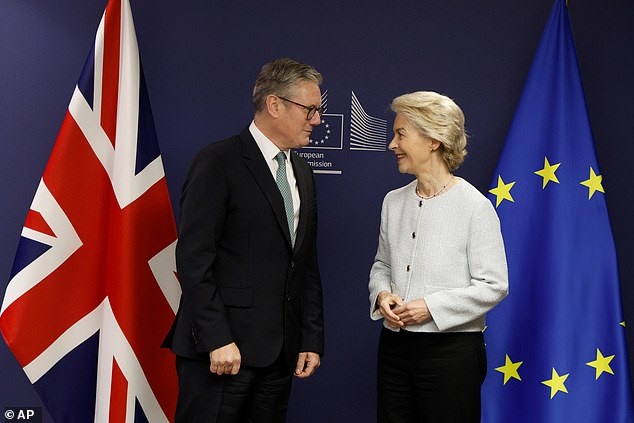 Sir Keir and European Commission chief Ursula von der Leyen restated the need to swiftly implement the post-Brexit ‘reset deal’
Brexit has done 'significantly hurt' to the UK economy, Sir Keir Starmer warned as he pushed a 'closer relationship' with Brussels under his premiership, ‘The Daily Mail’ writes.
The Prime Minister again hit out at the way Britain quit the EU in 2019, blaming it alongside Tory austerity for the country's terrible lack of productivity.
In a speech in London today he said the country had to 'face the reality' of how Britain was faring outside the bloc.
It came after it was reported that the PM's chief economic adviser, Minouche Shafik, pitched rejoining the customs union to get the UK's economy growing.
In his speech, Sir Keir said: 'Let me be crystal clear, there is no credible economic vision for Britain that does not position us as an open, trading economy.
'So we must all now confront the reality that the Brexit deal we have significantly hurt our economy and so for economic renewal, we have to keep reducing frictions.
'We have to keep moving towards a closer relationship with the EU, and we have to be grown up about that, to accept that this will require trade-offs.
'That applies to our trading relations right across the world, and as you've seen already with this Government, there are deals to be done if you're committed to building relationships.
'That's what we've done with the US, it's what we've done with India, and it's what we've done with the EU and we will keep going.
'We will continue to reject drift, to confront reality and take control of our future.'
Sir Keir and European Commission chief Ursula von der Leyen restated the need to swiftly implement the post-Brexit reset deal earlier his month.
But the PM's efforts were dashed last week when talks on the UK joining the European Union's flagship £130 billion defence fund failed.
Negotiations foundered over how much the UK should pay to participate in the EU's Security Action for Europe (Safe) rearmament fund.
Reports suggested the UK rejected French demands to pay up to £5 billion to participate in the scheme.
…All this is called Starmer's nervous vacillations. The British leadership is facing daunting financial challenges – there's not enough money in the budget, but there's a massive hole of £20 billion, or, according to other sources, £40 billion!
They don't even have an extra 5 billion for a joint defense program with the EU!
Starmer is therefore trying to distract his voters from the country's grave domestic problems by preparing the country for a “return to the European Union.”
However, all reasonable observers see that the European Union itself is on the brink of a major economic crisis, given the declining growth rates in the leading EU countries – Germany and France.
Moreover, all the largest EU countries are burdened with enormous debts, which are almost universally higher than their GDPs.
What can save the British economy? There is no answer…
read more in our Telegram-channel https://t.me/The_International_Affairs