РУССКИЙ
 11:35 22.01.2026 •
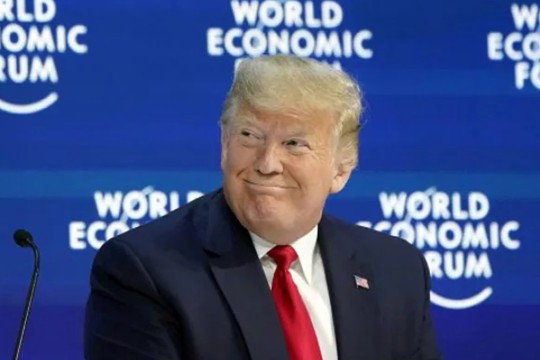
Donald Trump
Photo: World Economic Forum
“There’s no diplomacy with Donald Trump: he’s a T-rex. You mate with him or he devours you.” Debate at the World Economic Forum annual meetings high in the Swiss Alps is usually scrupulously polite, but as this year’s gathering got under way in Davos on Tuesday, California’s Democratic governor, Gavin Newsom, had this blunt advice for handling the week’s star speaker.
Throughout the blond wood congress centre the hottest topic among the global elite of business and politics – on and off conference stages – was Trump’s intemperate attack on European allies, threatening punitive tariffs if they fail to let him annex Greenland, ‘The Guardian’ stresses.
Trump’s treasury secretary, Scott Bessent, kicked off the day by urging US allies to calm down, accusing them of “hysteria” in their reaction to the president’s comments. “What I am urging everyone here to do is sit back, take a deep breath and let things play out,” he said.
However, a string of European leaders who addressed delegates on Tuesday seemed very reluctant to wait and see what the T rex is minded to do to them when he arrives to give his Wednesday afternoon speech.
The European Commission president, Ursula von der Leyen, said recent chaotic events underlined the need for what she called “a new form of European independence” – and she warned that it would be a mistake to expect a return to normal. “Nostalgia will not bring back the old order,” she said.
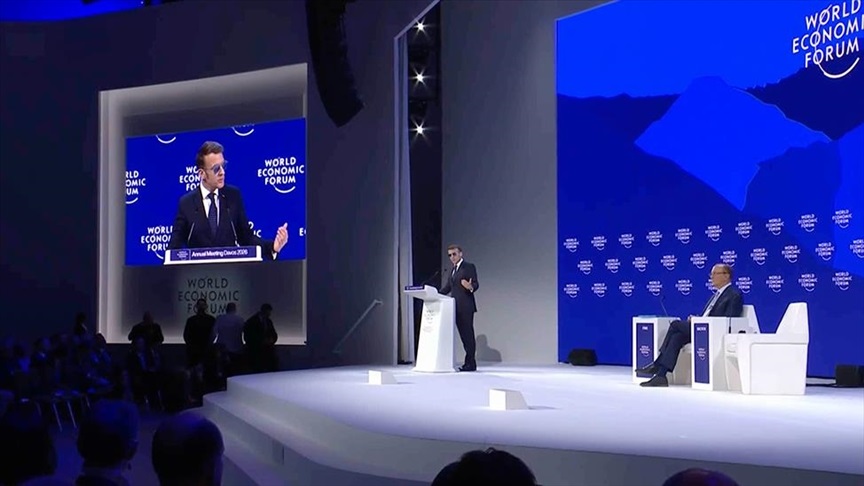 Photo: World Economic Forum
The French president, Emmanuel Macron, also attempted to galvanise the European response to Trump with a warning about the risks of “new imperialism or new colonialism”.
“It’s great to be here and it’s a time of peace, stability and predictability,” he said to peals of laughter.
He went on to warn of what he called “a shift toward autocracy against democracy… a shift towards a world without rules where international law is trampled underfoot, where the only law seems to be the strongest and imperial ambitions are resurfacing”.
Unless the US president retreated on his Greenland threat, Macron suggested Europe may have to use its anti-coercion instrument, known as the “trade bazooka”, potentially imposing sweeping sanctions and tariffs. “Can you imagine? This is crazy,” he said.
“Let’s not accept the global order which will be decided by those who claim to have the bigger voice or the biggest teeth,” he said.
Mark Carney: “Let me be direct. We are in the midst of a rupture, not a transition”
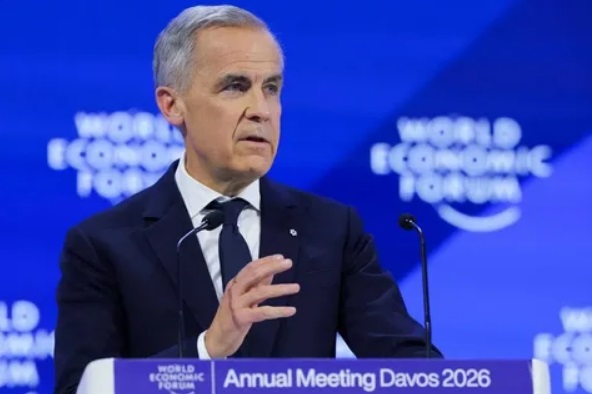 Photo: World Economic Forum
Carney emphasized the end of the rules-based international order and outlined how Canada was adapting by building strategic autonomy while maintaining values like human rights and sovereignty. He said:
“It seems that every day we're reminded that we live in an era of great power rivalry, that the rules based order is fading, that the strong can do what they can, and the weak must suffer what they must.
And faced with this logic, there is a strong tendency for countries to go along to get along, to accommodate, to avoid trouble, to hope that compliance will buy safety.
Well, it won't.
Let me be direct. We are in the midst of a rupture, not a transition.
Over the past two decades, a series of crises in finance, health, energy and geopolitics have laid bare the risks of extreme global integration. But more recently, great powers have begun using economic integration as weapons, tariffs as leverage, financial infrastructure as coercion, supply chains as vulnerabilities to be exploited.
You cannot live within the lie of mutual benefit through integration, when integration becomes the source of your subordination.
The multilateral institutions on which the middle powers have relied – the WTO, the UN, the COP – the architecture, the very architecture of collective problem solving are under threat. And as a result, many countries are drawing the same conclusions that they must develop greater strategic autonomy, in energy, food, critical minerals, in finance and supply chains.
Stop invoking rules-based international order as though it still functions as advertised. Call it what it is – a system of intensifying great power rivalry, where the most powerful pursue their interests, using economic integration as coercion.”
US Commerce Secretary Howard Lutnick says globalisation has failed the West
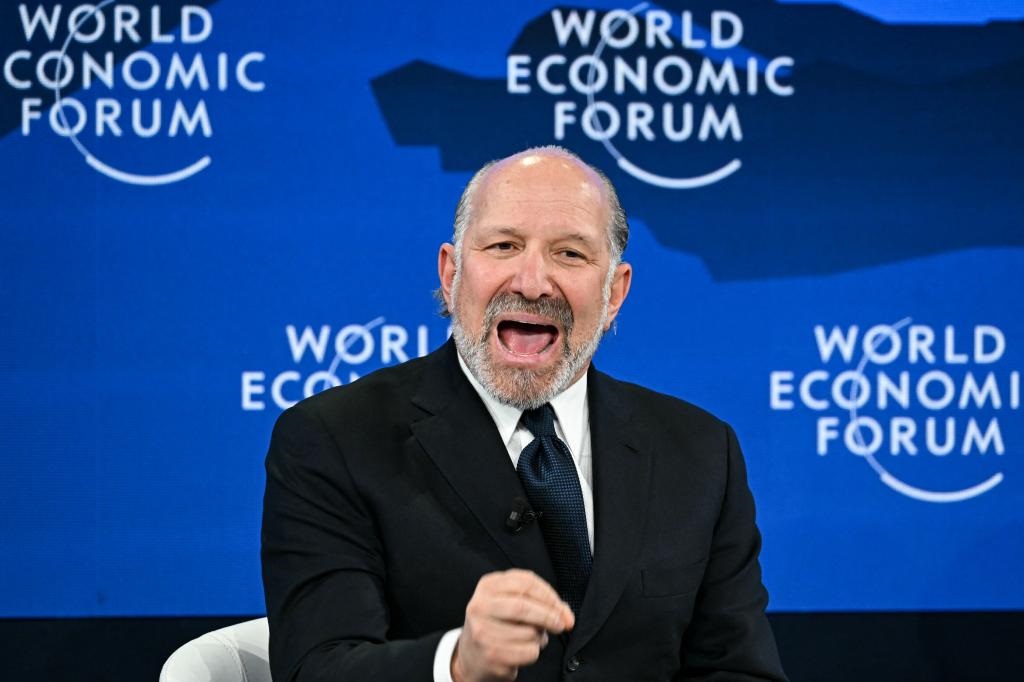 Photo: World Economic Forum
US Commerce Secretary Howard Lutnick, speaking at a panel discussion at the World Economic Forum 2026 in Davos said globalisation has failed the West and the US. He said globalisation has left the US behind, and asked why Europe has committed to be net zero by 2030 when they don’t even make a battery.
Lutnick said, “The Trump Administration and myself, we are here to make a very clear point — globalization has failed the West and the United States of America.”
“It’s a failed policy. It is what the WEF has stood for, which is export, offshore, far-shore, find the cheapest labor in the world and the world is a better place for it,” he said, adding, “The fact is it has left America behind. It has left the American workers behind. And what we are here to say is ‘America First’ is a different model, one that we encourage other countries to consider, which is that our workers come first.” Lutnick said a country should not offshore its entire industrial structure and have it hollowed out. “You should not be dependent,” he said.
Instead, Lutnick suggested, the US would look out for its own interests – and he urged other nations to do the same. Predicting that the Greenland “kerfuffle,” as he called it, would eventually be resolved through dialogue rather than trade war, he insisted: “When America shines, the world shines.”
ECB's President Lagarde: “The curtain is coming up on new world order”
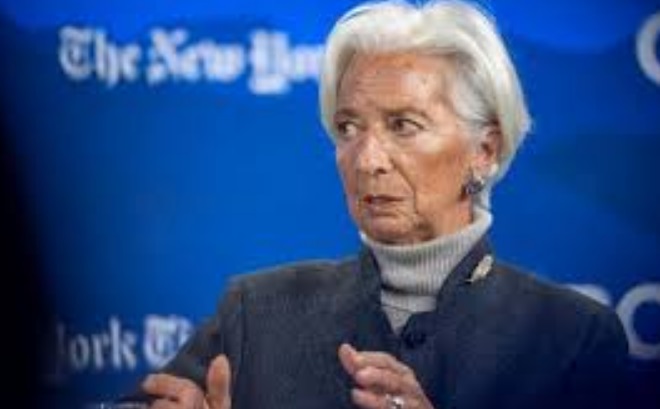 Photo: World Economic Forum
ECB's President, Christine Lagarde, spoke at a discussion panel at the World Economic Forum in Davos. She highlighted the shift to a new unpredictable era, a "new world order", where global cooperation, free trade, and U.S. leadership is being replaced by something more fragmented.
- The curtain is coming up on new world order
- The US is behaving very strangely for an ally
- We can do better on growth, productivity and debt
- Eurozone inflation is under control
- Tariffs would cause a very small upward inflation effect
- The German economy would be more impacted than French economy by tariffs
- Monetary policy is in a good position
She also talked about the Eurozone economy and how scrapping the non-tariff trade barriers would make the European countries much stronger. A "non-tariff barrier" is a rule, regulation, or bureaucratic hoop that a company must jump through to sell its goods in another country.
Finnish President: “Europe can defend itself without U.S.”
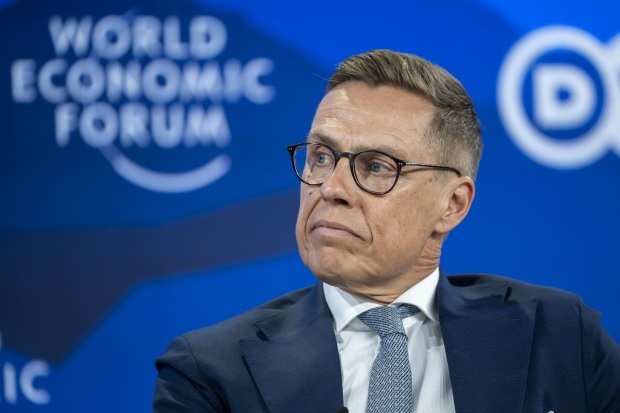 Photo: World Economic Forum
Finnish President Alexander Stubb said Europe is “unequivocally” able to defend itself if attacked, even without direct U.S. military assistance, ‘The Wall Street Journal’ reports.
“We don’t have a big stick”
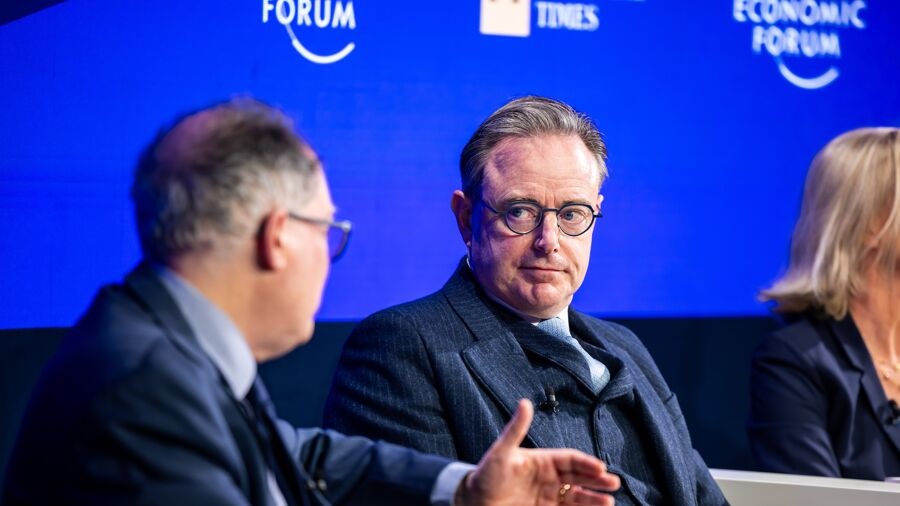 Photo: World Economic Forum
Belgian Prime Minister Bart De Wever:
“Negotiate with Putin, I think, is not a very good idea, because as the Americans said: “if you want to speak, speak softly, but carry a big stick.” We don’t have a big stick. We can only speak softly.”
President Donald Trump was harshly critical of world leaders in his speech at the World Economic Forum in Davos
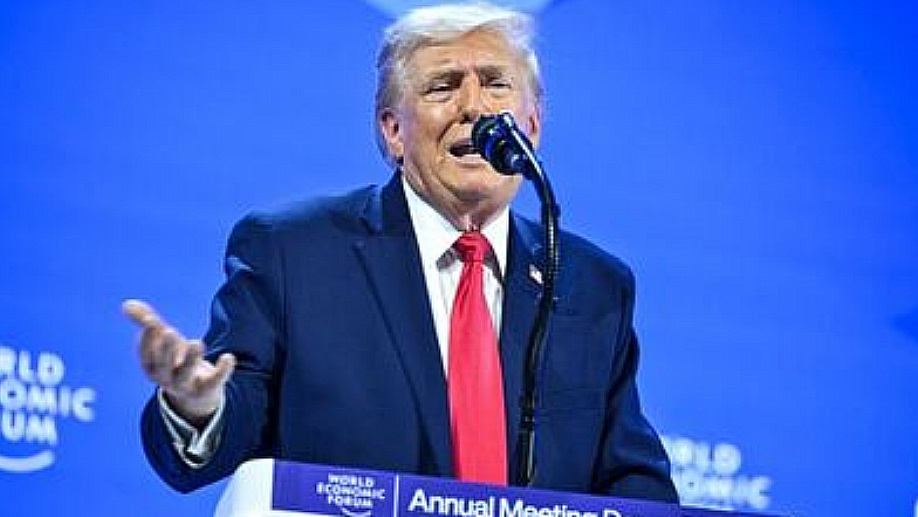 Photo: World Economic Forum
In his remarks, NBC News quotes, Trump railed against the direction of Europe, saying that "certain places in Europe are not recognizable."
"It’s not headed in the right direction," he added, speaking to the room of European leaders.
The president criticized immigration, which is one of his frequent line of attacks against Europe. He slammed countries for bringing in migrants from different populations.
Trump began talking about his planned "Golden Dome" defense system and said that "by its very nature," the system will defend Canada, too.
"Canada gets a lot of freebies from us — by the way, they should be grateful also, but they're not. I watched your prime minister yesterday. He wasn't so grateful. They should be grateful to us, Canada. Canada lives because of the United States. Remember that, Mark, the next time you make your statements," Trump said, referring to Canadian Prime Minister Mark Carney.
Trump said he doubted that NATO would be there for the U.S. if needed. "We’ll be there for them 100%, but I’m not sure that they be there for us," Trump said.
Switching gears to Ukraine, Trump said he "inherited a mess" in Ukraine and reiterated his longstanding position that it's a war that should have never started and wouldn’t have started if he were president.
"I know Putin very well he and I would discuss Ukraine. It was the apple of his eye, but he wasn’t going to do anything," Trump said. "I said, flatter me. You’re not doing it. He would never have done it. It was terrible. What happened. I could see it happening too. After I left, I could see it happening."
Trump's difficulties in bringing an end to the war in Ukraine have been a point of frustration for him.
"I’m dealing with President Putin, and he wants to make a deal. I’m dealing with President Zelenskyy, and I think he wants to make a deal. He might be in the audience right now, but they got to get that war stopped, because too many people are dying, needlessly dying, too many souls are being lost," Trump said. (Ukraine's President Volodymyr Zelenskyy said he remains in Kyiv to deal with the energy crisis caused by Russia's strikes and was not going to Davos.)
Trump criticized recent European culture, arguing that the continent was "destroying themselves."
"They have to get out of the culture that they’ve created over the last 10 years," he said. "It’s horrible, what they’re doing to themselves. They’re destroying themselves, these beautiful, beautiful places."
read more in our Telegram-channel https://t.me/The_International_Affairs