РУССКИЙ
 11:29 16.12.2025 •
 Pic.: publics
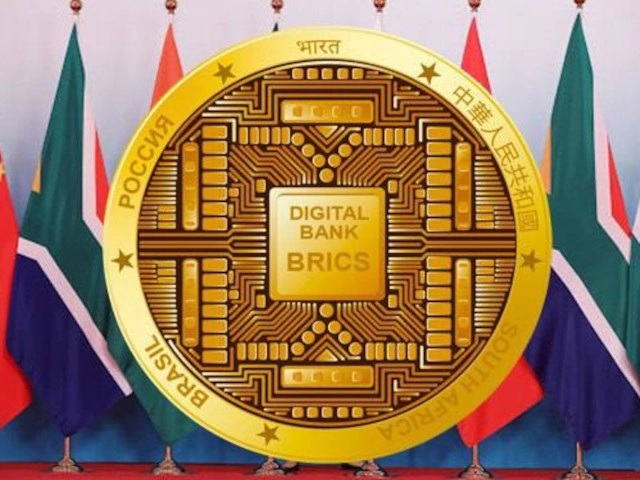
The BRICS consortium unveiled its plan for a gold-based currency, boringly called the “Unit.” It is to be composed of 40% gold, and 60% of a basket of the domestic fiat currencies of the participating governments, including China, India, Brazil, Russia and so forth.
If a country had a regular gold-based currency today, then the value of the currency would be fixed to gold. In other words, foreign exchange rates with the other major fiat currencies would be terribly volatile, and also, would introduce a lot of trade and finance difficulties. Yes, you don’t want to follow those fiat currencies into the oblivion they deserve. But, you don’t want to beat yourself to death with forex chaos in the interim period either, ‘Forbs’ writes.
The solution, in that 2019 project, was to have a currency with 40% Gold and 60% US Dollars, a proxy for the whole global fiat currency space, since all the major currencies (USD, EUR, JPY, GBP, others) tend to stay pretty close to one another to reduce forex volatility. In the future, maybe that 60% of fiat would devalue away to dirt, and you would be left with an effective gold-only currency. But for now, having one foot in both worlds seemed like the best solution.
Recently, the BRICS consortium unveiled its plan for a similar solution, rather boringly called the “Unit.” It is to be composed of 40% gold, and 60% of a basket of the domestic fiat currencies of the participating governments, including China, India, Brazil, Russia and so forth. For one thing, this allows the reserve assets of the Unit to consist 60% of government bonds, instead of relying on gold bullion alone. We don’t yet have much of a market in gold-based bonds that could serve as reserve assets, as was common in the 19th century gold standard era.
You would have to be quite a monetary history geek to know that, for several centuries, the premier international gold currency of Europe was the Byzantine “Nomisma,” which means “the Unit”. So, there is a lovely history of boring currency names.
In the process, as the 60% of the Unit that was composed of fiat depreciated away over a period of years, the value of the Unit would, of course, fall 60% vs. gold. This would be a little uncomfortable, but not really that big a deal, in the kind of global monetary chaos that “depreciating away over a period of years” would create.
For now, the Unit would have a lot less exchange rate volatility with the domestic fiat currencies of China, Russia and elsewhere, making it easier to adopt and less disruptive of daily affairs. It is the kind of “feeling your way in the dark” strategy that has worked well for China over the past few decades. In China, this is known as “crossing the river by touching the stones."
As the BRICS become comfortable with their new arrangements, it will be a small step – rather than a risky leap – to a regular international gold standard system, that worked so well in the past, and will still work well in the future.
read more in our Telegram-channel https://t.me/The_International_Affairs