
 РУССКИЙ
 11:02 22.02.2026 •
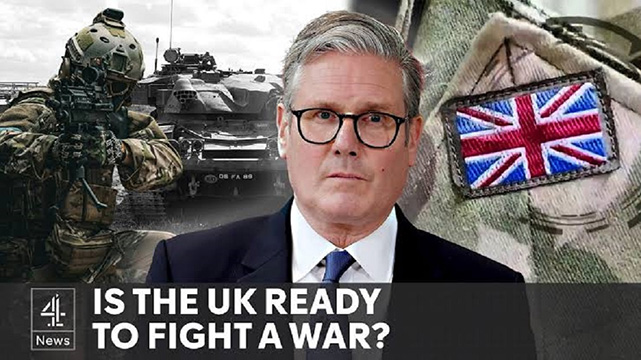
When Keir Starmer was told his pledge to raise defence spending to 3 per cent of GDP in the next parliament was not enough to fund his vision for the armed forces, as outlined in the strategic defence review (SDR), he put his head in his hands and snapped: ‘Why are you doing this to me? I thought this was costed!’, ‘The Spectator’ quotes.
The SDR, drawn up by George Robertson, the former Labour defence secretary, retired General Sir Richard Barrons and Fiona Hill, an adviser to both George W. Bush and Donald Trump, outlined a ten-year plan to bring our forces to ‘war readiness’ when it was published last June. But there were always going to be gaps in funding for the next couple of years before the new money began to come through. ‘The report was clear on that,’ says a senior Labour figure.
Yet Starmer seemed unaware of this when defence chiefs warned John Healey, the Defence Secretary, and the PM in November that there was a £28 billion black hole in the budget. One Brit in Munich declared Starmer ‘a manikin’ and observed: ‘He’s been living in a storm of blissful ignorance in which people have told him he’s very good at foreign policy.’
Starmer has set a target of spending 2.5 per cent of GDP on defence by April 2027, with an ‘ambition’ to raise this to 3 per cent after the general election and then to 3.5 per cent, with another 1.5 per cent spent on defence infrastructure – matching the 5 per cent Donald Trump has demanded of Nato countries.
Instead, the Defence Industrial Plan, due out in November, on how the money is split between the three armed services and the order in which weapons systems are built, is not finished. General Sir Nick Carter, the chief of the defence staff between 2018 and 2021, says Munich was ‘the first time I’ve been to a major European event when I’ve actually felt a bit dispirited about being British because I don’t feel that we’re stepping up to the plate as fast as we should be’.
“The army has never been as small as it is now since the days of Cromwell”
Starmer used his speech in Munich to say, ‘We must build our hard power… On defence spending, we need to go faster’, but failed to provide any concrete commitment. James Landale of the BBC was briefed that defence spending will hit 3 per cent in 2029, election year – but Rachel Reeves, the Chancellor, has refused to find any more money.
‘What NATO needs is kit and troops which are deliverable on day one of a conflict,’ says a Labour defence adviser. Carter’s view is that the army would struggle to field more than 10,000 combat troops and the navy more than ‘ten combatant warships’. One Type-45 destroyer spent eight years tied up in port. ‘The army has never been as small as it is now since the days of Cromwell,’ says Carter.
The RAF has 140 combat aircraft, a tenth of Cold War strength, and just two air defence squadrons. A 2024 report found them ‘not currently equipped to be able to defeat various forms of air threat’ including the ballistic missiles and waves of drones used by Russia in Ukraine.
The contrast with the Europeans is becoming embarrassing. The army will have 148 Challenger 3 battle tanks by 2030 but currently has more operational command headquarters than it does artillery pieces, having given 19 howitzers to Ukraine and replaced them with just 14 guns. In contrast, Poland will soon have 980 tanks and 685 self-propelled guns. Finland can mobilise 300,000 troops. Britain’s regular and reserve army totals only 90,000.
Britain would be practically defenceless against a military attack by Russia in the North
The Prime Minister is under intense pressure to overrule Reeves. He is acutely aware that both Healey and Al Carns, a former SBS commander and the armed forces minister who did five tours in Afghanistan, are being talked up as his possible successors.
‘John Healey being mentioned as a potential compromise prime minister creates leverage for defence at a critical time,’ says a Brit who was in Munich. Others say Healey needs to act because ‘Al Carns is coming for his job’.
Instead, the current Chief of the Defence Staff, Air Chief Marshal Sir Richard Knighton, whom one adviser calls ‘a genius with equipment programmes’ but who an ex-commander notes ‘has never been anywhere near a military operation’, is dragging his feet. Knighton dismissed the SDR at a select committee hearing as ‘an external document’.
Senior officers recently told MPs at a private dinner that Britain would be practically defenceless against a military attack by Russia in the North, perhaps against the Orkney or Shetland islands.
Tom Tugendhat, the former security minister who served alongside the SBS in Afghanistan, says: ‘It feels like the government are against soldiers, intelligence officers and those who operate in the confusion of combat. With the US and our other allies turning to us more and more for specialist skills like special forces and intelligence, they are questioning our worth.’ He adds: ‘Even European partners, bound by the same ECHR as us, are astonished we are not willing to use the power of the state to support those we send to keep us safe.’
...Britain has a strange policy. They themselves admit they are very weak militarily against Russia, yet they constantly bully Russia, conducting subversive activities against Moscow, often using proxies from Ukraine and Central Asia.
Do they think Russia will tolerate this forever? Naive people...
read more in our Telegram-channel https://t.me/The_International_Affairs

















