
 РУССКИЙ
 11:26 15.03.2026 •
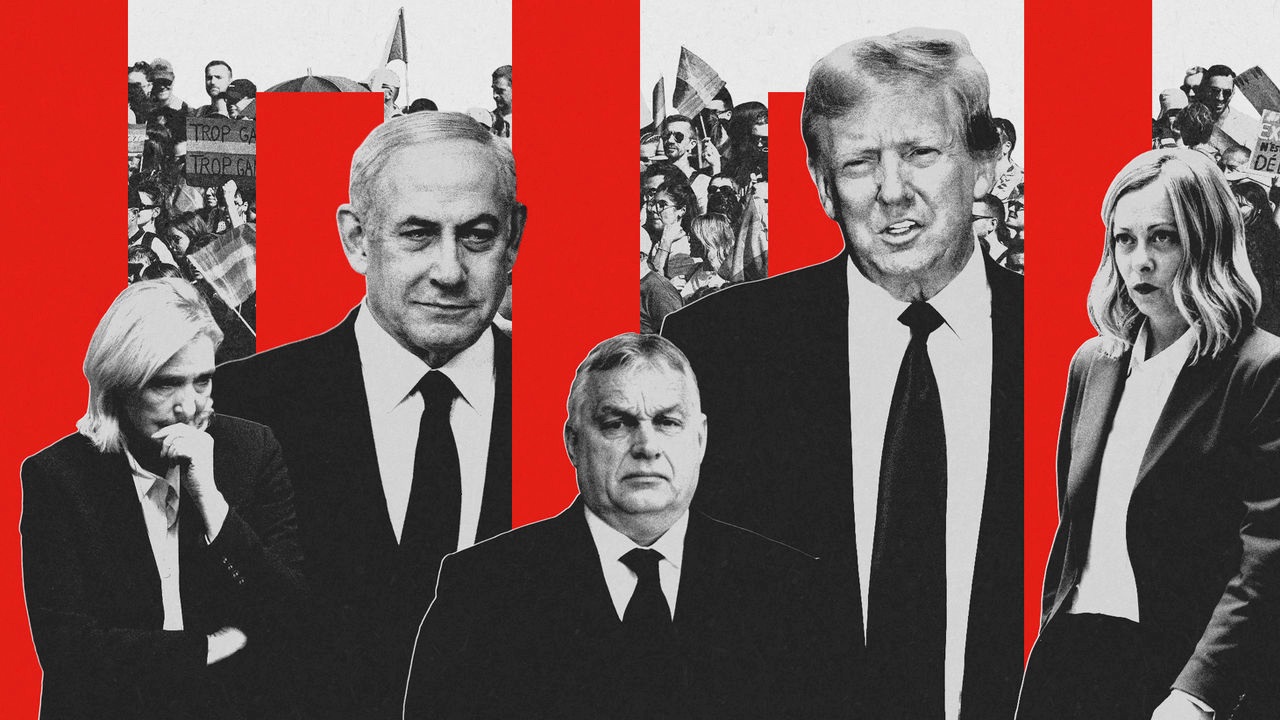 Pic.: Economist.com
Thirty-five years ago, American political scientist Francis Fukuyama made a name for himself by advancing the proposition that the end of the Cold War and the dissolution of the Soviet Union promised the ascendency and universalization of so-called Western “liberal democracy”, ‘American Thinker’ writes.
Fukuyama envisioned Western-styled liberalism as both “the endpoint of mankind’s ideological evolution” and “the final form of human government.” Expecting all human struggles to barrel toward a state of imminent equilibrium and future peace, Fukuyama stated out loud what many other late-twentieth century thinkers also believed: Humanity had reached the end of history.
After the 9/11 terror attacks in the United States, two decades of the “Global War on Terrorism,” China’s expansive “Belt and Road Initiative,” immigration-fueled social strife, the collapse of public trust in government institutions, the prevalence of pre-civil war conditions across Europe, the rise of Indian economic power, the emergence of Donald Trump’s nationalism as a counterbalance to the World Economic Forum’s vaunted globalism, the return of the Russian Federation as a major source of European angst, the growth of “multiculturalism” and its attendant fracturing of national unity, the “great powers” competition for hydrocarbon energies and other natural resources, the new geopolitical race to project strength in the Arctic, and the ever-present discussion of an impending World War III — just to name a few of the numerous global conflicts of the first quarter of the present century — Fukuyama’s “end of history” argument has probably reached the end of its usefulness.
In The Clash of Civilizations and the Remaking of World Order, Professor Samuel P. Huntington argued that unbridgeable cultural conflicts would continue to remake the world. Although critics called him “racist,” “Islamophobic,” “ignorant,” and even “Hitlerian” for dismissing the unifying effects of “diversity” and “multiculturalism,” Huntington’s predictions for a volatile twenty-first century were much more accurate than anything coming from the “end of history” camp.
Everywhere in the world, battle lines are drawn around civilizational identity. Religious conflict, historic grievance, and cultural incompatibility drive violence around the planet.
One might think that the last twenty-five years of global volatility would have given globalism’s biggest promoters some measure of pause as the “end of history” arrived and passed. But Western “elites” generally suffer from cerebral deficiency, shameless incuriosity, and pathological stubbornness. According to the blue bloods on both sides of the Atlantic — such as Canada’s banker-turned-prime-minister Mark Carney, France’s banker-turned-president Emmanuel Macron, Germany’s BlackRock-board-member-turned-chancellor Friedrich Merz, and the European Commission’s noble-aristocrat-turned-installed-president Ursula von der Leyen — “multiculturalism” is our future, “diversity is our strength,” and “cultural nationalism” is a “terrorist ideology” that breeds “hate.”
As we enter the second quarter of the twentieth century, the world is about to receive a harsh education in the persistent reality of civilizational conflict. The “end of history” tripe was always a figment of self-deluding theoreticians who envision themselves as philosopher kings. In the real world, values matter. Culture matters. Religion matters. The past matters. Honor matters. Violent conflict does not disappear in a puff of smoke. In the real world — where bullets fly faster than words — theories written on scraps of paper are rolled up into cigarettes or left under a rock near the trench latrine. In the real world, people fight. Cultures compete. And civilizations clash.
Western globalists who refuse to learn the basics won’t long last. From the Arctic to the Antarctic, battle lines are being drawn and redrawn everywhere. The past informs the present. The present informs the future. The rest of history is just now beginning.
read more in our Telegram-channel https://t.me/The_International_Affairs

















