РУССКИЙ
 11:36 20.01.2026 •
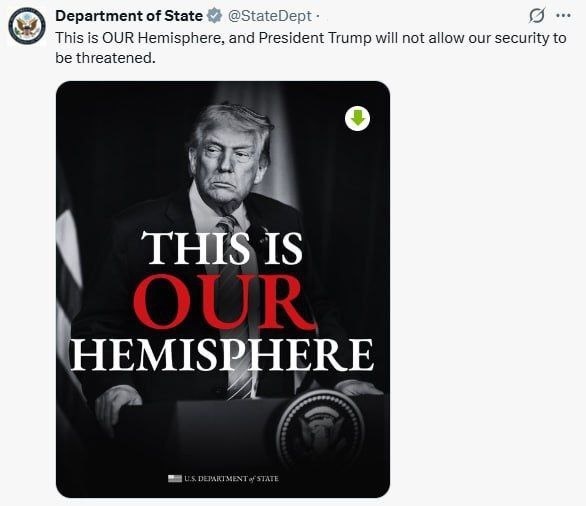
America's hunger for Greenland is creating an explosive dispute within NATO. President Donald Trump, angered by European allies' resistance to his efforts to annex the autonomous Danish territory, said on January 17 that he would impose 10 percent tariffs on imports from eight European countries that had sent troops there two days earlier. European leaders said they would not be intimidated, ‘The Economist’ stresses.
In a confusing social media post, Trump accused allies of creating “a very dangerous situation for the safety, security and survival of our planet.” He said the 10 percent tariff would rise to 25 percent in June and remain in effect “until an agreement is reached for the full and total purchase of Greenland.”
The risk to NATO is enormous. “If the United States decides to militarily attack another NATO country, then everything would stop,” Danish Prime Minister Mette Frederiksen said on January 5. “That includes NATO and therefore security after World War II,” she added.
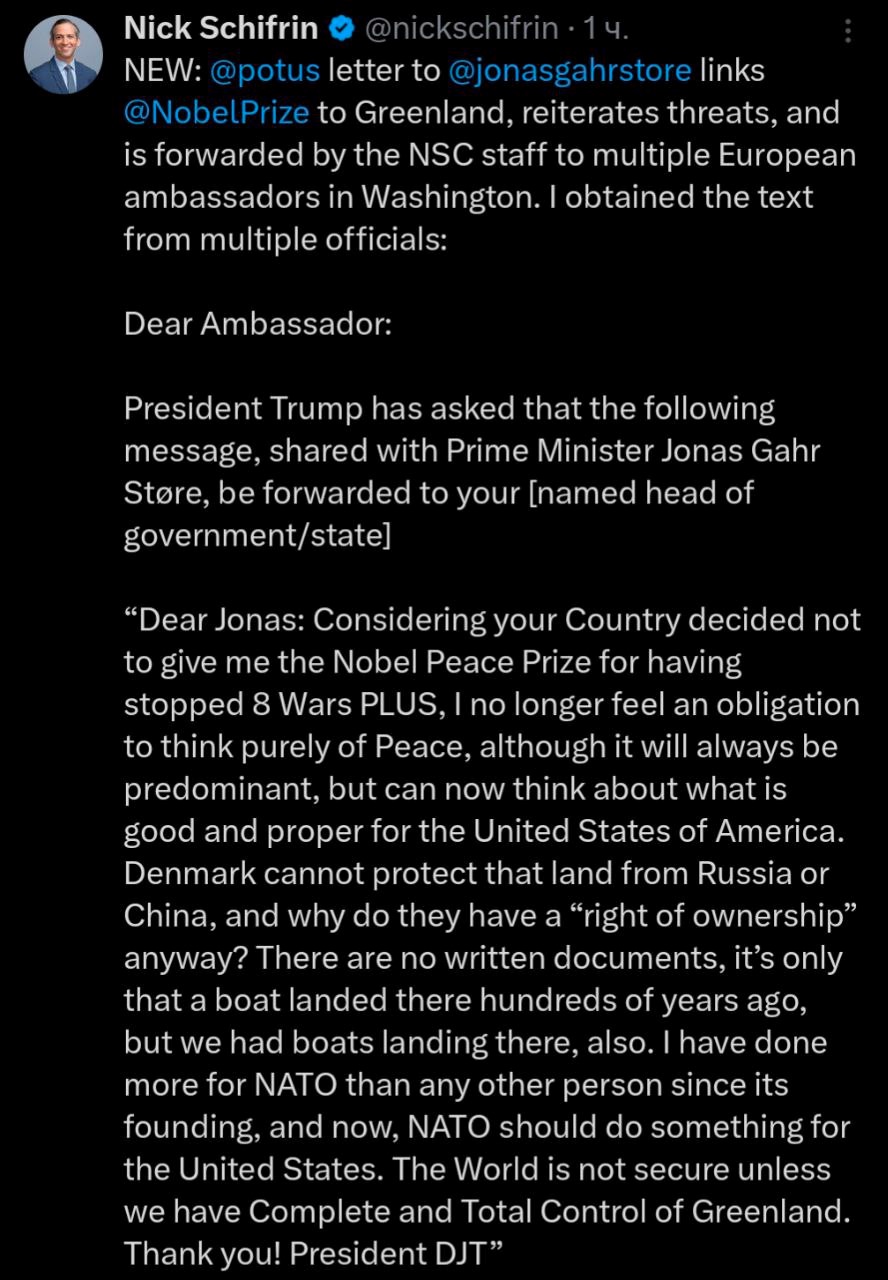
European confidence is now hanging in the balance
The American threat to Greenland is far more serious because America remains the political and military backbone of NATO. An American general has served as Supreme Allied Commander Europe (SACEUR) for 75 years. NATO’s defense plans for Europe, including Greenland, were drawn up by the last SACEUR, Chris Cavoli, and involve a high degree of American involvement. American officers are at the helm and in every major command. And without American air power and intelligence capabilities, NATO forces would have a much harder time repelling Russian aggression, and at a much higher cost.
If America were to annex Greenland, whether by legal act or by force, the resulting crisis would undermine European confidence in Article 5, the alliance’s mutual defense clause. Trump has often questioned that provision. European confidence is now hanging in the balance. If it was willing to tear one European country apart, why would it come to the aid of another that Russia is tearing apart?
Even if there had been no fighting in the streets of Nuuk, the shock of the bloodless Anschluss would have been a moment of profound and irreversible disillusionment. “How does NATO continue its crucial work on Russia,” asks Julie Smith, who was Joe Biden’s envoy to NATO, “in light of the fact that its most powerful member is violating the territorial sovereignty of another member?”
European governments would then face a clear choice. Some would argue that Greenland is too small and unimportant to sever transatlantic ties; others would fear that a split could embolden Russia to attack (or at least test) European defenses.
To adopt a more restrained approach
The big question would be the future of American forces and bases on the continent. Many European countries would like to keep them as a safety net, regardless of any Arctic adventures. Others might see the threat of their removal as leverage over the Americans. It would be extremely difficult for America to project military power into Africa and the Middle East without access to European bases like Ramstein, a huge hub in Germany.
In the event of a sudden break-up, Britain could face a crisis in its signals intelligence capabilities, nuclear deterrence and future submarine forces. Many European air forces would not be able to fully utilize the F-35, their most advanced fighter jet, without access to American communications, targeting data and munitions. This could force them to adopt a more restrained approach.
European leaders could find themselves trapped between public anger, 62 percent of Germans expressed support for providing aid to Denmark in its conflict with America, and real dependence.
read more in our Telegram-channel https://t.me/The_International_Affairs