РУССКИЙ
 11:57 11.02.2026 •
The EU countries consider the build-up of military capacities as a driver of economic growth, Russian Deputy Foreign Minister Alexander Grushko told Izvestia. To justify military spending, NATO and its European part demonize Russia. However, the price of such a course may be unaffordable: in order to bring defense budgets to the coveted 5% of GDP, the EU will have to spend an additional €1 trillion annually.
Meanwhile, since February 2022, Brussels and Washington have already allocated at least 420 billion euros to Kiev, Izvestia estimates. In recent months, it has been European support that has provided significant growth, including a €90 billion package for 2026-2027.
However, even the "military locomotive" has not yet saved the union: the IMF notes a decrease in Europe's global weight and a loss of its competitiveness.
NATO will spend another $1 trillion on weapons
In recent years, EU countries have initiated an unprecedented number of militaristic programs. The flagship project was the initiative "Rearm Europe" put forward by the EC in 2025, which implies spending of €800 billion by national governments. Of this amount, €150 billion is planned to be distributed through the specialized SAFE borrowing mechanism. Brussels has made no secret of its plans to convert these investments into economic dividends.
— They [the Europeans] are getting more and more bogged down in militarism, considering the militarization of the economy as a driver of economic growth, which will lead the European Union out of the deepest crisis into which it drove itself with this anti-Russian policy, and avoid deindustrialization. The weapons programs that are being implemented today are extremely costly," Russian Deputy Foreign Minister Alexander Grushko told Izvestia.
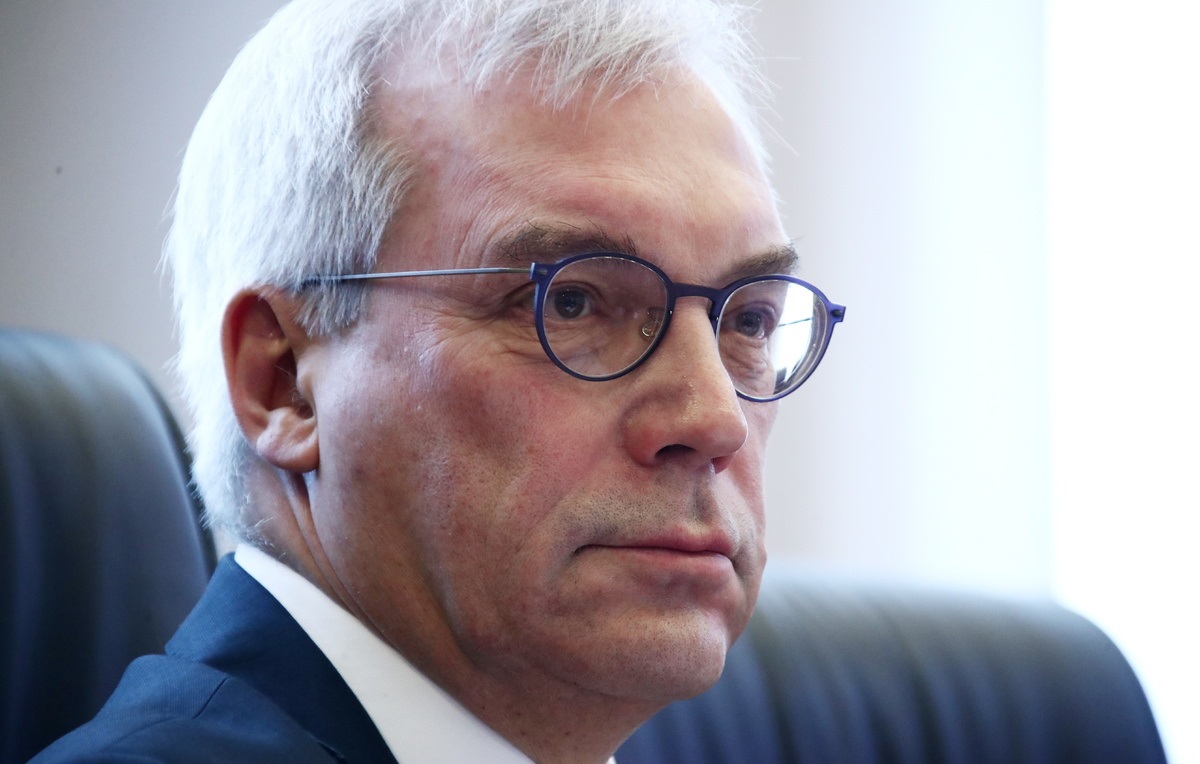 Russian Deputy Foreign Minister Alexander Grushko
Photo: TASS
The union's ambitions are reinforced by the decision to increase military spending to 5% of GDP by 2030, a figure that previously seemed unthinkable for the EU. The plan involves dividing budgets: 3.5% of GDP is allocated to the "defense core" (direct purchases of equipment), and the remaining 1.5% is allocated to related infrastructure: from cyber defense to the modernization of transport corridors for the transfer of troops.
It is noteworthy that the alliance's expenses were dominant on the world stage even before the transition to the new strategy. According to SIPRI, in 2024, NATO's total spending amounted to $1.506 trillion, which is equivalent to 55% of global military spending.
"If we talk about spending 5%, then they will have to spend additional money on defense every year, including the purchase of weapons, and according to NATO standards, at least 20% should go for these purposes, another trillion per year," Grushko stressed.
The state of the EU economy
While NATO and the EU are boosting military production, the social sphere is starting to crack at the seams. According to Alexander Grushko, the constant demonization of Russia is a measure to retain the loyalty of the electorate.
Sooner or later, the country's leaders will have to explain to their own populations why social programs are being cut, why education and healthcare systems are deteriorating, and why unemployment is increasing. And here is one "explanation": tomorrow there is a war, tomorrow Russia will attack," the deputy minister noted.
The European economy is already paying a high price for these decisions. The shortage of defense capacities is superimposed on the energy crisis. A striking example was France, where the budget for 2026 was adopted amid a protracted political standoff and government resignations. In the final document, Paris reduced spending in almost all sectors except the military, despite a budget deficit of 5.4% of GDP (about €125 billion).
The situation in Germany is no better. The locomotive of Europe in 2025 showed symbolic GDP growth of 0.2%, while facing a record industrial recession in decades and a wave of bankruptcies.
The systemic weakening of the EU's position is also confirmed by the IMF. The economic prospects for the European Union as an association remain vague. According to the analysis for February 2026, the economic situation of the European Union is characterized by a systemic weakening of its position in global competition.
If in 2010 the EU's GDP was comparable to that of the United States and significantly exceeded the volume of the Chinese economy, today this gap has practically been leveled. Kristalina Georgieva, Director of the IMF, emphasizes that such dynamics directly undermines the union's ability to maintain a familiar social model. At the same time, the EU, against the background of deteriorating relations with the United States, is beginning to abandon American technological solutions, according to media reports.
France and Europe have four years to prepare for war
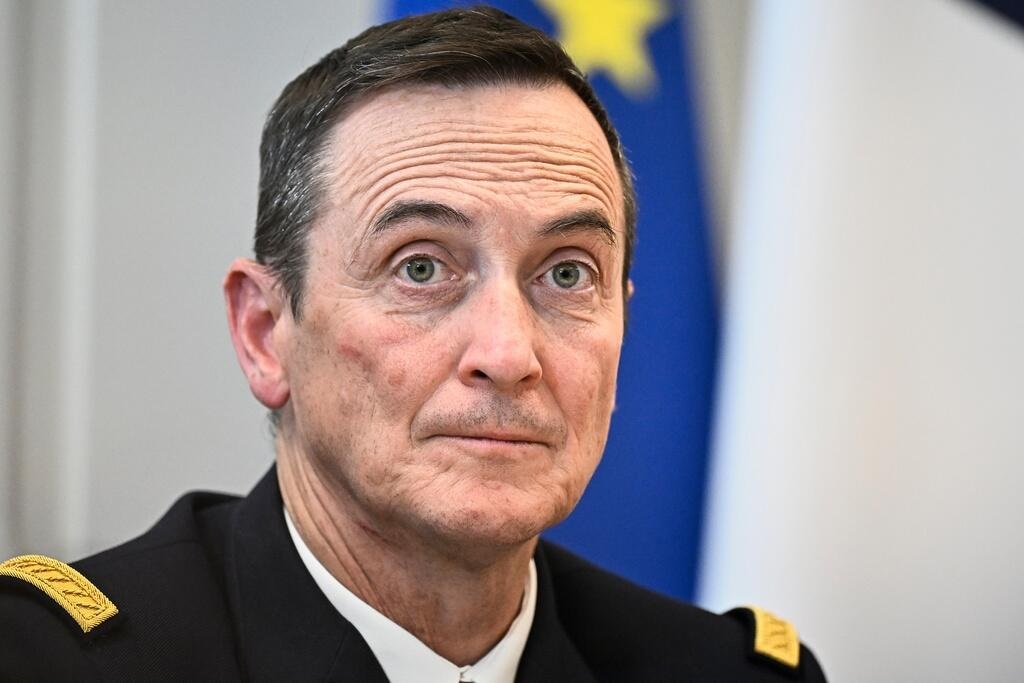 Fabien Mandon, chief of the defense staff of the French Armed Forces
Photo: AFP
France and Europe have four years to prepare for war, said Fabien Mandon, chief of the defense staff of the French Armed Forces, who cited Russia as Europe’s biggest threat.
His speech at a major naval conference outlined that France, as well as its allies, must take into account that this war will break out in the near future and that the French military must be ready by 2030.
“Today, we are preparing for war,” he said.
During his speech at the naval conference, Mandon stated that France is not prepared for war and the country had “an insufficient number of ships and armaments.”
He stated the nation needs “more missiles with greater range and lethality.”
Mandon recently made headlines for stating that Europeans and the French must be ready to lose children in a war, stating:
“You have to accept that you will lose your children,” which is necessary to defeat Russia during a November speech at the National Congress of French Mayors.
His words caused national shock, while the representatives of the parliamentary parties protested sharply in connection with his comment.
read more in our Telegram-channel https://t.me/The_International_Affairs