
 РУССКИЙ
 10:21 10.03.2026 •
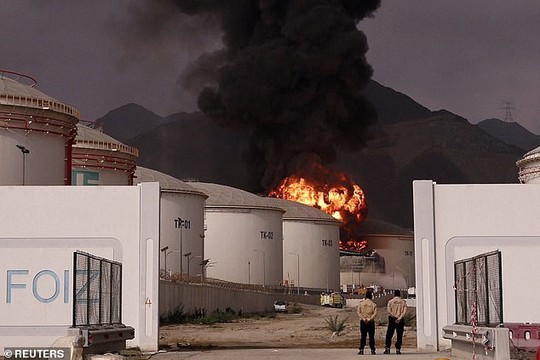
Fire is seen at the Fujairah oil industry zone in the UAE after drone debris struck
Britain has just two days' worth of natural gas in storage, sparking fears of a shortage crisis as the Middle East conflict shut down the world's largest gas facility and Iran closed a key shipping channel, ‘The Daily Mail’ reports.
The UK's gas reserves have dwindled from 18,000 GWh last year to 6,700 GWh, enough for just 1.5 days of demand, according to new data published by National Gas. There is a similar quantity stored as liquefied natural gas (LNG).
Europe is much better prepared to weather fluctuations in supply, with several weeks' worth of gas stored up.
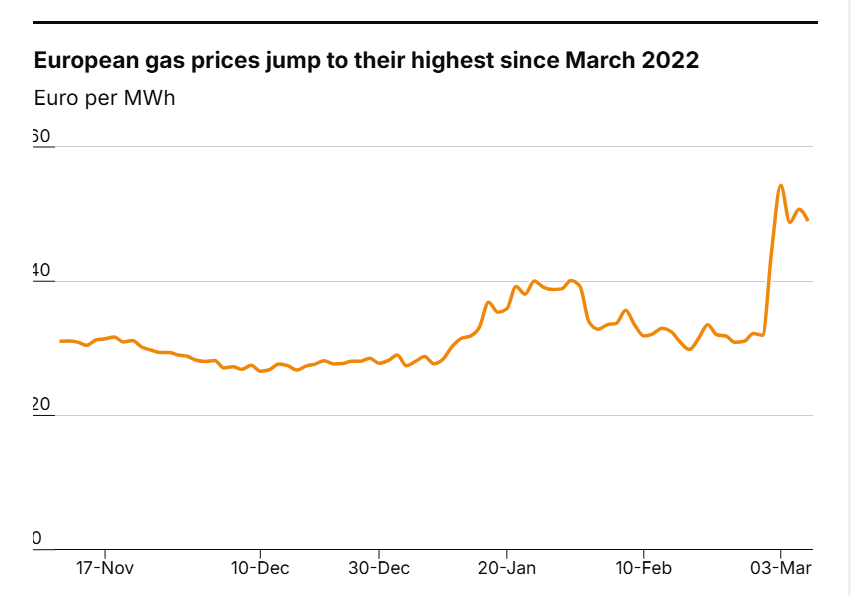
Traders have been exploiting the UK's situation by charging it a premium price on gas, knowing it has no choice but to outbid its European competitors. The UK is now paying the highest wholesale gas price in Europe.
Disruption to the gas market is driven partly by the near-total closure of the Strait of Hormuz, through which around 20 per cent of the world's natural gas and oil flows, and also by the shutdown of production in some places.
Qatar announced at the beginning of the week it had suspended production at Ras Laffan, the world's largest natural gas facility, after it came under Iranian bombardment.
Meanwhile, oil prices are set to soon hit $100 a barrel and that could rise to $150 if the war drags on, industry experts warned.
Natasha Fielding, head of gas pricing at Argus Media, a leading publisher of commodity data, said: 'The price of gas in the UK has increased by more than almost anywhere in Europe.
She said this was partly because the UK's meagre gas stockpiles leave us 'more exposed to price spikes', and added: 'We can’t rely on withdrawing more from storage, so we have to get that gas from abroad.'
The UK used to have up to 12 days worth of gas in storage, but the system collapsed after successive government ministers pulled its funding.
Oil prices have already surged above $90, with American crude settling at $90.90 on Friday, up 36 per cent from a week ago, while Brent, the international benchmark, climbed 27 per cent over the course of the week to land at $92.69.
Professor Mohamed El-Erian of the University of Pennsylvania told BBC Radio 4’s Today programme: 'Once again, we see the UK more vulnerable to external shocks than otherwise that in turn is going to translate into higher mortgage rates. So the average person will get hit from multiple sizes, unfortunately.
'The average person is going to face higher energy prices, but also higher mortgage rates and slowly but surely, noticeable increases in a broad range of goods and services because of supply chain disruptions.'
read more in our Telegram-channel https://t.me/The_International_Affairs

















