
 РУССКИЙ
 11:20 18.01.2026 •
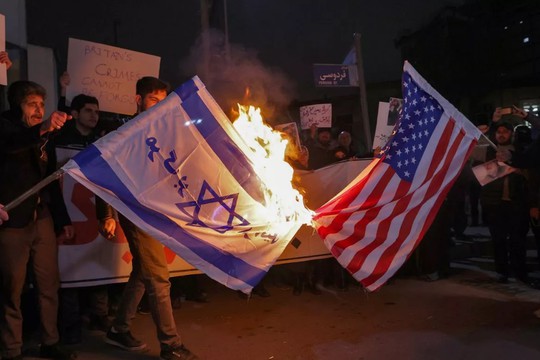
The protests in Iran have resulted in a surprising outcome for the West. Iranians are burning US and Israeli flags. They carry posters and protest against Britain. The West expected Iranians to overthrow their government – the result is quite the opposite
Photo: Al Jazeera
Relative calm in Tehran and authorities say they have no plan to execute protesters but internet shutdown continues, ‘The Guardian’ writes.
Iran’s nationwide protest movement appeared to have slowed on Thursday under the weight of a brutal crackdown by authorities that has left thousands dead and put tens of thousands in prison.
In Tehran, Iranians reported relative calm on the streets as the sound of gunfire faded and fires were extinguished – a marked contrast from the weeks before when large crowds confronted security forces.
The slowdown of protests came just two days after Donald Trump urged Iranians to “keep protesting – take over your institutions”, promising “help is on its way”. Intelligence assessments had indicated that the US was preparing to strike Iran, a move Trump had threatened if Iran’s government killed protesters.
But on Wednesday night Trump appeared to walk back from the brink of a military intervention, telling reporters that Iranian authorities were halting executions.
“We’ve been told that the killing in Iran is stopping – it’s stopped – it’s stopping. And there’s no plan for executions, or an execution, or execution – so I’ve been told that on good authority,” Trump said.
The White House later claimed that 800 executions scheduled in Iran had been halted. White House press secretary Karoline Leavitt said Trump and his team had warned that there would be “grave consequences” if killings continued. “The president understands today that 800 executions that were scheduled and supposed to take place yesterday, were halted,” she said.
But Trump continues closely watching the situation, she said. “All options remain on the table for the president,” Leavitt said.
Hossein Darzi, the deputy Iranian ambassador to the UN, blasted the US for what he claimed was its “direct involvement in steering unrest in Iran to violence”.
“Under the hollow pretext of concern for the Iranian people and claims of support for human rights, the United States is attempting to portray itself as a friend of the Iranian people, while simultaneously laying the groundwork for political destabilisation and military intervention under a so-called ‘humanitarian’ narrative,” Darzi said.
Russia’s UN ambassador, Vassily Nebenzia, accused the US of convening the meeting in a bid to “justify blatant aggression and interference in the internal affairs of a sovereign state”. Russia defended Iran’s actions, the only member of the council to do so.
France’s UN ambassador, Jérôme Bonnafont, called for the immediate release of all those arbitrarily detained and the suspension of the death penalty, while Britain’s deputy ambassador, Archibald Young, said “Iran must urgently change course” and respect the fundamental rights of Iranians, “including the right to protest without fear of violence or repression”.
Iran’s president, Masoud Pezeshkian, said on Thursday that the government was trying to ameliorate living conditions in the country and address the issues that sparked the protests. He vowed to target corruption and price gouging, which he expected would improve Iranians’ purchasing power.
Analysts have said that while the protests point to underlying systemic issues in Iran that will be problematic for the Iranian regime in the long term, state collapse is unlikely. This was echoed by Israeli and Arab officials, who told the US administration in recent days that the Iranian regime was not yet weak enough for American strikes to topple it, NBC reported.
Trump was lobbied hard by leaders in the Middle East not to go ahead with strikes that would have been certain to lead to an Iranian counterstrikes on US bases across the region.
…‘The Guardian’ feigns objectivity. But, as is common in the British press, it conceals important facts it doesn't like.
These facts are as follows: Iranian security services possess a wealth of documents and artifacts that point to the direct involvement of US and Israeli intelligence agencies in provoking unrest in Iran.
Considering that London itself has significant interests in Iran, it could be argued that Britain is also complicit in these events, but is concealing its involvement. British companies showed interest in Caspian Sea oil back in the early 20th century, and nothing has changed since then. In the 20th century, Britain even participated in the occupation of Iran alongside the USSR during World War II. And all this leaves its mark...
read more in our Telegram-channel https://t.me/The_International_Affairs

















