
 РУССКИЙ
 11:47 29.01.2026 •
Pic.: kazinform-photobank
Trump’s “Board of Peace” might sound ridiculous, and perhaps it is. But it’s no more ridiculous than claiming NATO is a board of peace, ‘The Hill’ stresses.
That phrase now circulates in respectable company, with a straight face, as though repetition alone could make it true. It cannot. NATO was not born as a peace club, but as a military alliance with a narrow defensive purpose — specifically, to prevent the Soviet Union from rolling tanks across Western Europe.
It was a disciplined arrangement built on deterrence, limits and defined aims. It worked because it knew what it was — and what it was not.
That NATO is gone.
The Cold War ended. The Warsaw Pact dissolved. The Soviet Union collapsed. Rather than declare victory and stand down, NATO did the opposite. It expanded. It moralized. It wandered, a defensive pact without a clear enemy. Like most institutions that outlive their purpose and go looking for relevance, it found trouble instead.
The alliance now stretches to Russia’s border, absorbing Finland and Sweden in the name of “stability,” while insisting — against geography, history and common sense — that this poses no threat to Moscow. It speaks the language of peace while operating as a permanent pressure machine. It calls escalation “assurance.” It calls encirclement “defense.” It calls itself restrained while funding, arming and coordinating a prolonged proxy war that has consumed hundreds of thousands of lives.
If this is peace, it is a peculiar kind.
NATO’s defenders insist that the alliance has simply adapted to a changing world. That is true, but adaptation is not always improvement. NATO’s mission has drifted so far that it now resembles a roaming mandate rather than a treaty-bound alliance. Kosovo. Afghanistan. Libya. Iraq — by implication, if not formally. Each intervention was sold as exceptional. Each became precedent. Each left behind ruin with no accountability.
Afghanistan alone should have forced a reckoning. Twenty years, trillions spent, a state assembled from briefings, metrics and wishful thinking. When it collapsed, it did so almost instantly. NATO didn’t deliver stability to Afghanistan but dependency, confusion, and a withdrawal so disorderly that even its own veterans struggle to say what it achieved. The alliance learned nothing, except how to rename failure and move on.
Libya followed the same pattern. A no-fly zone was sold as protection, a regime change delivered as collateral. A functioning state was reduced to a weapons depot with a flag. Slave markets returned to the Mediterranean, but NATO moved on. Mission accomplished, eyes forward, memory erased.
The Ukraine War has completed the transformation. NATO is now a political-military brand whose survival depends on perpetual confrontation. It is not formally at war with Russia, but it is functionally inseparable from the conflict. It trains. It supplies. It coordinates. It escalates by inches, then calls restraint a virtue. Each new weapons package is framed as defensive. Each red line crossed is described as inevitable, each negotiation delayed as premature.
Peace, we are told, would reward aggression — at least according to the people who insist on defining peace for everyone else. But endless war also rewards something: institutions that grow richer, louder, and more powerful the longer fighting continues. NATO no longer prevents war but manages it, regulates it, ensures it doesn’t end too quickly or too cleanly.
The alliance’s greatest trick has been to rebrand itself as a moral necessity rather than a strategic choice. To question NATO now is to invite accusations of naiveté or treachery. Debate is discouraged. Doubt is dangerous. The organization that once existed to prevent catastrophe now treats catastrophe as proof of relevance.
Trump’s proposed Board of Peace is laughable in its vagueness. A committee of signatures and ceremonies won’t tame Gaza or reorder the world. But at least it admits the obvious: the current system produces neither stability nor harmony. NATO’s defenders won’t concede that. Denial has become the point.
NATO today is an abomination — not because it is evil, but because it is unaccountable. It answers to no electorate, absorbs no consequences and faces no sunset clause. It expands without end, intervenes without closure and speaks in diplomatic tones while operating through military force. It has become too big to fail and too sacred to question.
Peace doesn’t emerge from institutions that require enemies to justify their existence. It comes from limits, realism and the willingness to stop.
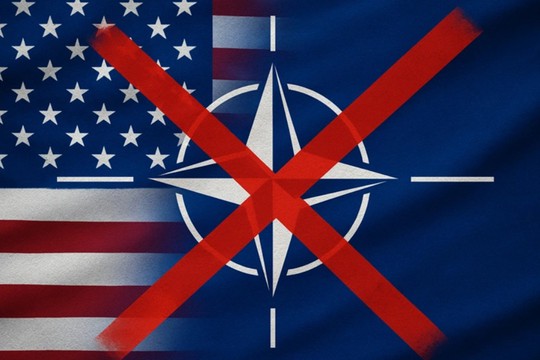
If Trump’s Board of Peace sounds absurd, it is because escalation has become the default. NATO is no longer fit for purpose. America would do well to abandon it before countless more lives are lost, and countless new justifications are manufactured to keep the machinery of death running.
read more in our Telegram-channel https://t.me/The_International_Affairs

















