РУССКИЙ
 20:56 28.02.2026 •
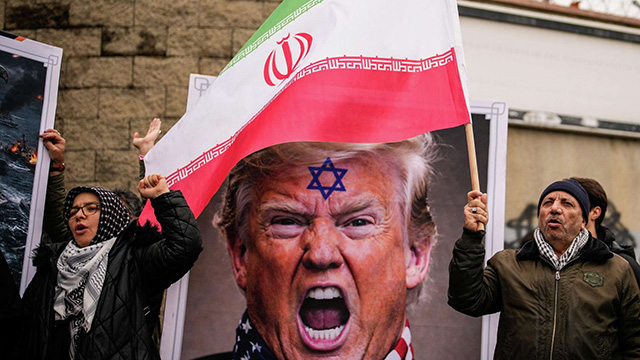 Photo: sputnik.kg
Trump gambles on war to force Iran’s capitulation
Bloody history of US interventions in region shows those launching assaults are rarely able to control outcome, ‘Financial Times’ writes.
After weeks of threats and a massive US military build-up, the missiles began to rain down on Tehran on Saturday morning, the first day of Iran’s working week, triggering panic across the capital. With waves of air strikes, the US and Israel ignited their second war against the Islamic republic in eight months, warning it would be on a far larger scale than Israel’s 12-day war in June. This time the US is at the forefront, with President Donald Trump describing the attack as “massive”, warning that “bombs will be dropping everywhere” and seemingly pushing for the ultimate objective: regime change. “I say tonight that the hour of your freedom is at hand. Stay sheltered,” Trump said in a video. “When we are finished, take over your government.” Like the last war in June — which was started by Israel and briefly joined by the US — it has come while the Trump administration was engaging in talks with Iran to secure a deal over its nuclear programme. Those talks always seemed doomed to fail, with war becoming ever more inevitable despite the efforts of Arab and Muslim states who fear it will trigger a regional conflict that will spill over their borders.
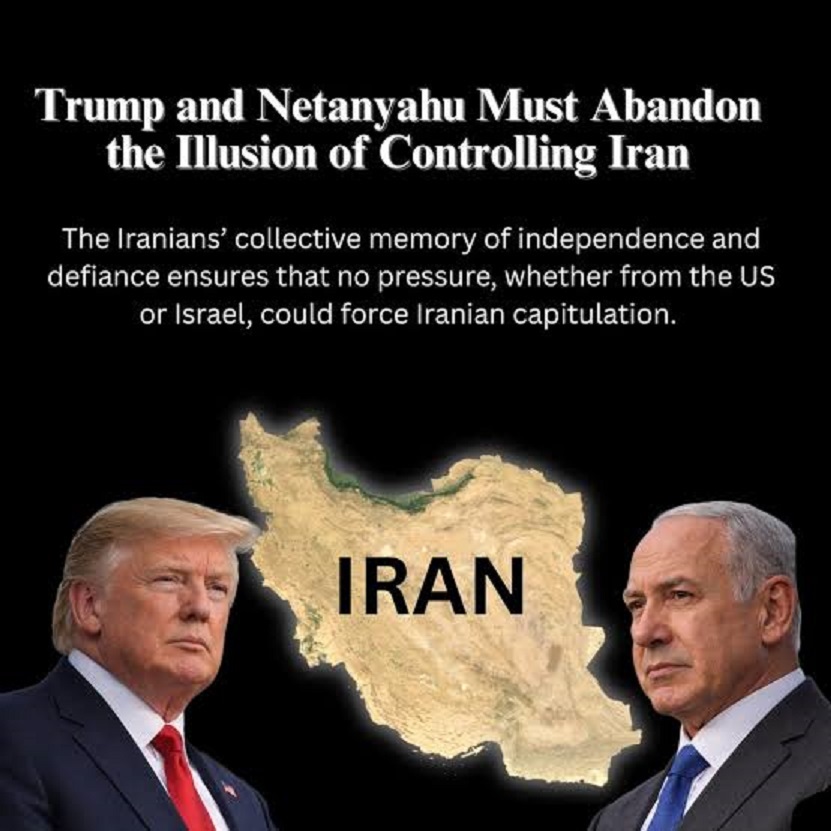
Trump, spurred on by Israeli Prime Minister Benjamin Netanyahu, was in a rush and seeking to force Iran’s capitulation as he ordered the biggest military deployment in the Middle East since the US-led invasion of Iraq in 2003.
Iran’s supreme leader Ayatollah Ali Khamenei, deeply distrustful of Trump, was never likely to bend the knee — in his mind surrendering to the ideological enemy would present a graver threat to the regime’s survival than a conflict.
The regime’s calculus is not that it can match the far superior firepower of the US or Israel, but that it can endure and land enough blows to raise the cost to its foes so they ultimately de-escalate.
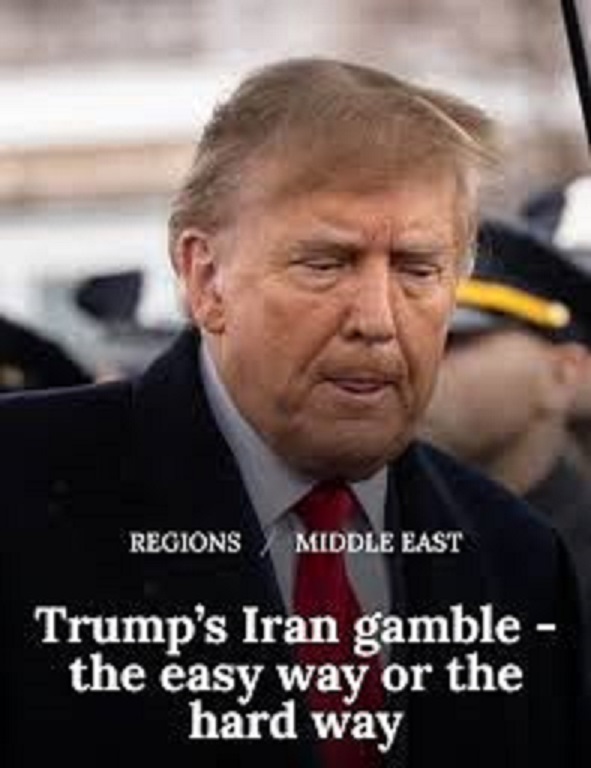
But Trump, who came to office promising to end America’s wars, is taking the biggest gamble of his presidency. The bloody history of US interventions in the Middle East shows that those who launch military assaults are rarely able to control their outcomes.
To Trump and Netanyahu this appears the moment to land a decisive blow. Yet while the regime was severely battered during last June’s war, it was far from defeated. It emerged intact, with no signs of defections. It took solace from the fact that at least some of its missiles were able to penetrate Israel’s defence systems and in effect shut down the country for two weeks.
Both sides will have learnt lessons from that conflict and the Iranian regime has had months to begin to replenish its missile arsenal.
Iranian officials have repeatedly warned that they will target US bases in the region, which are far closer to the republic than Israel, meaning Tehran could use short-range missiles that would arrive in minutes.
Tehran has also previously threatened to block the Strait of Hormuz, the vital maritime trade route through which about a third of the world’s seaborne crude oil passes.
Iran has not acted on that threat, but the regime has never before been backed into the perilous corner it finds itself in now, facing a battle for its survival.
Attacks over the past two years on merchant shipping in the Red Sea by Iran-backed Houthi rebels demonstrated the disruption that missile and drone barrages can cause.
Arab states — fearful of the chaos a war could unleash — have also warned the US about the potential threat to energy facilities.
Trump has overseen several swift, contained military operations in his second term: the bombing of Iran’s nuclear facilities last June, which he claimed “obliterated” the programme, and the kidnapping of Venezuelan President Nicolás Maduro in January.
But Iran should not be compared to Venezuela, and previous US interventions in the Middle East, from Iraq to Libya, have left a bloody, chaotic legacy. Iran is a vast, multi-ethnic country of more than 90mn people, and if the regime did disintegrate, there is no telling what would come next.
Multiple Gulf Arab states that host US assets targeted in Iran retaliation
Iran confirms targeting US bases across the Middle East, ‘Al Jazeera’ reports.
Iran has targeted United States assets across the Gulf Arab states in retaliation for a huge joint attack on Iran by the US and Israel, as the region’s worst fears of being ignited in the flames of a sustained war loom.
The Iranian government on Saturday confirmed its attacks on several targets, according to the Fars news agency, including Bahrain, Kuwait, Qatar and the United Arab Emirates, where US airbases are hosted.
Iran’s Islamic Revolutionary Guard Corps (IRGC) claimed all Israeli and US military targets in the Middle East have been struck “by the powerful blows of Iranian missiles”.
“This operation will continue relentlessly until the enemy is decisively defeated,” it said. All US assets throughout the region are considered legitimate targets for Iran’s army, it added.
At least one person has been killed in Abu Dhabi, the UAE capital, after several missiles launched from Iran were intercepted, according to the country’s state news agency.
Bahrain says a missile attack targeted the headquarters of the US Navy’s 5th Fleet, which it hosts.
Al Jazeera Arabic has meanwhile confirmed the sound of explosions in Kuwait, home to the US military’s Central Command headquarters.
Qatar, Kuwait and the UAE have all closed their airspaces.
Al Jazeera’s Zein Basravi, reporting from Doha, said the only country in the Gulf Cooperation Council that Iran has not struck today thus far is Oman.
Oman has for years served as a liaison between Iran and other nations in the region and beyond. It has played a central role in recent indirect talks between Iran and the US in Oman and Geneva.
In Bahrain, huge plumes of black smoke were seen rising above the headquarters of the US Navy's Fifth Fleet
Iranian forces say they have struck a US naval base in Bahrain, as Iran launched strikes across the region in retaliation for a "massive" and ongoing attack against it by the US and Israel, BBC reports.
Huge plumes of black smoke were seen rising from an area near the headquarters of the US Navy's Fifth Fleet in Manama, Bahrain. The extent of any damage is unclear and the US has not commented.
Elsewhere across the region, explosions have been heard in the United Arab Emirates, Qatar and Kuwait – also homes to US military bases.
Iran's Revolutionary Guard Corps said in a statement it had launched the retaliatory operation "Truthful Promise 4", targeting US assets in the region.
In Israel, sirens were heard across the country after the Israeli military said it had detected an incoming Iranian missile barrage.
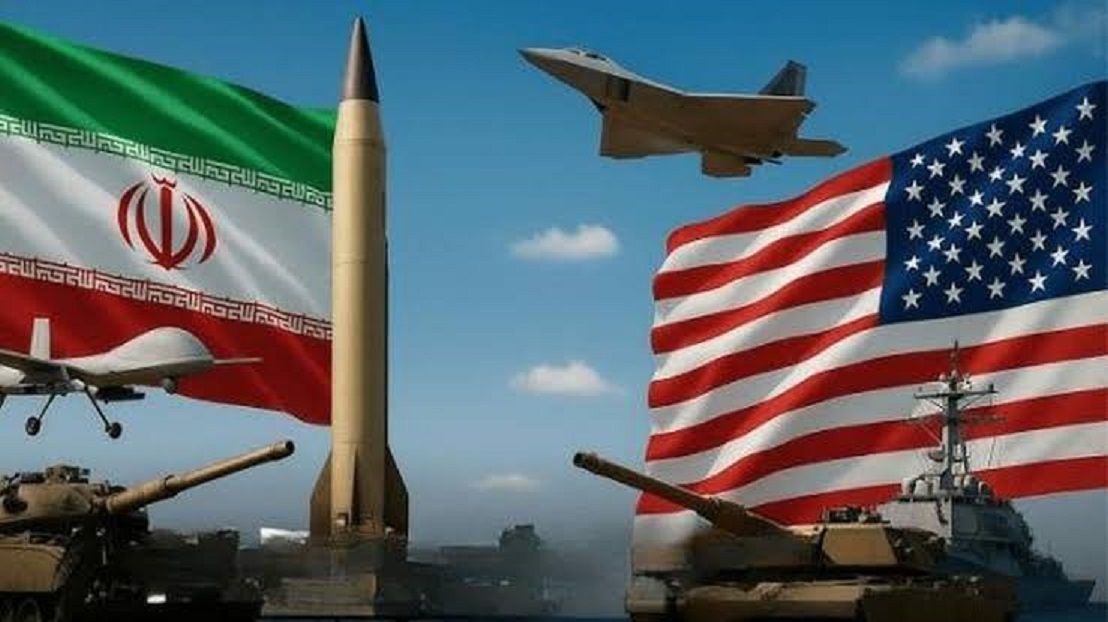 Pic.: You Tube
Defensive munition shortages to shape attack on Iran
US and Israel burned through interceptors at an unprecedented rate during last year’s 12-day war, ‘Financial Times’ writes.
Limited supplies of critical defensive munitions to protect US forces and allies from Tehran’s missiles are likely to shape the military offensive against Iran, according to officials and analysts.
The US and Israel burned through their stockpiles of interceptors at an unprecedented rate during last year’s 12-day war, when Iran fired hundreds of missiles at Israel.
Now, the US military is weighing the likelihood that Iran’s retaliation will strain the supply of those crucial munitions while it struggles to replenish them, affecting not just the war in Ukraine but also Washington’s battle plans for any possible conflict with China or Russia.
The “magazine depth” — military jargon for the stockpiles of available munitions — of the US’s Terminal High-Altitude Area Defense, or THAAD, anti-missile systems was of particular concern, said a regional military official.
Washington could “easily” expend a “whole year’s worth” of critical defensive munitions in just one or two days of operations “if Iran were able to launch multiple large salvos of missile and drone attacks” at US forces and Israel, said Stacie Pettyjohn, director of the defence programme at the Center for a New American Security think-tank.
Both defensive and offensive “munitions would be a critical factor that the Pentagon would be highlighting as one of the potential costs of a conflict with Iran, especially if the president were thinking about a more sustained air campaign, and not just some limited punitive strikes”, said Pettyjohn.
During last year’s war the US navy also fired at least 80 sophisticated seaborne missiles, including one called the SM-3, which saw combat for the first time in April 2024 protecting Israel, the official said. It will procure only 12 SM-3s, which are optimised for ballistic missiles, this fiscal year for $445mn.
Any “air campaign right now is going to be fundamentally governed by our magazine depth”, which has “been taxed significantly supporting a variety of operations around the world,” said Doug Birkey, executive director of the Mitchell Institute for Aerospace Studies think-tank.
Israel’s own stock of interceptors is classified information, but their limited supply has been a concern for its military as Iran and Tehran-backed Lebanese group Hizbollah manufactured thousands of missiles over the past decade.
Is Israel about to surrender? Where is Netanyahu – why is he silent now?
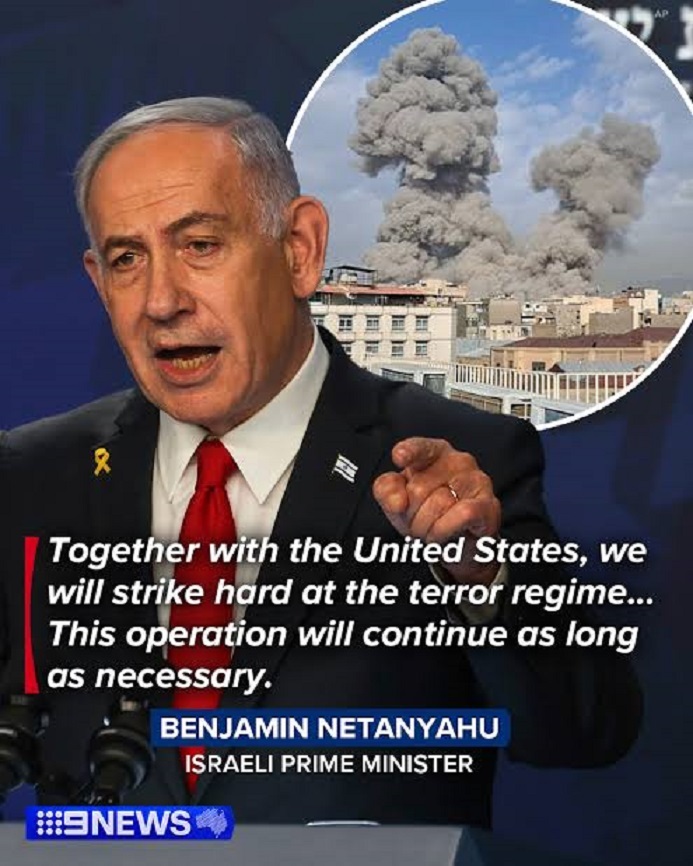 Pay attention to this Netanyahu’s lie told on the eve of the attack on Iran. Now he's disappeared...
On the Israeli side, the military said on Saturday that its air force had completed a broad wave of strikes targeting strategic air defense systems belonging to the Iranian government. In a statement, the Israeli army said the operation focused on dismantling key components of Iran’s air defense infrastructure, ‘Shafaq’ reports from Irak.
Iran’s Islamic Revolutionary Guard Corps (IRGC) said it targeted US military assets in the region and destroyed a US radar system in Qatar, while Israel confirmed carrying out large-scale airstrikes on Iran’s strategic air defense network.
In a statement, the IRGC said it had “completely destroyed” a US FP132 radar system in Qatar, describing it as capable of tracking ballistic missiles with a range of up to 5,000 kilometers. The force also said it had struck a US combat support vessel of the MST class and warned that other American naval units would be within range of its missiles and drones.
There was no immediate confirmation from US or Qatari officials regarding the radar claim.
The semi-official Tasnim news agency quoted a military official as saying Iran had so far targeted 14 US military bases in the region.
Iran’s Foreign Minister told NBC News that Tehran would consider steps toward de-escalation. “If the aggression stops, we will then examine how we can work toward reducing tensions,” he said.
read more in our Telegram-channel https://t.me/The_International_Affairs