РУССКИЙ
 13:26 16.03.2026 •
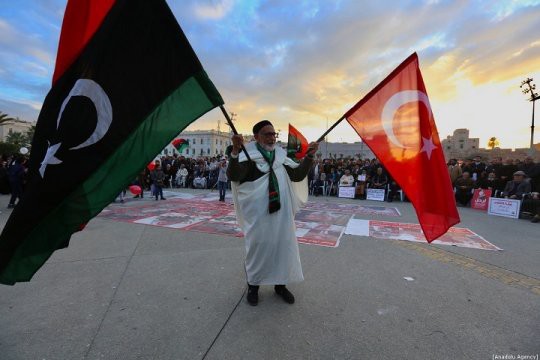
Turkey, especially during the presidency of Recep Tayyip Erdoğan, has been displaying marked activity in strengthening its regional and international influence.
This strategy is aimed at obtaining tangible material and financial dividends, including through control over mineral resources beyond the bounds of “obvious” Turkish jurisdiction recognized by other parties.
This course of action is most clearly manifested in relation to Libya. The signing of the Turkish-Libyan memorandum of understanding on the delimitation of maritime jurisdiction areas in 2019 became a starting point for the reconfiguration of existing maritime boundaries in the Eastern Mediterranean in order to implement the maritime geopolitical doctrine of the “Blue Homeland,” proposed in 2006, which envisions expanding Turkey’s exclusive economic zone in the Black and Aegean Seas and the Eastern Mediterranean.
The Libyan case, it would seem, can be viewed as a highly symptomatic attempt to reconfigure the international legal and geostrategic foundations of maritime policy in the region and the world at large.
An important aspect is that maritime policy in Libya has become a significant component of the new, active, and aggressive foreign policy model shaped during the rule of the Justice and Development Party (AKP) and Erdoğan in Turkey.
At the same time, Turkey is currently in the throes of a domestic political struggle in anticipation of possible early elections. The situation has worsened following the arrest of Erdoğan’s main opposition rival, Ekrem İmamoğlu. The difficult socio-economic conditions, amid an ongoing economic crisis and growing social tensions – also linked to the normalization of relations with the Kurds – make it necessary to seek ways to strengthen the government’s authority and legitimacy. Among the methods used to boost popularity is the demonstration of foreign policy victories, one of which could be the Libyan case.
This is particularly relevant given a policy launched in 2025 to enhance ties between Turkey and eastern Libya, which is under the control of the Libyan National Army (hereinafter LNA), led by Khalifa Haftar. Following a visit to Turkey by his son, Saddam Haftar, chief of staff of the LNA Ground Forces, and the signing of several agreements between the parties, including in the areas of military cooperation and economic relations, the possibility of ratifying the Turkish-Libyan memorandum of understanding on the delimitation of maritime boundaries has emerged.
After the fall of Muammar Gaddafi’s regime, Libya found itself in a state of political instability, and a power vacuum formed in the country – one traditionally filled by global actors. However, under current conditions, regional players aspiring to leadership roles in the Middle East and North Africa (MENA) region are coming to the forefront.
In this context, Turkey, having supported the Government of National Accord of Libya (GNA) led by Fayez al-Sarraj, found itself on the opposite side of a bloc of countries supporting Gen. Haftar, the head of the LNA – namely, Saudi Arabia, the UAE, and Egypt. At the same time, this bloc is also supported by a number of global actors such as the EU. Libya has turned into a platform for regional confrontation and, more broadly, for the transformation of the entire security architecture in the Eastern Mediterranean.
Among the countries involved in the Libyan conflict to varying degrees, several broad groups can be identified. First, there are those that view the Libyan conflict in the context of broader regional destabilization of the MENA region, with a predominantly Middle Eastern perception of the conflict. Second, there are states for which the Libyan conflict is particularly significant in terms of the development of the Mediterranean region and related issues of maritime boundary delimitation and the use of natural resources [6, p. 685].
Turkish policy in Libya initially took shape as a response to the systemic transformations occurring in the MENA region following the Arab Spring, and thus was largely situational [7, p. 330]. Among the full range of political, economic, ideological, and international legal motives behind the chosen course, one can identify both those that have characterized bilateral cooperation over a long period and those that are a direct result of recent developments in Libya and in the MENA and Mediterranean regions. Today, Turkish policy in Libya can be viewed from three main perspectives: (1) Mediterranean; (2) Middle Eastern; and (3) African.
The Mediterranean Dimension
FROM the standpoint of Turkish national interests, the Mediterranean dimension of the Libyan issue is currently the most critical. The prevailing view in Turkish foreign policy discourse is that the current system of maritime boundary delimitation and resource distribution in the Eastern Mediterranean is unfair (adil olmayan) [15, p. 155]. This perceived “unfairness” is explained by the actions of a group of Turkey’s neighboring states – chiefly Greece and Cyprus – along with their regional and global supporters, aimed at isolating Turkey and the Turkish Republic of Northern Cyprus (TRNC), which Turkey supports.
According to the Turkish side, this leads to the disregard of its legitimate rights, even though Turkey has the longest coastline in the region. At the heart of the problems that have come to the fore in the region in recent years are not just political and economic factors but also legal issues – namely, differing interpretations by the parties of international legal norms, especially regarding maritime boundary delimitation and shelf usage, as well as their attempts to legitimize their policies through these interpretations.
In addition, several pressing issues within Turkish society have led modern Turkey to prioritize its interests in the Mediterranean region, including:
- Its unique geographical position (between Asia and Europe, the main energy exporters and importers), which is used to establish the status of a new Eurasian energy hub.
- The need to ensure stable energy supplies to meet growing domestic energy demand (Turkey’s population today exceeds 80 million [14]).
- The lack of significant domestic energy resources and the desire to reduce dependence on Russia and other energy exporters (according to the International Energy Agency, Turkey imports 93% of its oil and 99% of its gas from Russia [13]).
Within the Mediterranean dimension of Turkey’s foreign policy since the Arab Spring, the legal aspect of the issue has acquired particular importance. In this regard, it is essential to consider that Turkey has not signed or ratified the four key 1958 conventions on the law of the sea (the Convention on the High Seas, the Convention on the Territorial Sea and the Contiguous Zone, the Convention on the Continental Shelf, and the Convention on Fishing and Conservation of the Living Resources of the High Seas), nor the 1982 UN Convention on the Law of the Sea, which Turkey’s opponents in the Eastern Mediterranean appeal to. As a result, there exists a unique Turkish interpretation of maritime law norms, which, as noted by Pavel Gudev [3, p. 475] is based on several core elements.
First, regarding the external boundaries of the territorial sea, Turkey adheres to the necessity of maintaining a 3/6-mile territorial sea limit (as opposed to the 12 miles stipulated in the 1982 UN Convention on the Law of the Sea) in the absence of bilateral treaties establishing otherwise. This is justified by adherence to the norms of the 1923 Treaty of Lausanne (in particular, Art. 12), which established these limits and mandated the mutual nature of any changes, while also taking into account the special status of the Aegean Sea.
Second, the Turkish position on the legal regime of islands is based on their special status, which, according to Ankara, precludes them from constituting an exclusive economic zone and possessing a continental shelf if they are located within maritime areas that belong to other states, possess less than a tenth of the mainland area of the coastal state, and have a population less than a tenth of the mainland population of the coastal state. This argument also applies to islands incapable of sustaining human life and located beyond the territorial sea. Moreover, Turkey denies the possibility of sovereignty over a group of islands solely based on the concept of archipelagic waters.
Third, Turkey’s stance on the delimitation of the continental shelf also deviates from contemporary norms of the law of the sea. Specifically, priority is given to the concept of “natural prolongation” (the shelf as a continuation of the coastal state’s land territory) and the principle of “equity.”
Under these circumstances, the issue of the UN’s recognition of the Libyan-Turkish agreements becomes especially important. Turkish experts emphasize the legality of their position and policy both in Libya – considering the internationally recognized status of the GNA – and in the Eastern Mediterranean as a whole, relying on international legal norms. The signing of agreements on the delimitation of maritime boundaries and military cooperation, the establishment of an exclusive economic zone, and the deployment of a Turkish military contingent in Libya are all framed as measures to protect Turkey’s national interests in the region in the face of encroachments by a bloc of hostile states.
In this context, the “Blue Homeland” concept, developed and promoted by retired Rear Admirals Cihat Yaycı and Cem Gürdeniz, becomes especially relevant. It has become Turkey’s maritime doctrine in the 21st century, reflecting the Turkish understanding of a “just order” (adil düzen) [16]. In this case, a “just” maritime order from Turkey’s perspective entails the expansion of its maritime jurisdiction in the Mediterranean, Black, and Aegean Seas to 462,000 km2.
One of the first and most significant practical steps toward implementing this doctrine was the signing of the Memorandum of Understanding between Turkey and the GNA in 2019 on the delimitation of maritime jurisdiction areas in the Eastern Mediterranean. This document provided the legal basis for Turkey’s activities in the Mediterranean, which provoked intensified confrontation with a number of regional countries. It marked the beginning of active cooperation on energy resource extraction in the Eastern Mediterranean and led to the subsequent signing of an oil and gas exploration agreement between Turkey and the Government of National Unity (GNU), which was sharply criticized by countries such as Egypt and Greece, as well as by the Tripoli authorities. Thus, it becomes clear that the legal dimension of Turkey’s Libya policy is one of the most pressing and significant aspects in the implementation of its plans in the Eastern Mediterranean.
The Middle Eastern Dimension
AS FOR the Middle Eastern dimension of Turkey’s policy in Libya, several key areas can be identified from Turkey’s perspective. Even during the rule of Gaddafi, the Libyan market was a priority destination for Turkish companies, especially those in the construction and logistics sectors. These included both representatives of Turkish small and medium-sized businesses and large firms that signed multimillion-dollar contracts to implement major infrastructure projects in energy, oil production, trade, and other areas. However, the onset of the crisis in the country, which led to political chaos, made it impossible for Libyan clients to repay debts and, overall, limited the feasibility of implementing the projects themselves due to the prevailing instability. As a result, stable ties with the GNA became a means for Turkey to potentially recover economic losses in the event that the situation in the country stabilizes.
In the MENA context, the ideological aspect of Turkey’s involvement in the Libyan conflict and Turkey’s justification of regional policy is also of significance and consists of two main elements. First, the Libyan case is important to Turkey in terms of the domestic political agenda of recent years and the new political culture being shaped by the ruling party, in which the practice of military coups as a tool of political struggle is considered unacceptable. This stance is linked both to the Turkish Republic’s long history of military coups and to the failed attempt by the military to seize power by force in 2016. Since then, while combating the “putschist Gülenists,” the current leadership has undertaken a series of reforms that have reduced the role of the military in state governance.
At the same time, large-scale purges and personnel reshuffles were carried out at all levels of military leadership, shifting the balance within the traditional civil-military relations paradigm, where the military had long held a privileged position. Against this backdrop, Turkish officials seize every opportunity to publicly emphasize their commitment to democratic norms and the principle of the peaceful transfer of power, as with the case of Haftar. In supporting internationally recognized forces in Libya and rejecting the possibility of Haftar coming to power through military means, Turkey also draws on its domestic political agenda and more broadly employs democratic principles as a pretext to consolidate its own power and maintain the country’s image.
Turkey’s Libya policy is also closely linked to the growing influence of political Islamist elements in the MENA region, particularly the Muslim Brotherhood. Given their ideological affinity, Turkey has supported representatives of “moderate Islam” in the region, viewing this as an opportunity to strengthen its own position as a socio-political development model for the region. In the Libyan case, this was evident in the fact that the GNA, which Turkey supported, was positioned as an ally of Libyan Islamists. This has become one of the most sensitive aspects of the confrontation between Turkey and the bloc of regional states supporting Haftar’s military regime in Libya.
The African Dimension
THE African dimension of Turkey’s Libya policy held particular importance even before the active phase of the conflict began, stemming from the perception common among AKP representatives in the early 2000s of Libya as a “gateway to Africa” – a resource-rich and growing market for major economic projects [2, p. 32]. Turkey’s growing engagement in Africa began with the adoption of the “Action Plan for Opening to Africa” in 1998, well before the Arab Spring. However, the intensification of this policy area came during the AKP’s time in power, beginning with the declaration of 2005 as the Year of Africa in Turkey [4, p. 48]. Turkey’s current Africa policy fully aligns with the broader trajectory of Turkish foreign policy over recent decades, which is aimed at supporting the emerging multipolar international system dominated by non-Western countries that form the foundation of the Global South and the World Majority.
Libya, due to its geographical location, occupies a sort of border position within the African region, which enables it to function as a connecting link. From Turkey’s perspective, this presents an opportunity to prevent the expansion and consolidation of the anti-Turkish alliance that has formed in the Mediterranean with the participation of North African states. Moreover, the current lack of effective integration institutions in Africa – due to disparities in levels of economic development, the structural similarity of national economies, instability in the military-political situation in a number of countries, and the overall absence of regional unity, including on the issue of Turkish involvement – creates an opening for Turkey to leverage crisis dynamics to strengthen its position and form an alternative regional platform for cooperation in Africa.
Moreover, the growing influence of African countries on international platforms – particularly within the UN, where 54 African states (28% of all member countries) are represented, several of which regularly hold non-permanent seats on the Security Council – is also of considerable importance [12]. This underscores the significance of African states during voting at the UN.
The region currently has one of the fastest growing populations in the world. According to UN estimates, the population of African countries will reach 1.7 billion by 2030 [9], which explains the growing potential of the emerging consumer market. This opens up opportunities for expanding Turkish exports, which, in turn, contributes to economic stabilization.
In addition to human capital, the region’s significance is further enhanced by its large reserves of untapped natural resources – especially rare earth metals – which are critically important to high-tech industries, including the defense sector. This factor increases the interest of global and regional actors (China, the US, the EU, India, and Russia) in the region.
The Global Dimension
AT THE global level, Turkey’s growing activity on the Libyan track since 2019 is interpreted by some researchers as an attempt to establish another tool of influence. For example, with regard to the EU, this could eventually bolster Turkey’s position on the issue of illegal migration, which is of critical importance to the national security of several European countries. Libya, one of the main transit points for illegal migration from Africa, becomes an important lever of pressure on the EU, as demonstrated by the situation with Middle Eastern migrants on the Greek border in 2020.
Libya’s transit position is also of strategic importance. Its positive aspect offers regional actors the opportunity to benefit from Libya’s transport and logistics potential as a key Mediterranean port and a “gateway to Africa” [5, p. 154]. This includes the possibility of establishing new energy routes, given the country’s resource endowment and the potential of the Mediterranean shelf, which is of critical importance for Turkey’s pursuit of its new energy hub concept. However, the opposition Turkey faces from a bloc of Mediterranean countries presents a risk of regional isolation and a missed opportunity to develop new resource deposits or participate in transit routes. This also extends to the potential creation of new economic chains capable of providing access to growing African consumer markets, which are attractive to countries with developed light and food industries – such as Turkey. Furthermore, such economic corridors offer regional states access to resource-rich countries, which is vital for countries developing advanced industries, including military technology.
Conversely, the negative side of Libya’s transit status and the consequences of potential destabilization create risks related to flows of illegal economic activity, including the trafficking of arms, narcotics, and oil products.
Libya holds the largest proven oil reserves in Africa, which allows European countries to diversify their energy import channels amid rising geopolitical tensions in the international system in the context of the Russia-West confrontation. Thus, a country that exerts influence over the Libyan process is highly likely to gain de facto control over access to Libyan oil on the global market.
It is also important to consider Libya’s military-political significance as a strategic point in the Mediterranean, owing to its extensive coastline, along which naval bases could potentially be established. This, on the one hand, heightens the fears of regional actors about Turkey’s ambitious regional plans and fuels rhetoric critical of neo-Ottomanism among regional leaders. On the other hand, it offers Turkey the opportunity to overcome regional isolation and assert itself as a regional leader.
This issue has become more relevant since the 12-day war between Iran and Israel, which was one of the largest direct armed clashes between the two countries, albeit with limited but tangible US involvement. The resulting vacuum – caused by Iran’s weakening and Israel’s preoccupation with domestic and military issues – may create conditions conducive to Turkey’s increased activity in the region. Moreover, Iran’s weakening reduces its chances of competing with Turkey. Meanwhile, the focus of the US and the EU on stabilizing the situation around Israel and Iran has temporarily diverted their attention from the Eastern Mediterranean and North Africa, which could provide Turkey with an opportunity to step up its activities in these areas with less external resistance.
The Iran-Israel escalation has significantly increased tensions in the Persian Gulf and the Strait of Hormuz, where key energy and trade routes intersect. This has led to heightened interest in alternative energy supply routes and raised the strategic value of the Eastern Mediterranean as a potential energy corridor. Turkey, having legal grounds stemming from its agreement with the GNA and a de facto military presence in the region, has gained an opportunity to advance its agenda on the revision of maritime boundaries.
Consequences of the Libyan Episode for Turkish Foreign Policy
TURKEY’S intervention in the Libyan conflict in 2019 proved decisive in determining the balance of power in Libya, given the significant potential of Haftar’s LNA and his external sponsors (UAE, Saudi Arabia, etc.). With Turkish military support, the GNA achieved several key successes – most notably, halting Haftar’s advance on Tripoli. As for the outcomes of Turkey’s Libya policy from Ankara’s perspective, several key developments can be identified.
First, from a military standpoint, the Libyan conflict confirmed the effectiveness of the model of military involvement in regional conflicts developed by Turkey since the onset of the Arab Spring. This model includes the use of various types of military tools (official/unofficial, traditional/nontraditional, etc.).1 Turkey has already begun to actively apply this model in other parts of the world, as demonstrated by its experience in the Second Nagorno-Karabakh War in 2020. Furthermore, the Libyan experience cemented the success of Turkey’s latest military technologies, as domestically produced weapons were actively deployed in Libya (including Bayraktar TB2 drones, Kirpi armored vehicles, etc.). This significantly enhanced the reputation of the Turkish defense industry on the international stage. In addition, Turkey secured another physical foothold in the region in the form of the al-Watiya air base and a trilateral military coordination center in the port of Misrata. Turkey’s positions “on the ground” in Libya, bolstered by the experience gained, provide it with a channel for expanding its practical involvement in the region, for instance through the air force, which could potentially conduct operations in countries such as Egypt, Tunisia, Algeria, Sudan, and Chad.
Second, Turkey managed to achieve its objectives not only in the Libyan theater but also in the Eastern Mediterranean [10, p. 599]. In terms of territorial claims in the Eastern Mediterranean, Turkey consolidated a de facto maritime boundary arrangement favorable to itself and secured the opportunity to exploit regional resources. This enhanced Turkey’s role in the Mediterranean and became a lever of influence over regional rivals, which in turn facilitated the beginning of Turkey’s exit from regional isolation (e.g., attempts to normalize relations with Egypt, the UAE, and Saudi Arabia).
Third, from a global perspective, the Libyan success strengthened Turkey’s international image as a reliable partner and significant player, demonstrating its capacity for swift and effective military intervention beyond its borders.
Fourth, Turkey’s 2019 intervention established a new status quo in Libya, where a conflict settlement now appears impossible without Turkey’s active participation. Turkey is attempting (although not entirely successfully) to get closer to the possibility of forming a stabilization mechanism for the conflict similar to the Astana format [for settling the armed conflict in Syria]. This was evident in the 2020 meeting of the opposing Libyan parties held in Moscow with Turkish and Russian mediation. While this attempt did not produce agreements, it nonetheless demonstrated the potential for Russian-Turkish cooperation in such matters. Overall, Turkey is effectively seeking to avoid direct confrontation with Russia in Libya by involving it in such interaction formats, though it assigns itself a dominant role in this context – unlike in the Syrian format.
Fifth, given the positive past experience of Turkish-Libyan trade and economic cooperation prior to 2011, Libya represents an important market for the Turkish economy, should the conflict develop favorably for Turkey – or at the very least, should the status quo be maintained. Moreover, the gradual return of Turkish companies to the Libyan market, especially in the construction and transport-logistics sectors, as the situation stabilizes, confirms this outlook.
In general, the results of Turkey’s policy in Libya at this stage can be characterized as having long-term strategic significance, with their potential directly dependent on the dynamics of the conflict.
However, several negative aspects limit the extent of Turkey’s achievements in Libya: (1) most importantly, the conflict is not taking place along Turkey’s borders, which complicates justifying Ankara’s active involvement in the events; and (2) Turkey’s Libyan partners hold unstable positions and lack the capacity to take full control of the country. Therefore, Turkey’s accomplishments in Libya since 2019 are critically dependent on the survival of the GNA and now the GNU, which increases the risk of these gains being lost if the latter collapses. Furthermore, Turkey faces the risk of becoming bogged down in Libya, which could significantly increase both its material and reputational costs – something Ankara is not prepared for.
* * *
TURKEY’S policy in Libya can thus be seen as one of the most successful applications of its new foreign policy model, establishing long-term trends in the development of the country’s regional and global standing.
By confirming the effectiveness of its unique model of engagement in military-political conflicts, Turkey has significantly strengthened its international image, one of the key elements of which is now its national defense industry. Moreover, Turkey has managed to establish and consolidate a new status quo favorable to its interests, enabling it to pursue its territorial claims and strategic ambitions. Additionally, by bolstering its position in Libya, Turkey has expanded its economic prospects across several regions, including the MENA region and the Mediterranean.
Although Turkey’s policy in Libya was largely formed as a reaction to developments in the region following the Arab Spring, it is important to consider Libya’s broader significance for Turkey within the Mediterranean, Middle Eastern, and African dimensions of the Libyan conflict. In this context, several priority issues emerge for Turkey in Libya related to policy, economics, ideology, and international law. At the same time, Ankara’s policy toward Libya has become an important tool for Turkey to justify its regional ambitions and build a framework for engagement with both regional and global actors in the MENA region, as well as in the Mediterranean and the African Sahel.
In this regard, Libya appears, on the one hand, as a bridge that links key points of regional energy and economic corridors from a transport and logistics perspective; on the other hand, it functions as a frontier for the further spread of regional instability and its consequences to neighboring regions, especially Europe and Africa.
Thus, Turkey’s Libyan track in foreign policy should be viewed as part of its maritime strategy. Through Libya, Turkey has articulated its maritime ambitions aimed at shaping a new order in strategically important maritime zones. Therefore, the Libyan case is not a standalone episode but a reflection of a broader global trend emphasizing the growing importance of maritime activity – even for middle powers.
It appears that the “Libyan case” could prompt other states to become more active in the struggle for territory. This could lead to a major escalation of the international situation and an intensification of the arms race, particularly in the naval domain.
It is in Russia’s interest to restrain such trends and, when necessary, to preemptively address potential encroachments on Russian interests in various regions of the world and oceans.
________________
1 Telci I.N. “Turkey’s Libya policy: Achievements and challenges,” Insight Turkey, Vol. 22, No. 4 (2020), p. 43, DOI: 10.252
_________________
- Baklanov A.G. “Kak podgotovitsya k voyne budushchego. Novyy vektor gonki vooruzheniy v predstoyashchiye gody,” Rossiya v globalnoy
read more in our Telegram-channel https://t.me/The_International_Affairs