
 РУССКИЙ
 10:22 23.02.2026 •
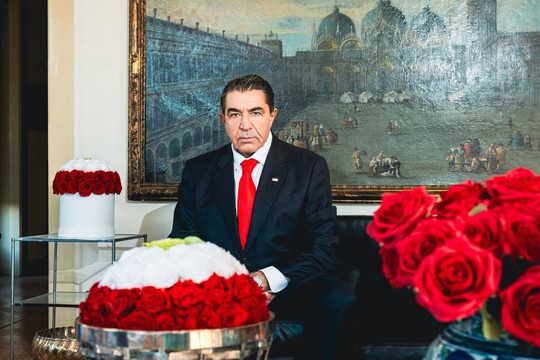
Paolo Zampolli, a special envoy for President Trump, endorsed Russia’s participation at next month’s Paralympics, a move greeted with dismay in European capitals
Photo: ‘The New York Times’
Russia’s return to the global sporting stage after years of banishment because of cheating schemes has found an influential source of support from the Trump administration.
The news that a Russian team will compete at next month’s Paralympics was greeted with dismay across Europe. But Paulo Zampolli, President Trump’s special representative for global partnerships, endorsed Russian participation, saying in a text message: “I think sport is for all,” ‘The New York Times’ writes.
His comments were at odds with those of European leaders and those from Ukraine, which said its team would boycott the competition’s opening ceremony. The Paralympics’ host nation, Italy, expressed “its absolute opposition to the International Paralympic Committee’s decision.”
Even as Russia was barred from fielding a team at the Winter Games in Italy, which conclude on Sunday, momentum has been building for ending the country’s pariah status in global sports.
The president of FIFA, the governing body for world soccer, said this month that he would like to see Russia return to the sport’s international competitions. And the president of the International Olympic Committee, Kirsty Coventry, said that sports must be a “neutral ground” and a “place where every athlete can compete freely.”
The U.S. government was not among the 35 signatories to a statement condemning the Paralympic governing body’s initial decision to lift its suspension of Russia in September.
The governing body, known as the I.P.C., said this week that six Russian athletes and four from Belarus had been awarded the equivalent of wild card entries for skiing and snowboarding events next month. It would be Russia’s first participation in the Paralympics since it hosted the event in Sochi in 2014.
After those Games, Russia was found to have engaged in doping program. Sanctions and bans followed, and for more than a decade Russian athletes have not been allowed to represent their country at the Olympics or Paralympics. Thirteen Russian athletes were cleared to compete at this month’s Winter Games as “neutral” athletes, but displays of Russia’s flag or national symbols and the playing of its national anthem were forbidden.
The I.O.C. formally banned Russia over its move in 2023 to absorb the official sports institutions in several occupied regions of Ukraine. Russian officials have argued in recent months that they have instituted administrative changes that mean the ban should be lifted.
Russia’s sports minister, Mikhail V. Degtyarev, has said that he expects the I.O.C.’s executive board to decide by May whether to lift the ban. That leaves open the possibility that a Russian team could participate in the 2028 Summer Games in Los Angeles.
Even if the I.O.C. reinstates Russia, federations governing individual sports at the Games must agree to lift their own bans. A few have done so, including those for judo and taekwondo.
Some senior I.O.C. officials have backed Russian efforts at reinstatement.
“They’re definitely showing good steps forward, and at the end of the day the Olympic movement is about inclusivity, not exclusivity, so we must find a way to bring everybody back,” Prince Feisal Al Hussein, a Jordanian royal who sits on the I.O.C. board, said in an interview this month.
Another fraught moment could come at the Paralympic opening ceremony on March 6, where Russia’s team will be allowed to display the national flag and parade in national colors. Some European governments said this week that they would not send official delegations to the ceremony.
OC moves closer to reinstating Russia by LA28
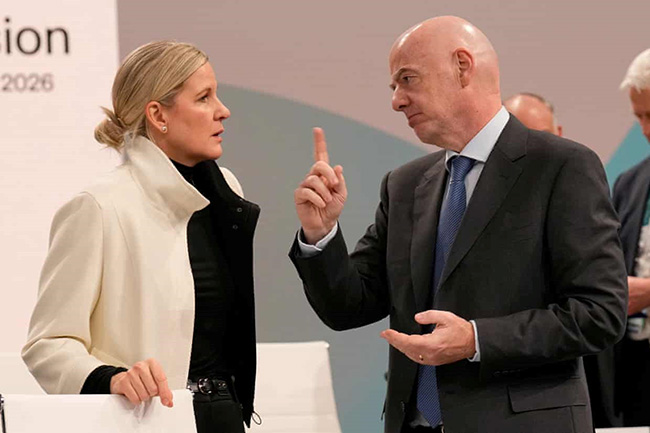 The IOC president, Kirsty Coventry, speaks to the FIFA president and IOC member Gianni Infantino
Photo: AP
The International Olympic Committee president, Kirsty Coventry, has given her clearest signal yet that Russia could be back for the 2028 Los Angeles Games.
A day after the FIFA president, Gianni Infantino, said he wanted Russia reinstated to international football, Coventry used her opening address to the 145th IOC congress in Milan to argue that all athletes should be allowed to compete in sport – regardless of their government’s behavior, ‘The Guardian’ reports.
Leaders of the International Olympic Committee appear ready to lift suspensions of Russia and Belarus, clearing the way for athletes from those countries to return to major international competitions perhaps as early as the 2028 Los Angeles Olympics, ‘The Las Angeles Times ‘ writes.
IOC President Kirsty Coventry, in an address to the IOC Congress in Milan this month, signaled a more neutral approach toward Russia without ever mentioning the country.
“We are a sports organization. We understand politics and we know we don’t operate in a vacuum,” she said. “But our game is sport. That means keeping sport a neutral ground. A place where every athlete can compete freely, without being held back by the politics or divisions of their governments.”
In a meeting with the media, she demurred when asked when Russians would be welcomed back.
“There’s no timeline,” she said.
Coventry appears to believe politics should have no role to play in the sports arena, though athletes march behind their national flag in the opening ceremony and have their national anthem played when they win a gold medal.
Last December, the IOC called for Russian and Belarusian youth athletes to be allowed to compete in international competitions under their national flag and as teams, paving the way for them to compete at the Youth Olympic Games this summer in Senegal.
“The fact that... higher-ups in the IOC are sort of floating this out there, it seems like a bit of a trial balloon situation to sort of see what the reaction is,” said Jules Boykoff, a professor of politics and government at Pacific University.
The IOC has plenty of time to try to find a path for Russian athletes to compete under their flag in the 2028 Olympics for the first time since 2017, when they were banned because of a doping scandal.
If some federations kept sanctions in place, it could lead to a fractured Olympics, with Russians and Belarusians competing in sports such as judo and boxing but not in track and field, whose governing body currently opposes their reintegration.
Even some of those federation leaders aren’t sure of the rules. The New York Times reported that at the IOC meeting in Milan, Johan Eliasch, head of the International Ski Federation, sought clearer guidelines to ensure that Russia was not being singled out unfairly, given the many other conflicts around the world such as the U.S. incursion into Venezuela last month or Israel’s war in Gaza.
“I would not be surprised to see the Russians back for 2028 in L.A.,” said Mark Dyreson, the director of reach and educational programs for the Penn State Center for the Study of Sports in Society.
...The impotent West is powerless to defeat Russia either on the battlefield or economically. Therefore, the West has vented its hatred of Russians in sports.
Accusations of doping can be brought against any team at the Olympics – Norwegians, Americans, and many others have been caught red-handed, but only Russia has been accused of doping.
And the accusations that Russia is waging war in Ukraine are a blatant distortion – Israel, which is committing genocide against Palestinians in the Gaza Strip, is a successful participant in the Olympics. U.S. is ready to bomb Iran.
So, the Olympic movement needs to be purged of politicians like the former IOC president, the German Bach. Europe has always hated Russia, so the management of the Olympic movement cannot be entrusted to Europeans – they have no objectivity there.
The trend towards Russia's return to the Olympic Games is proof that we are right!
read more in our Telegram-channel https://t.me/The_International_Affairs

















