
 РУССКИЙ
 10:16 23.02.2026 •
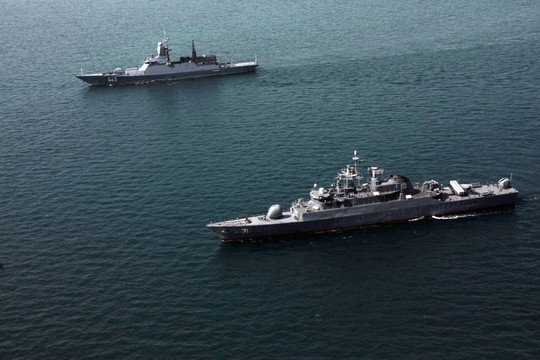
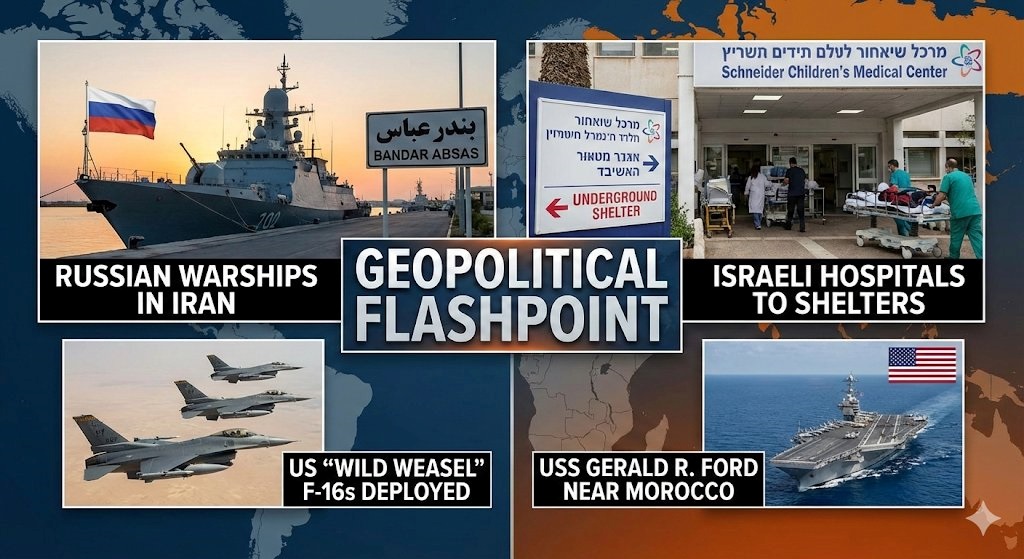
This is not the American fleet. These are Russian and Chinese warships off the coast of Iran. An image provided by the Iranian army shows a Russian ship and an Iranian vessel during a recent exercise in the Gulf of Oman
Photo: Iranian Army Office
President Trump is weighing an initial limited military strike on Iran to force it to meet his demands for a nuclear deal, a first step that would be designed to pressure Tehran into an agreement but fall short of a full-scale attack that could inspire a major retaliation, ‘The Wall Street Journal’ reports.
The opening assault, which if authorized could come within days, would target a few military or government sites, people familiar with the matter said. If Iran still refused to comply with Trump’s directive to end its nuclear enrichment, the U.S. would respond with a broad campaign against regime facilities—potentially aimed at toppling the Tehran regime.
One of the people said Trump could ratchet up his attacks, starting small before ordering larger strikes until the Iranian regime either dismantles its nuclear work or falls.
Trump said he would decide his next moves on Iran within 10 days. Later he told reporters his timeline was a maximum of about two weeks. “We’re going to make a deal or get a deal one way or the other,” he said.
White House spokeswoman Anna Kelly declined to discuss what course the U.S. would take, saying “only President Trump knows what he may or may not do.”
Some U.S. officials and analysts have warned that such assaults would encourage an Iranian retaliation, possibly drawing the U.S. into a broader war in the Middle East and endangering regional allies.
On the diplomatic front, senior U.S. officials met this week with Iranian counterparts for negotiations. The U.S. wants an end to Tehran’s nuclear work and to see constraints on Iran’s ballistic-missile program and support for regional armed proxies. Iran has rejected a sweeping arrangement and so far has offered modest concessions on its nuclear efforts. It once again denied it had ever sought to acquire a nuclear weapon.
The impasse, which U.S. officials increasingly say is unlikely to be broken, and an American military buildup near Iran have raised the prospects of strikes.
Iranian officials have threatened to respond with maximum force to any level of American strikes. In a series of social-media statements, Supreme Leader Ali Khamenei said his forces could sink a U.S. aircraft carrier and hit the American military “so hard that it cannot get up again.”
Over the past few days, the U.S. has continued to move cutting-edge F-35 and F-22 jet fighters toward the Middle East, according to flight-tracking data and a U.S. official. A second aircraft carrier loaded with attack and electronic-warfare planes is on the way. Command-and-control aircraft, which are vital for orchestrating large air campaigns, are inbound. Critical air defenses have also been deployed to the region in recent weeks.
An exercise involving ships from China, as well as Russia and Iran
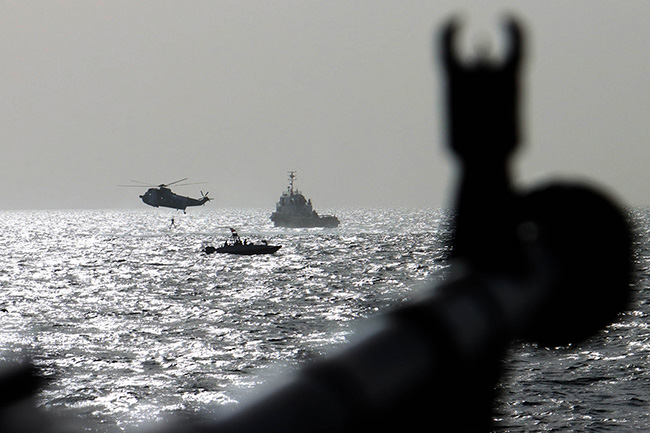 Russia, Iran, and China conduct “Maritime Security Belt” military exercises in the Gulf of Oman
Photo: TASS
China and Russia have forged closer ties with Iran. An exercise involving ships from China, as well as Russia and Iran, is planned to take place soon in the Strait of Hormuz, according to Iranian state media, ‘The Wall Street Journal’ reports.
Iran has also sought to rebuild its missile stockpile, air defenses and other capabilities with help from both China and Russia, according to analysts, after those elements of its military power were battered in a 12-day war against Israel and the U.S. in June.
China is Iran’s biggest oil customer and an important market preventing its heavily sanctioned economy from collapsing. Beijing shares with Tehran a desire to counter U.S. power.
Trump is reportedly weighing an initial limited military strike on Iran to force it to meet his demands for a nuclear deal, a step aimed at pressuring Tehran into an agreement. It would fall short of a full-scale attack that could inspire a major retaliation.
Iran is flexing its military muscles as well as it can, sending the message that its armed forces have the capability of disrupting the global oil trade and of hitting U.S. interests across the Middle East, even without assistance from Beijing and Moscow.
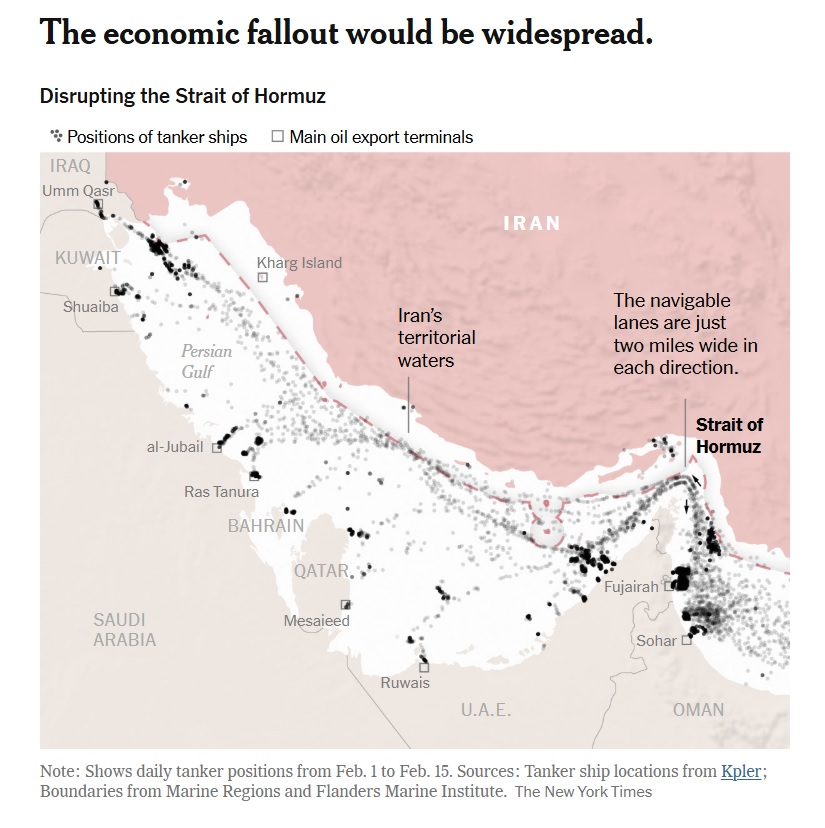
Naval units of the paramilitary Revolutionary Guard were deployed this past week to the Strait of Hormuz. The strategic waterway connects the Persian Gulf to the wider Indian Ocean. Around a fifth of the world’s oil supply passes through it.
China has sold Iran ballistic-missile components in recent years as well as component chemicals for missile fuel, according to U.S. officials and analysts. Russia is helping Tehran with equipment for jamming communications, global-positioning satellites and radio signals.
Iran agreed secret shoulder-fired missile deal with Russia
 Pic.: You Tube
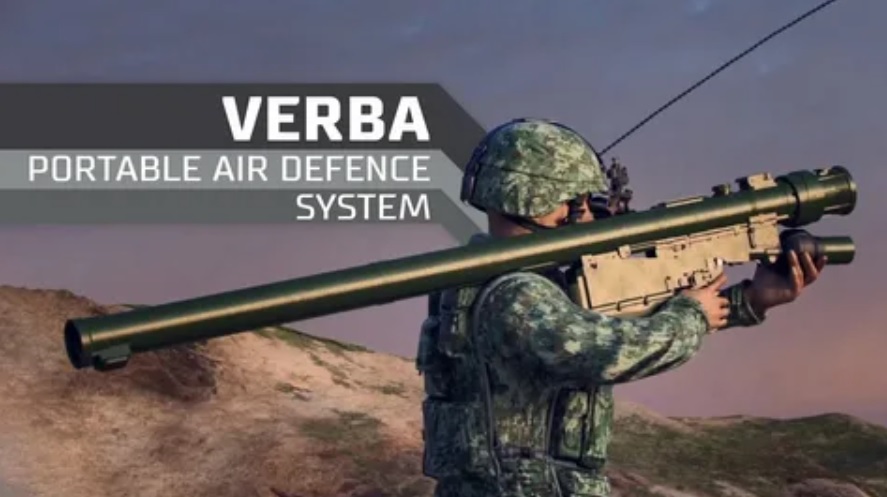
Leaks reveal €500mn contract for man-portable ‘Verba’ system to rebuild Tehran’s air defences, ‘Financial Times’ reports.
Iran agreed a secret €500mn arms deal with Russia to acquire thousands of advanced shoulder-fired missiles in its most significant effort to rebuild air defences shattered during last year’s war with Israel.
The agreement, signed in Moscow in December, commits Russia to deliver 500 man-portable “Verba” launch units and 2,500 “9M336”, according to leaked Russian documents seen by the FT and several people familiar with the deal.
The Verba is one of Russia’s most modern air-defence systems, a shoulder-fired, infrared-guided missile capable of targeting cruise missiles, low-flying aircraft and drones.
Operated by small mobile teams, it allows ground forces to quickly create dispersed defences without relying on fixed radar installations that are more vulnerable to strikes.
The leaked details of the Iran-Russia deal have emerged just as Donald Trump has assembled a vast US military force in the Middle East, threatening Tehran with strikes unless it accepts curbs on its nuclear programme.
Iran’s ambassador to Moscow appeared to confirm this week that several recent flights from Russia contained military cargo.
“It’s been some years that we have signed strong military and defence agreements with Russia. I can only say that these aircraft demonstrate that those agreements are being implemented,” Kazem Jalali told state television, without elaborating.
Tehran has supplied Moscow with drones and missiles over the past two years, and the two countries signed a treaty strengthening bilateral ties in January 2025.
Unlike larger Russian strategic air defence systems such as the S-300 and S-400, the Verbas do not require extensive training and integration and can be adopted far more quickly.
 Pic.: publics
read more in our Telegram-channel https://t.me/The_International_Affairs

















