РУССКИЙ
 9:38 31.05.2026 •
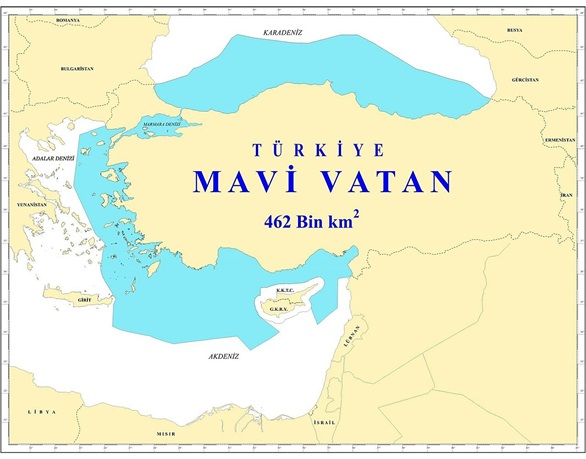
During a May 12 event organized by Ankara University’s National Center for Maritime Law (the main body providing expert advice on Turkey's maritime policy), it was announced that a bill on maritime jurisdiction zones would be submitted for parliamentary consideration in early June. This would create, for the first time in forty years, important preconditions for a unified framework for protecting Turkey's rights and interests in the Black, Aegean, and Mediterranean Seas. The main points of this draft document are the following: maintaining a 6-mile territorial water zone in the Aegean Sea; establishing a 12-mile zone in the Black Sea and the Eastern Mediterranean; and allowing the Turkish leader to declare "maritime zones with special status" (above all when it comes to fisheries, environmental protection, etc.) It is worth mentioning the fact that Turkey did not ratify the United Nations Convention on the Law of the Sea (UNCLOS), insisting on the “principle of equity, rather than physical equidistance,” which allows Ankara to put forward such initiatives without formally violating international legal norms.
Essentially, this is creating a situation where the "Blue Homeland" doctrine, previously an element of Turkish geopolitical thought, will be enshrined at the legislative level. This concept was initially outlined in 2006 by Admiral Ramazan Cem Gurdeniz during a symposium held at the Turkish Navy Command Center. Its main idea is to ensure Turkey's maritime superiority in the Eastern Mediterranean, the Persian Gulf, and the Red Sea by setting up naval bases throughout the region. The following three key aspects are critical to Turkey's maritime security:
- disagreements with Greece (and, by extension, the EU) over areas of Turkish maritime jurisdiction;
- the potential for an independent Kurdistan with free access to the Mediterranean;
- the future of the Turkish Republic of Northern Cyprus, with its geopolitical implications for Turkey itself.
At the time of its inception, the concept did not resonate with the country’s academic or political communities, who then considered its proponents as being opposed to the idea of "Turkish democratization." That being said, since 2015, the "Blue Homeland" has become the mainstay of Ankara’s policy of strengthening its maritime policy.
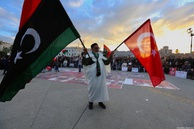
This doctrine found its most demonstrative practical manifestation in the 2019 Turkish-Libyan memorandum on maritime delimitation in the Mediterranean, according to which the maritime boundaries between the two Middle Eastern neighbors run through an area that ignores the maritime claims of Greek islands, including Crete. Also telling is the fact that since 2020, the Turkish Navy has been conducting large-scale military exercises dubbed as "Blue Homeland," which reached a whole new level this year, showcasing cutting-edge Turkish military equipment.
Most of the proponents of the ”Blue Homeland” concept have traditionally been viewed as anti-Western and adhering to Eurasian views. Nowadays, this concept is increasingly gaining traction, viewed by military and political leaders primarily as an effective instrument of bringing all relevant regulations into a single structure and further institutionalizing Turkey's maritime rights. "Now, geographic power is no less important than nuclear weapons," Admiral Gurdeniz commented on the news of the draft law. In a recent interview, he emphasized that while boasting the world's largest military machine, the United States was unable to achieve a decisive result either in the conflict with Iran or in its attempts to influence the emerging Eurasian balance. Ramazan Gurdeniz believes that geography has once again become a factor that "cannot be compensated for by aircraft carriers, sanctions, or financial might." He also believes that this offers a "direct historical opportunity" for Turkey: a country at the crossroads of the seas must realize that its main strength is not only its army, but also its geography.
There are several factors that such close attention to the "Blue Homeland" concept and its translation into legislation may be linked to. First, the current geopolitical turbulence in the Middle East makes it imperative to develop backup options, which, even if not accepted by all regional players (notably by Greece), still create a certain precedent and demonstrate Ankara's political will. Secondly, against the backcloth of extreme instability in energy flows and markets, Turkey is trying to dramatically reduce its dependence on foreign energy sources and become a net energy exporter. By legally securing the right to drill wherever it deems necessary, Ankara is effectively blocking attempts, particularly by Greece and Cyprus, to monopolize gas fields in the Eastern Mediterranean.
Thus, as aptly noted by domestic analysts, Turkey is "gathering" the Black Sea, the Straits, the Eastern Mediterranean, and the Aegean Nexus into a single maritime space, thereby demonstrating that overland corridors and maritime zones are becoming part of the overall trajectory of its influence. Finally, in the run-up to what may become a heated presidential race in 2028, the country’s ruling forces need to demonstrate a positive agenda on the international stage to expand their electoral support.
Overall, as Turkish observers rightly note, throughout its history, the Turkish Republic has prioritized its "land orientation," with the seas often considered as secondary strategic territories. During the Cold War, Turkey built its security system primarily to defend against the Soviet threat on NATO's southern flank. As for the maritime space, it was mainly intended for transportation, fisheries, and coastal security. However, with the growing role of waterways for energy transportation, offshore mineral extraction, data cable laying, etc., maritime energy infrastructure has gradually become a primary focus for Ankara, calling for a strategic-level response commensurate with ongoing changes in the global system. Thus, what is now publicly referred to as the "Blue Homeland Law" actually reflects the culmination of nearly half a century of changes in Turkish approaches to perceiving geopolitical struggles through the prism of political and legal means.
read more in our Telegram-channel https://t.me/The_International_Affairs