
 РУССКИЙ
 10:40 02.03.2026 •
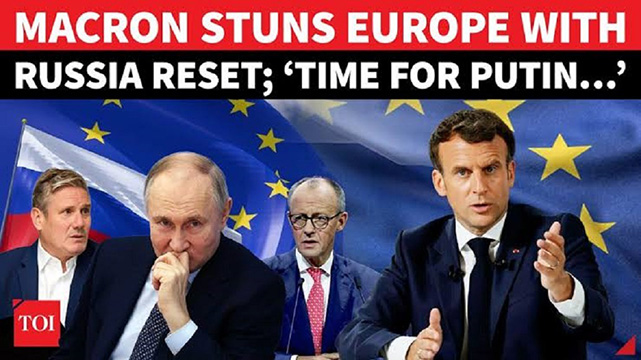
For months, European leaders have lamented being shut out of US-Russia negotiations over Ukraine’s future, insisting that a war fought on European soil cannot be settled without them. However, by refusing to talk to Moscow, they have in effect excluded themselves from the peace process. If Europe wants to be taken seriously and play a role, reopening a direct line to Moscow is the obvious place to start, ‘UnHerd’ stresses.
There have been indications since late last year that Russia has been more willing to participate in talks, while of course seeking peace on its own terms. These include US-brokered talks in Abu Dhabi and Geneva, as well as Vladimir Putin’s remarks that a US-Ukraine draft text “can be used as a basis for future agreements”.
Washington is already moving in this direction. This month, United States European Command announced that America and Russia had agreed to reestablish regular high-level military dialogue, which has been suspended since 2021, to avoid unintentional escalation.
If Washington can keep these channels open as a means of risk reduction, so can European allies. Given the existing state of relations between Russia and most European Nato members, the chances of an accidental clash are very high, and rebuilding confidence-building mechanisms is crucial to preventing this. Risks are heightened by the combination of routine close military encounters in the air, cross-border spillover incidents from the war (such as drone incursions into Poland), and the growing number of strikes on targets inside Russia using both drones and Western-supplied weapons.
Above all, such talks — if held privately — can be a way for both sides to state their real (as opposed to public) “red lines”. For example, France can tell Russia that if its “hybrid” operations in Europe lead to serious casualties, Nato countries will have no choice but to radically increase their support for Ukraine. The Kremlin can respond by saying that it will use force to protect Russian ships and cargoes in the Baltic from seizure, and will go to war if NATO attempts to cut off access to the exclave of Kaliningrad. Confidence-building is pointless if both sides take actions that destroy the other’s confidence.
It would be far better for any Franco-Russian talks to be conducted entirely behind closed doors rather than played out in public. They should not proceed in the name of the EU as a whole, but on behalf of those member states which are genuinely prepared to explore dialogue with Moscow. Macron has stressed that talks with Russia should take place “without too many interlocutors.”
A small group of European governments has already formed a “coalition of the willing” to provide security guarantees for Ukraine. Europe requires a similar configuration not only to engage Russia diplomatically, but to develop a coherent and credible proposal worth putting on the table.
read more in our Telegram-channel https://t.me/The_International_Affairs

















