
 РУССКИЙ
 10:01 08.02.2026 •
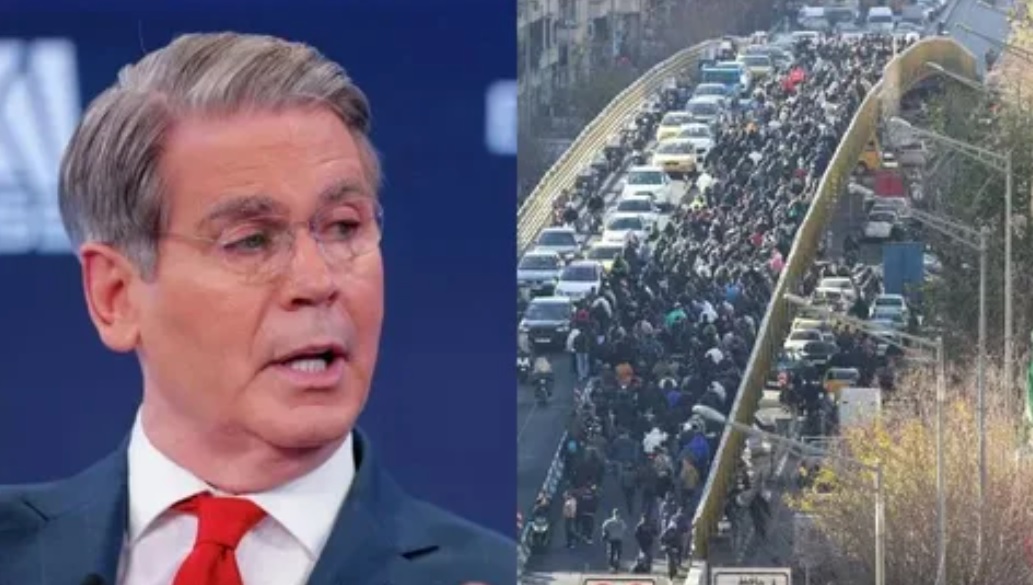 Scott Bessent and the Iranian unrest of January 2026
US Treasury Secretary Scott Bessent, testifying before the Senate Banking Committee, revealed the cause of the recent unrest in Iran:
“We created a dollar shortage in the country. And it happened quickly. I would say the climax came in December, when one of Iran's largest banks went bankrupt after a massive bank run. The central bank was forced to print money. The Iranian currency plummeted, inflation skyrocketed, and as a result, we see Iranians on the streets.”
US Treasury Secretary Scott Bessent told the Senate Banking Committee on Thursday that the Trump administration’s “maximum pressure campaign” against Iran was responsible for collapsing the country’s economy and sparking the protests and unrest that began at the end of December.
At the Treasury, what we have done is created a dollar shortage in the country… It came to a swift and, I would say, grand culmination in December, when one of the largest banks in Iran went under. There was a run on the bank,” Bessent said.
“The central bank had to print money, the Iranian currency went into free fall, inflation exploded, and hence we have seen the Iranian people out on the street,” he added.
Bessent said that he outlined his plan to destroy the Iranian economy in a speech he delivered at the Economic Club of New York in March 2025, where he said the goal was to “collapse [Iran’s] already buckling economy” and “make Iran broke again” by targeting its oil sales and efforts to get around US sanctions.
“Making Iran Broke Again will mark the beginning of our updated sanctions policy. Watch this space. If economic security is national security, the regime in Tehran will have neither,” Bessent said at the time.
Foreign Minister Araghchi: Iran will not negotiate over its missiles
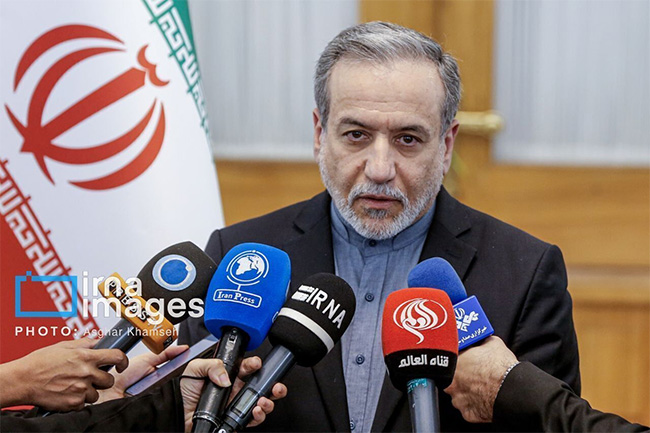 Foreign Minister Abbas Araghchi
Iranian Foreign Minister Abbas Araghchi says Iran will not negotiate over its missile program, describing it as a purely defensive matter.
Speaking in an interview with Al Jazeera, Araghchi said Iran’s recent talks with Washington marked “a good starting point,” but emphasized that there is still a long way ahead for confidence-building.
He underlined that the negotiations held a day earlier were indirect and limited exclusively to the nuclear issue.
“The issue of banning enrichment is not negotiable from Iran’s point of view,” the foreign minister said, adding that uranium enrichment is Iran’s right and must continue.
“They were not able to eliminate Iran’s capabilities in this field even through bombing,” he said.
At the same time, Araghchi said Iran is ready to reach a reliable agreement regarding enrichment.
Addressing Iran’s missile program, Araghchi reiterated, “Neither now nor in the future can negotiations be held over missiles – because this is a defensive issue.”
He also stressed that Iran’s nuclear file can only be resolved through negotiations.
The foreign minister also addressed Iran’s response to any potential US attack, saying, “If Iran is attacked, we will target US bases in the region.”
He made clear that Iran would not attack neighboring countries, drawing a clear distinction “between attacking bases and attacking neighboring states.”
Araghchi further noted that the possibility of war always exists, adding that Iran is prepared for such a scenario.
The new round of indirect nuclear talks between Iran and the US began on Friday morning in Muscat with the mediation of the Sultanate of Oman and concluded several hours later.
During the talks, the Iranian and US negotiating teams conveyed a set of views, considerations, and approaches to one another through Oman’s foreign minister.
Iran and Rope-a-Dope in Oman
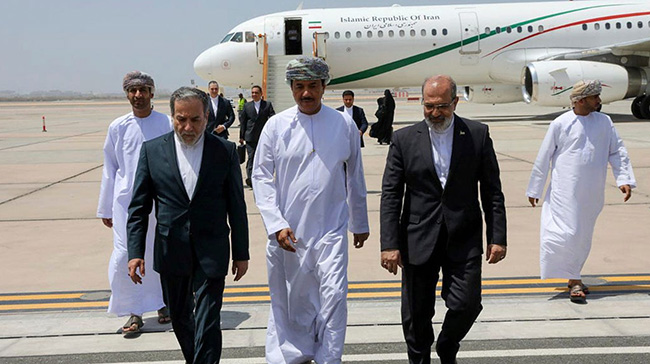 In this photo released by the Iranian Foreign Ministry, Iranian Foreign Minister Abbas Abbas Araghchi (C) heads to the venue for talks between Iran and the U.S. in Muscat, Oman, February 6, 2026
President Trump, notwithstanding his crude rhetoric about smashing Iran, wants peace, not war. His objective is to be a Peace President. So any final piece of paper, as worthless as it may be, so long as it can be called a Peace Deal, is good enough, writes Stephen Bryen, a former Deputy Under U.S. Secretary of Defense.
The great American prize fighter, Muhammad Ali, would have called Iran’s strategy rope-a-dope.” Rope-a-dope was a strategy in the boxing ring where Ali would lean against the ropes and let his opponent try and hit him while Ali covered his head and chest with his arms. Once the opponent tired, Ali would clonk him with a right uppercut to the jaw that would send him to the mat in agony.
Rope-a-dope is the Iranian strategy. Agree to nothing other than their “peaceful” intentions, and do that over weeks of “bargaining,” and then tell the Americans to go home. That’s why the Iranian foreign minister, Abbas Araghchi, called the talks in Oman “a good start.”
Indeed they were. First off, the Iranians made it clear they would not discuss anything other than the nuclear issue. There could be no talks about missiles, or about internal. Moreover, the Iranians told the American delegation they would not discuss their right to enrich uranium, or talk about transferring already enriched uranium out of the country.
President Putin had already told Araghchi that Moscow would accept Iranian uranium if that was part of any deal, though it would still belong to Iran.
So what was there to discuss about Iran’s nuclear program? Probably some revival of an even weaker version of the 2015 Joint Comprehensive Plan of Action (JCPOA). The JCPOA agreement was negotiated by the Obama administration and P5+1 powers to prevent Iran from developing nuclear weapons. Iran agreed to curb its uranium enrichment and allowed monitoring, in exchange for sanctions relief. P5+1 was the five permanent UN Security Council members (P5)—the United States, China, Russia, France, and the United Kingdom—plus Germany (+1)
If Iran gets around to tabling anything, it will be a JCPOA-like deal that does not include uranium enrichment or uranium stockpiles, rendering any deal meaningless. Along these lines, Iran might say they will never field a nuclear weapon or be the first to use a nuclear weapon, channeling Israel’s argument that they don’t have nuclear weapons and would never be the first to use what they allegedly don’t have.
But that will happen weeks into the future, after the US flotilla will have to go home, having been on station for too long.
Rope-a-dope.
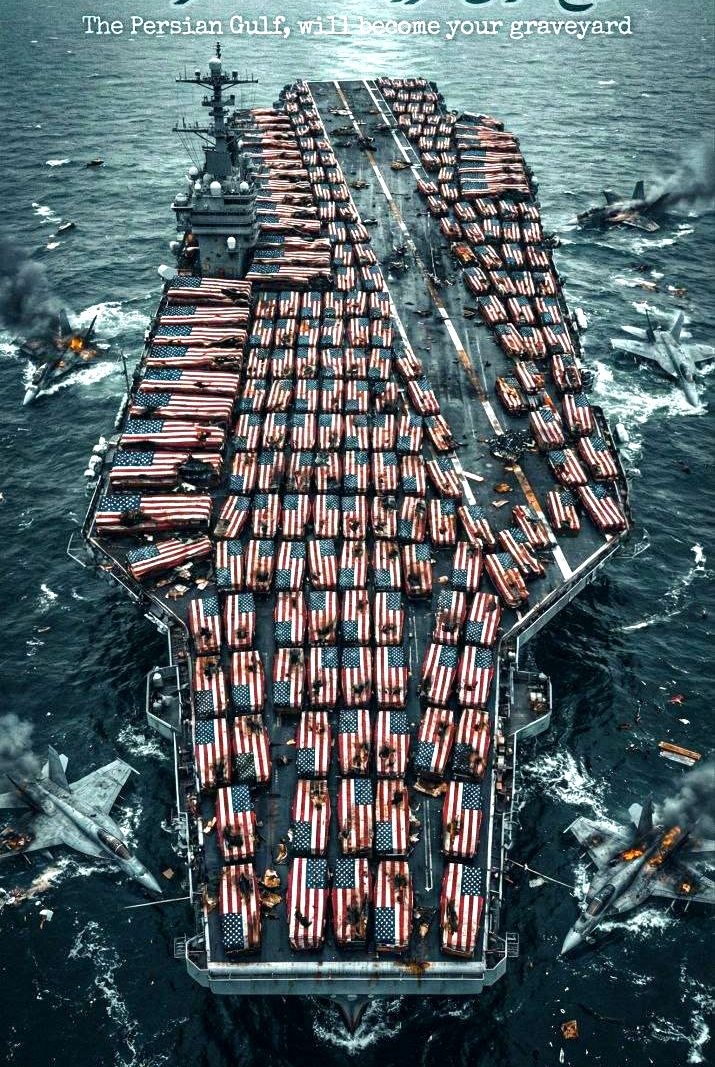
…We'll see whether the Americans will support the negotiations with Iran or whether Trump will decide to launch a military operation against Iran. In that case, the US will suffer losses of its soldiers and sailors.
Araghchi addressed Iran’s response to any potential US attack, saying, “If Iran is attacked, we will target US bases in the region.”
This image from social media shows the result of Iran's response to Trump's possible aggression.
For Trump, such an outcome of the war is pure impeachment:
read more in our Telegram-channel https://t.me/The_International_Affairs

















