
 РУССКИЙ
 10:40 19.03.2026 •
 Pic.: First Post
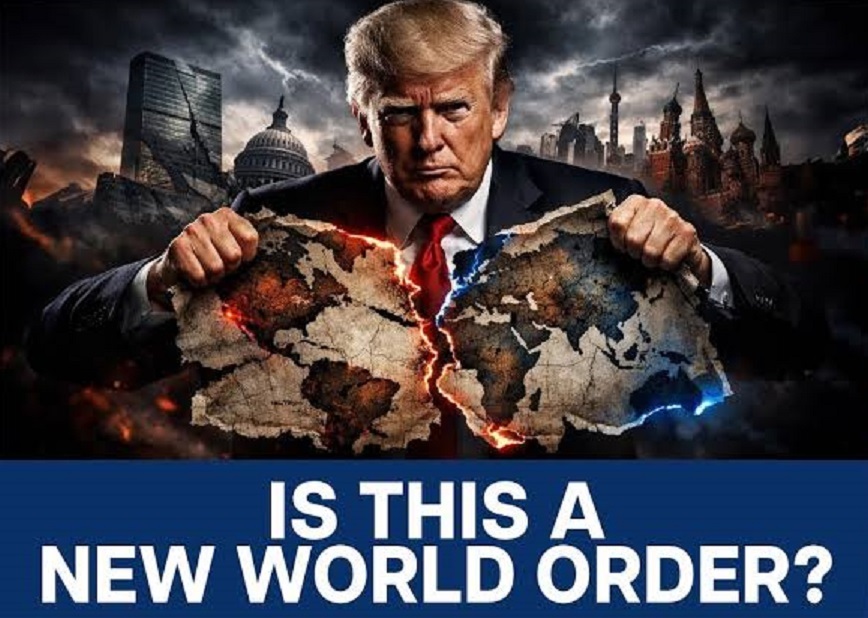
American hegemony is unraveling in real time as Iran strikes Gulf states and US security guarantees prove hollow, ‘Asia Times’ stresses.
The joint US-Israeli strike against Iran in February 2026 has triggered intense debate among scholars and policy observers. Military conflicts in West Asia are not unusual, but this particular episode may carry consequences far beyond the immediate battlefield.
Beginning in the 1970s, Washington offered security guarantees to Gulf monarchies such as Saudi Arabia, Qatar and the United Arab Emirates.
In return, these states agreed to price and trade oil primarily in US dollars. This arrangement, commonly known as the petrodollar system, reinforced the central role of the US dollar in global finance while ensuring reliable energy supplies.
The relationship functioned as a strategic bargain. Gulf states received security protection in a region marked by geopolitical rivalry, while the United States secured both energy stability and financial influence.
Over time, this arrangement helped sustain economic development across the Gulf and strengthened Washington’s position as the primary external power shaping regional security.
Iran, however, has long stood outside this system. After the 1979 Islamic Revolution, relations between Tehran and Washington deteriorated sharply. Iran positioned itself as a challenger to US influence and developed networks of regional alliances with actors such as Hezbollah, Hamas and the Houthis. These relationships deepened tensions across the region and reinforced the reliance of Gulf monarchies on US security guarantees.
For decades, American strategy in West Asia rested on three pillars: containing Iran, maintaining the petrodollar system and guaranteeing the security of Gulf partners. This framework allowed Washington to shape regional dynamics while sustaining its broader global leadership.
Why the regional order may be fracturing
Recent developments, however, suggest that the foundations of this system are weakening. The February 2026 strike on Iran has raised serious questions about both the credibility and sustainability of US leadership in the region.
One major concern relates to diplomatic trust. Reports indicate that negotiations between the US and Iran were ongoing in Oman when the first strike occurred. Launching a military attack during diplomatic engagement risks undermining confidence in negotiation processes. In international diplomacy, credibility remains a crucial resource, even among strategic rivals.
The legitimacy of the operation has also been widely debated. The strike reportedly lacked formal authorization from the US Congress and did not receive approval from the United Nations Security Council. Actions that bypass established international mechanisms inevitably raise questions about the rules governing the use of force and the consistency of the international order.
Growing vulnerabilities for U.S.
More importantly, the regional consequences have highlighted growing vulnerabilities. Iran’s retaliatory actions have targeted infrastructure and strategic locations associated with Gulf states. For these governments, the episode raises a fundamental question: if the US cannot shield them from regional escalation, can it still serve as a reliable security guarantor?
At the same time, the economic consequences of escalating conflict could extend far beyond the Middle East. Any disruption to the Strait of Hormuz, the narrow maritime passage through which a significant share of global oil shipments pass, would push energy prices sharply higher. Oil prices exceeding US$100 per barrel would generate inflationary pressures across the global economy, affecting both developed and emerging markets.
The broader concern is that the US risks undermining the very system that once sustained its leadership. The post-war order commanded legitimacy because it appeared to promote stability, predictable rules and economic growth. If Washington is increasingly perceived as a destabilizing rather than stabilizing force, the credibility of that leadership may gradually erode.
This dynamic is already visible in the growing interest among many countries in diversifying economic and financial systems. Initiatives within the BRICS grouping aimed at reducing reliance on US-dominated financial institutions reflect a broader search for alternatives to the existing order.
If the credibility of US security guarantees continues to erode in regions that once anchored its influence, the global order may gradually shift toward a more multipolar structure. Emerging powers, regional actors and new economic coalitions will increasingly shape international politics.
Whether the events of 2026 ultimately prove to be a turning point remains uncertain. But history suggests that moments of strategic overreach can accelerate deeper transformations.
For the US, the challenge will be whether it can adapt its leadership to a changing world — or risk witnessing the slow erosion and eventual passing of the very order it once built.
read more in our Telegram-channel https://t.me/The_International_Affairs

















