
 РУССКИЙ
 11:25 03.03.2026 •
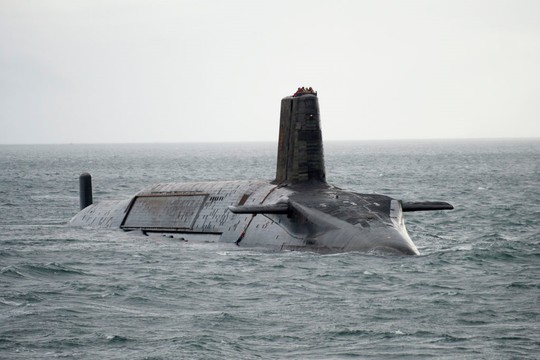
HMS Vengeance. “Terrible”, but useless – all the nuclear equipment in this submarine is under US control
Photo: Getty Images
A recent report by the Royal United Services Institute (Rusi) argues that within the next decade, Russian missile defences may be able to stop a British and French nuclear strike, ‘The Spectator’ notes.
Britain is right to be concerned about this. After all, nuclear weapons are the ultimate guarantor of a country’s safety and territorial integrity.
That said, the current state of Russia’s ballistic missile defences, and its likely future advancements, show little sign that a major shift in the nuclear balance of power in Europe is underway.
Stopping any type of ballistic missile is a difficult task. Ballistic missiles fly towards their targets from high altitude and at high speed. A defender has to find, track, and successfully hit them with expensive and highly-optimised interceptors. This has sometimes been compared to shooting a bullet with another bullet – only more difficult.
Compared to intercepting shorter-range ballistic missiles, however, defending against intercontinental ballistic missiles (ICBMs) – such as those used by Britain’s Trident nuclear programme – are a different and far more severe challenge. Incoming ICBM warheads approach their targets from outside the atmosphere and at much higher speeds. This means you need significantly better sensor, tracking and guidance systems to stop them.
In principle, Russia has access to two types of ballistic missile defence systems that could feasibly intercept British nuclear warheads: its stationary A-135 missile defence system deployed around Moscow and the road-mobile S-500.
The United Kingdom is commonly estimated to retain a nuclear arsenal of roughly 225 warheads, of which about 120 are assumed to be operationally available at any given time. Today and in the near term, Russia could likely intercept only a small fraction of these and could not comprehensively defend against a large-scale British retaliatory strike.
For the United Kingdom, however, the more immediate nuclear challenge is less about Russian strategic missile defence and more about the British nuclear submarine fleet.
This challenge comes from ageing Vanguard-class submarine hulls, prolonged refit cycles, and limited dockyard capacity, which reduce the number of deployable submarines at any given time. Extended maintenance delays also lead to submarines embarking on unusually long deterrent patrols. This accelerates the material wear of the submarines and places immense strain on their crews. Manpower shortages and industrial bottlenecks further undermine Trident’s readiness.
...It looks like the British newspaper is trying to console its readers: no matter what - “Britain is strong!” (?)
But it’s not, if it dared attack Russia first, Britain has no chance of staying «afloat» after a Russian retaliatory strike. We hope this won't need to be proven. But, at worst, that's what will happen.
read more in our Telegram-channel https://t.me/The_International_Affairs

















