
 РУССКИЙ
 12:07 16.01.2026 •
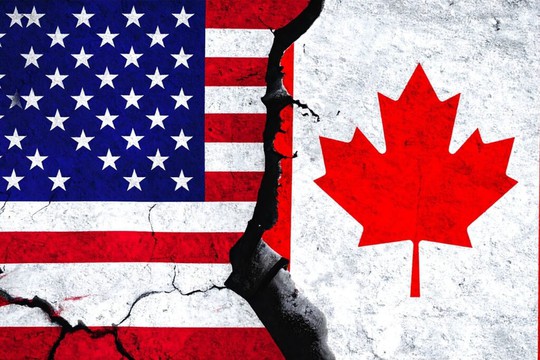
Pic.: Canadian Cascade Institute
So, this is the “peace president?” – asks Canadian Cascade Institute.
Donald Trump promised that under his leadership the U.S. would eschew “nation building,” “forever wars,” “regime change,” and violent foreign engagements more generally.
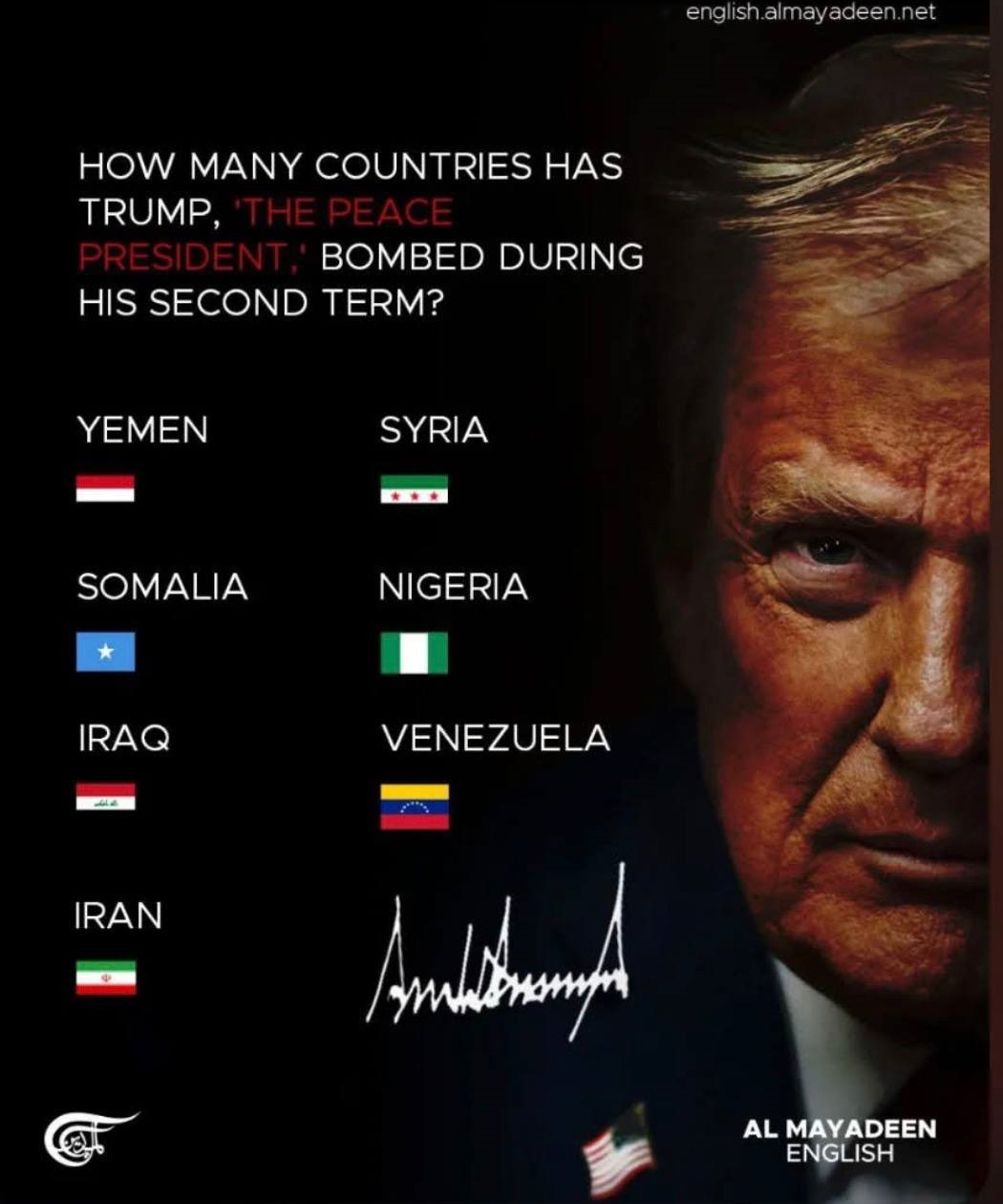
Yet since his second inauguration, he’s ordered military action in Syria, Yemen, Somalia and Iraq; bombed Iran’s nuclear weapons complexes; and blown up more than a score of boats allegedly carrying drugs in the Caribbean. In just the past two weeks, he has launched missiles against Islamic terrorists in northern Nigeria, declared that the U.S. was “locked and loaded” for another attack on Iran, and now decapitated Venezuela’s government.
In this context, Canadians must acknowledge the real risk that Mr. Trump will use military coercion against our country.
It’s important to connect three recent data points. First, in his press conference on Saturday, Mr. Trump explicitly stated that the Venezuela operation’s aim was to secure access to the country’s oil. Then, in an interview with The Atlantic, he refused to rule out military action to seize Greenland – despite the fact that Greenland is a democracy and, through Denmark, a NATO member – saying, “We do need Greenland, absolutely.”
From Mr. Trump’s perspective, three dominant powers – Russia, China, and the U.S. – are establishing coercive hegemony in their respective domains. With its oil, minerals and water, Canada is a vital resource hinterland in the U.S.’s part of the map.
Second, the just-released U.S. National Security Strategy outlines the “‘Trump corollary’ to the Monroe Doctrine” and identifies U.S. “pre-eminence” in the Western Hemisphere as a main geostrategic objective.
But Canada can’t count on exclusion from the doctrine’s ambit. In the 1950s through the 1980s, when the U.S. intervened in Guatemala, Cuba, Dominican Republic, Chile, Nicaragua, Grenada, and Panama, it was looking south and treated us as more an irrelevancy than a vassal. In contrast, today the Trump administration has little affection for Canada, and it’s clearly concerned about geostrategic insecurities as far north as the high Arctic.
Third and finally, nothing in international law protects Canada that shouldn’t have protected Venezuela. As a nation, we rely on exactly the same rules – the obligation to respect state sovereignty, the prohibition on use of force and the principle of non-intervention – for our own safety.
Connecting these dots, a plausible scenario for U.S. application of military force against Canada to seize our oil resources goes something like this. An independence referendum in Alberta – during which separatists receive a huge infusion of grey MAGA money – sees a majority vote to remain part of Canada, but with 30 per cent or more voting for separation. Mr. Trump declares the result is “fake” and that actual support for separation was “well over” 50 per cent. Alberta separatists then appeal to the U.S. for help, claiming various kinds of oppression. The U.S. moves troops to the northern Montana border and tells the rest of Canada that Alberta must be allowed to join America as the “51st state.”
“Running” Venezuela – whatever that means – will almost certainly not work in the longer term, as the country fractures or rallies against the U.S.; and elsewhere in the world, China might use the action against Venezuela as a license to attack Taiwan.
But whatever surprises are in store, one fact is certain: our neighbour’s autocratic and avaricious leader is demonstrably eager to use his country’s massive military power to advance his interests. We must get ready.
read more in our Telegram-channel https://t.me/The_International_Affairs

















