
 РУССКИЙ
 9:17 15.08.2026 •
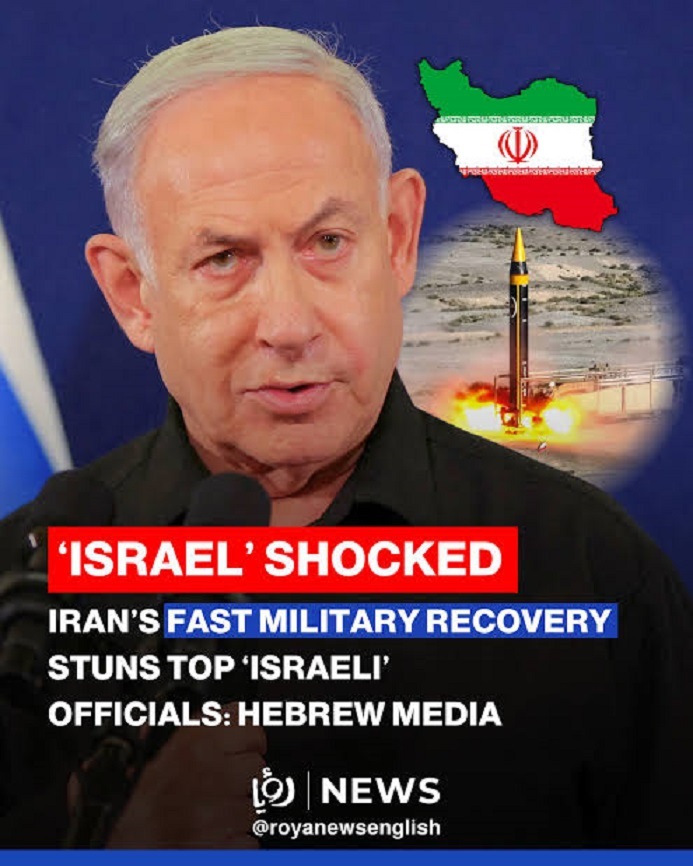
Israeli defense officials have been shocked by the speed of Iran’s recovery following the early 2026 war, The Jerusalem Post has learned.
This includes both IDF and Mossad officials, though the military was the lead evaluator of targeting and the harm from the targeting of the Islamic Republic’s defense sector.
Part of what is surprising in this story is that the IDF was already surprised by the Iranians in this area of rapid recovery twice: in October 2024 and January 2025.
After striking 20 critical ballistic missile and industrial military targets in Iran in October 2024, the IDF claimed that it had set back Iranian future missile production by a year or more.
By early 2025, the IDF had already seen the Iranians fully recover their high-speed ballistic missile production pace, so much so that the military moved up a possible fall 2025 attack to June 2025.
After attacking around 100 missile and industrial military targets in June 2025, the IDF said it had found the formula to truly set back Iran’s missile production by multiple years.
There was reason to believe this given that five times as many targets had been struck and that the IDF had dropped an exponentially larger volume of bombs.
Yet, once again, somehow, Iran figured out ways to recover high-speed missile production, again stunning the IDF.
What was estimated as around 1,300 missiles in June 2025 became 2,500 by February of this year.
Finally, the IDF and the US together said they achieved the goal during the around 40-day war in 2026.
Over 2,600 missile and industrial military targets were attacked, and both the US and Israel collectively attacked Iran around 30,000 times.
This was an increase of 26 times compared to 2025 and over 100 times compared to 2024.
IDF officials told the Post that every large and small part of the military industry had been shattered to pieces.
How could Iran restore its missile volume to 2,500 or to much higher threatening levels with $300 b. in damage to its military?
In other words, the lesson the IDF drew from each of the three rounds of attacks was not that Iran could find shortcuts which Israel might not anticipate to rapidly rebuild specific weapons threats, while leaving other parts of the country in squalor, but that a larger number of specific targets needed to be struck.
The Post has now independently confirmed statements by senior Iranian officials that it is now producing new weapons again at a much faster pace than expected.
read more in our Telegram-channel https://t.me/The_International_Affairs

















