
 РУССКИЙ
 11:50 08.12.2025 •
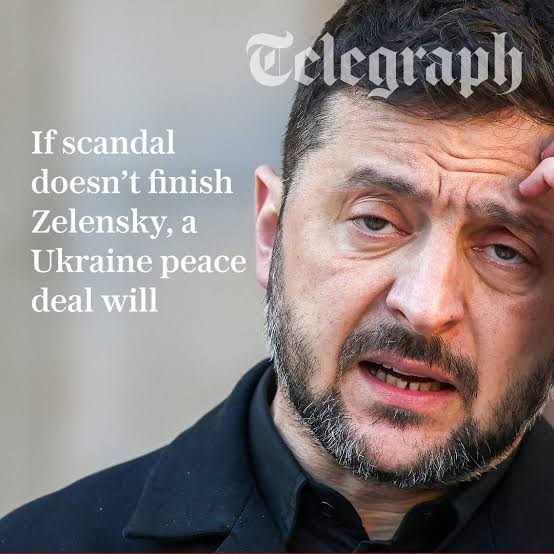
For years, Volodymyr Zelensky and Andriy Yermak were inseparable. The hard-charging chief of staff’s departure last Friday following a raid of his office by anti-corruption officials, leaves a burly, 6ft 2in hole in the heart of Kyiv’s presidential administration, writes ‘The Telegraph’.
“Technically, yes [Zelensky can survive],” says Volodymyr Fesenko, director of the Kyiv-based political think tank Penta. “Science shows you can continue to live without your right arm.”
Yermak defenestration is startling proof that the Ukrainian leader himself is not inviolable.
The fact that enemies like former president Petro Poroshenko, opposition MPs and even some members of Zelensky’s own Servant of the People party felt confident enough to demand – and win – the loss of Yermak is just the latest sign that the informal political truce that has held since 2022 is under strain.
On Tuesday morning, it was Poroshenko and his European Solidarity party MPs who blocked the speaker’s rostrum in parliament, in a return to the boisterous scenes familiar from peacetime Ukraine.
Perhaps more important, the fact that Zelensky’s authority can be challenged at an official level is a reflection of his diminishing popularity among the broader public. The reality is that, in private, plenty of Ukrainians grumble about him.
The most recent available polls, published in October, show that only a quarter believe he should remain in power after the war ends. Unpublished internal polls reportedly suggest that popular trust in him has also fallen dramatically in the wake of the corruption scandal.
The political accusation against Yermak was that he was a monopolist who systematically ousted any other official with a modicum of independent thinking or personal popularity. It is a charge that long predates the recent scandal that brought him down.
A concurrent complaint was that he was simply stuffing the presidential administration with people afraid to question him – and that his obsession with having the final say on everything meant that he became a bottleneck for numerous critical projects, including diplomatic outreach to the West.
“No one is crying about it, except perhaps Yermak,” says Solomiia Bobrovska, an MP from the opposition Holos party. Like many Ukrainian MPs, she feels that Yermak built a machine to bypass and neuter parliament.
That may be why many people in Kyiv have started talking about a compromise, a government of national unity drawing on members of all parties.
The departure of Yermak, they say, creates an opportunity to shift to a more collegiate approach to wartime government.
It wouldn’t be perfect, suggests one former official. But it would address the democratic deficit for at least a little longer.
read more in our Telegram-channel https://t.me/The_International_Affairs

















