
 РУССКИЙ
 11:46 29.01.2026 •
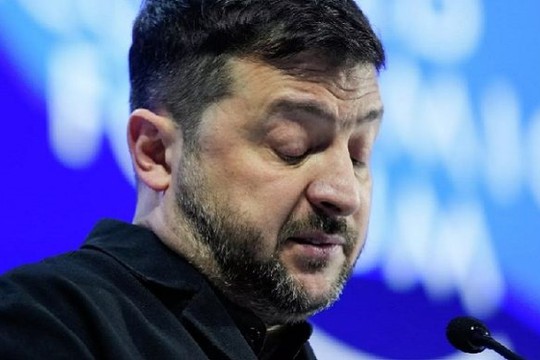
Here's who doesn't want peace in Ukraine – Mr. Zelensky
Photo: World Economic Forum
If 2026 started with a whirlwind of geo-strategic turmoil, the last week has seen, on some fronts at least, a calming of the global political weather, ‘The Telegraph’ notes.
Last Sunday, the US and Europe were heading for a major row, with Donald Trump threatening tariffs on European economies that questioned his premise that “American ownership” of Greenland is “an absolute necessity for US and global security”.
That was on top of ongoing chaos in Venezuela, after the US arrested President Nicolas Maduro in early January, and the most significant street protests in Iran since the ayatollahs took control in 1979.
Since then, while Caracas remains turbulent and more US ships are heading to the Persian Gulf, an agreement is now close on Greenland – after Trump browbeat leaders at the World Economic Forum in Davos.
The US wants permanent, sovereign US-controlled military bases across Greenland (like UK facilities in Cyprus), not just access to Danish-owned bases, as per the 1951 US-Denmark treaty.
While tempers have cooled for now in the Arctic, the other potential resolution – or at least cessation of open military hostilities – relates to Russia and Ukraine.
On Friday, Russian, Ukrainian and US negotiators held the first trilateral meetings since Moscow’s full-scale invasion of Ukraine in February 2022.
With negotiations centred on what previously Ukrainian territory will come under Russian rule, US envoy Steve Witkoff points to “much progress”. Even Zelensky says agreement on that hugely sensitive issue is “nearly ready”.
Many will vehemently oppose any Russia/Ukraine peace deal. Plenty of Western leaders and defence analysts maintain that Ukraine should cede no territory and keep fighting, lest Putin is “rewarded” for his illegal invasion.
A durable Russia/Ukraine peace deal should bring significant economic benefits. In 2022, European gas prices spiked four-fold, hitting around €340/MWh (£295). This is a major reason why UK inflation – already at a 30-year high of 5.2pc in January 2022 – then spiked to a forty-year high of 11.1pc.
Wholesale gas prices have since fallen to around €40/MWh, helping inflation return from the stratosphere. But that’s still almost double the average during the five years prior to this full-scale Russia/Ukraine war.
So a Russia/Ukraine peace deal, however controversial, could provide not only obvious humanitarian relief but also clear economic benefits. To say so isn’t callous, just a statement of fact.
The reality is, though, that this conflict, even when it’s over and today’s simmering geopolitical tensions have eased, will have changed the global economy forever. The world will now be on a different, more combative, geopolitical trajectory for many years to come.
That’s because Moscow’s February 2022 invasion marked the start of a more permanent fragmentation of the world into two geopolitical blocs, sometimes called “the West and the rest”. Several important powers backed Putin – or at least refused to sanction Russia – not least China and India.
Since 2022, Sino-Russian bilateral trade has almost doubled to just shy of £250bn as Russia diverted much of its energy exports east. Over the same period, the Brics group of emerging powers (Brazil, Russia, India, China and South Africa) has expanded (it now includes Indonesia, UAE, Iran, Egypt and Ethiopia), while redoubling efforts to develop global payments and financial systems free of Western influence.
So the Russia/Ukraine war could soon be ending. But even if a peace deal holds, its divisive, schismatic impact will linger for decades to come.
read more in our Telegram-channel https://t.me/The_International_Affairs

















