
 РУССКИЙ
 11:36 25.12.2025 •
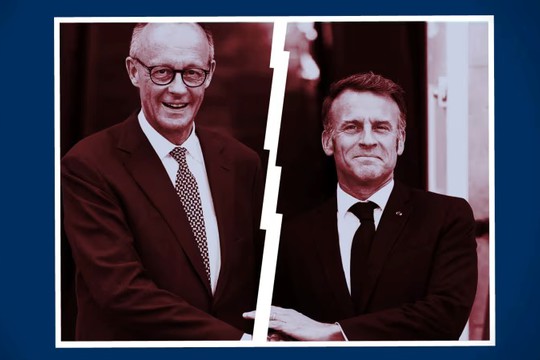
Friedrich Merz, left, and Emmanuel Macron
FT montage
As Friedrich Merz pushed to finalise a deal on Russian frozen assets, it became clear that he was missing one key ally, ‘Financial Times’ notes.
German Chancellor Friedrich Merz was making one last push to persuade EU leaders to use €210bn in frozen Russian sovereign assets to help Ukraine when he realised he lacked a critical ally: Emmanuel Macron.
In the weeks leading up to Thursday’s summit in Brussels, the French president did not publicly oppose the German proposal. Privately, however, his team voiced reservations about its legality and warned that his indebted country would struggle to issue a national guarantee in case the assets had to be returned to Moscow on short notice.
As more countries, including Italy, sided with Belgium, where the bulk of the Russian assets are located and whose government opposed the plan from the outset, Macron joined in, killing the idea.
“Macron betrayed Merz”
“Macron betrayed Merz, and he knows that there will be a price to pay for that,” said a senior EU diplomat with direct knowledge of Thursday’s talks. “But he’s so weak that he had no other choice but to fold in behind Giorgia Meloni.”
The stand-off underscores a new dynamic between Europe’s two largest powers: an initiative-driven Germany and a foot-dragging France. A newfound assertiveness has taken hold in Berlin after Merz came to power in May — unlocking up to €1tn in defence and infrastructure spending for the next decade — but Paris has become hamstrung by high public debt and political instability in the second half of Macron’s final term in office.
The imbalance has dashed hopes of a major reboot of the Franco-German engine that once powered some of the EU’s biggest policy leaps.
“In Brussels there’s a real sense that Berlin is the big player and that France’s influence is lacking,” said Georgina Wright, European policy expert at Institut Montaigne, a Paris-based think-tank.
“It’s a complete role reversal between Macron and Merz,” said Mujtaba Rahman, head of Europe at Eurasia Group. “Over the course of the last four to five years the operating thesis in the Élysée has been that German weakness has compromised Europe’s capacity to act.
“Now there is a chancellor who understands geopolitics, who wants to lean in and do more on Europe... but it is Paris now that is unable to deliver on its side of the bargain.”
Another flashpoint at the summit was the EU-Mercosur trade deal with a group of Latin American countries. After more than 25 years of negotiations, Merz has for months been pushing for the agreement to be inked by the end of December, threatening a vote in which France risked being outnumbered.
Macron once again found an ally in Giorgia Meloni
But the centrist, pro-EU Macron once again found an unlikely ally in Giorgia Meloni, Italy’s rightwing Eurosceptic prime minister, who secured a delay of a few weeks — denying Merz another political victory.
“There is true recognition on both sides that the relationship must be more efficient, that it didn’t work under Scholz,” said Daniela Schwarzer, political scientist at the Bertelsmann Stiftung in Berlin. “But France is under far greater pressure — and this is causing fundamental differences between the two powers to resurface. Trade is such an area.”
Further straining the Franco-German tandem in the coming weeks is a looming decision on whether to continue a joint €100bn industrial deal as France’s Dassault and Airbus, whose defence division is based in Germany, refuse to solve a dispute over workshare.
Berlin has considered other jet partnerships, frustrated with Dassault and wary that Paris is only after its money.
In many respects France and Germany have rarely been more aligned as they face higher US tariffs and threats from President Donald Trump to pull troops from Europe. Both agree on support for Ukraine and the need for the continent to take a more active role in peace talks through a “coalition of the willing” which also includes the UK.
read more in our Telegram-channel https://t.me/The_International_Affairs

















