РУССКИЙ
 10:47 17.03.2026 •
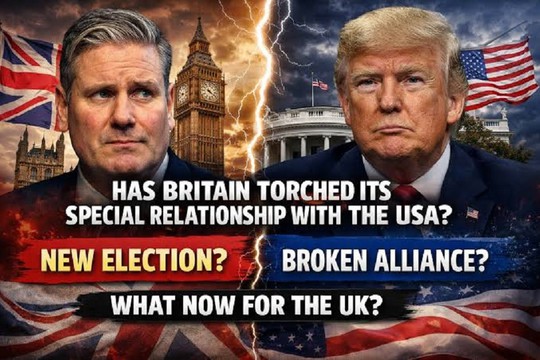
Pic.: Facebook
As Keir Starmer tries to hold on to power, he has pitched himself as the anti-Trump tribune. The flattery with which Starmer first tried to woo Trump has been cast aside. This approach was based on a misunderstanding of the Maga administration and the realities of the US-UK relationship. Lyrical letters cannot subdue Trump’s capriciousness, ‘New Statesman’ notes.
The U.S. president called Starmer a “loser” and “no Churchill”
One of Britain’s roles used to be to provide a multilateralist sheen to American aggression. In Trump’s world, that has been made redundant.
On 4 March, the PM told parliament that “hanging on to President Trump’s latest words is not the special relationship”. In return, the president called Starmer a “loser” and “no Churchill”, and said Britain was a “once great ally”. The principals, as civil servants call their bosses, were trading barbs.
British foreign policy is now shaped by three overlapping forces: politicians in Westminster and Washington; communications between the British and American deep states; and, more startlingly, the global nationalist hard right. While Starmer tries to distance himself from this war in Westminster, the transatlantic deep state is working to repair trust between the two nations. At the same time, Nigel Farage and other opposition politicians flout procedure and act as independent emissaries to the White House.
British officials talk about the special relationship as if it is a family heirloom. As the war began, protecting this antique meant smoothing the anger in the Trump administration at the UK government’s initial refusal to block the use of British bases.
“We are behaving as though we are in a pre-Trumpian world”
The government’s legalistic approach, driven by Starmer and his Attorney General, Richard Hermer, defied Washington’s expectation that “the Brits” will support them without pause. In an age when the US’s leader no longer believes in international law, the UK is led by a man for whom international law forms the core of his politics. Starmer has not justified Britain’s response in terms of national interest; he is governing by legal opinion. This is alien in Trumpland.
“We are behaving as though we are in a pre-Trumpian world,” the former head of the Foreign Office, Simon McDonald, told me. “The American separation from Europe has been underway for a long time and has been given a huge shove by Trump,” he continued. In the medium term, he thinks Britain must “make a much bigger offer to Brussels”. But in the short term, “Everything is about the US. This is the unavoidable fact of the day.”
Part of what Starmer and his team did not understand when they left the White House last February was that the Maga movement believes Britain is a sinking nation, one overwhelmed by “third-world” immigration and vulnerable to woke institutions. Maga looks at the UK as a country that has become so powerless in the face of its internal malaise that it can no longer be a reliable ally.
US will continue to engage with Britain, but in a manner akin to how Germany and France are treated
Americans’ reverence for British culture was once as much a glue as joint military operations. Today, even a moderate appreciation for British literature feels anachronistic among Washington’s current political milieu. London no longer captivates the Washington right-wing foreign policy elite in a way that it once did. “For a younger generation the Gulf is what London used to be,” one administration official told.
“Japan, say, has a clear constituency politically in the US,” they continued. “Heck, even El Salvador does because [President Nayib] Bukele has created a brand. India may be divisive but it resonates. What is the UK’s constituency?” They said the US will continue to engage with Britain, but in a manner akin to how Germany and France are treated.
Some British officials still think they only need to preserve the relationship long enough for the Trumpian era to pass. “It’s not impossible that in 2028 there’s a government that says, ‘We’re glad you didn’t join this,’” one said. But that is to misunderstand the ambivalence, and occasional hostility, among Democrats as well. I once attended a dinner party in Georgetown with foreign policy types and mentioned the British position on the Middle East, causing one guest to mutter: “Colonialists.” In her book 107 Days, Kamala Harris, who has Indian heritage, recounts how she and Joe Biden, who has Irish heritage, bonded over jibes about British colonialism. Matt Duss, who was Bernie Sanders’ foreign policy adviser and went to last month’s Munich Security Conference with Alexandria Ocasio-Cortez, gave no credit to Starmer for his supposedly independent position. “An insult to empty suits,” was how he described Starmer to me.
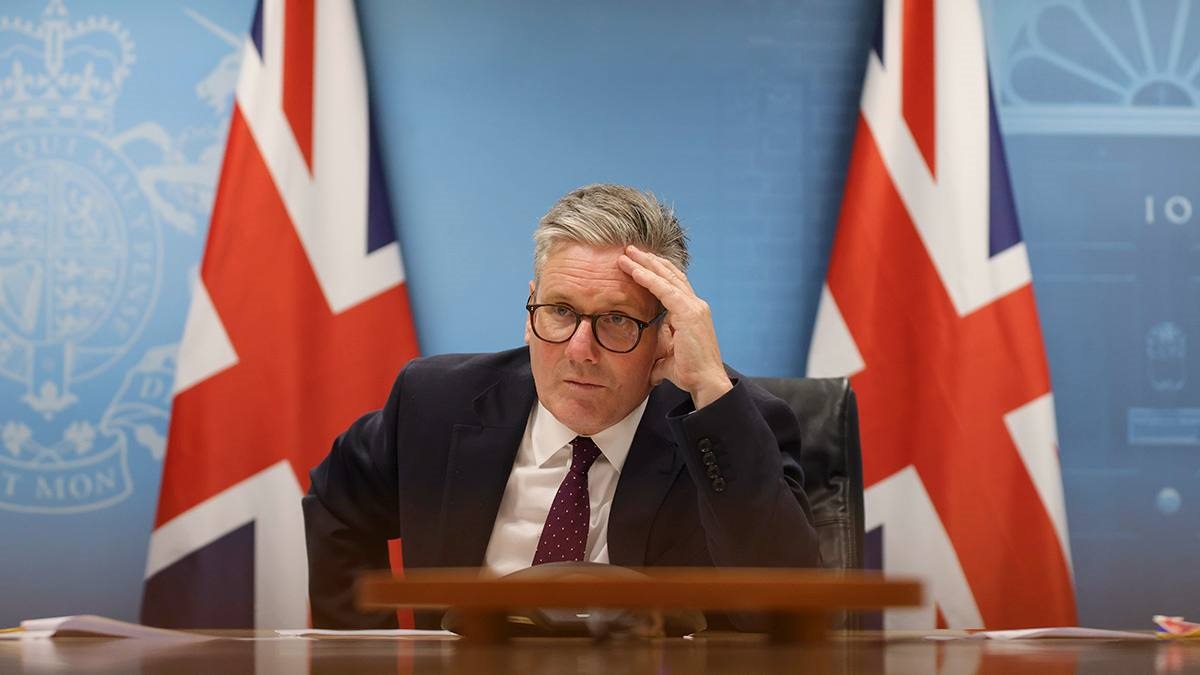 Starmer is at a loss
Photo: Reuters
Britain is an impotent ally and America a dangerous and unstable one
On 9 March, Starmer and Trump spoke to each other for the first time since their spat erupted. But the relationship will not be as amicable as it once was. The lurch is towards the UK’s alienation. This year has so far shown the wrath with which Trump’s America treats other countries, whether through its designs on Greenland or plucking Nicolás Maduro from Caracas. The usual order of things will not return.
The war in Iran proves this. For both sides of the Atlantic, the war has exposed a truth that cuts at the heart of the “special relationship”: that Britain is an impotent ally and America a dangerous and unstable one.
read more in our Telegram-channel https://t.me/The_International_Affairs