
 РУССКИЙ
 10:26 21.03.2026 •
On August 13, 1961, the Berlin Wall was erected, becoming one of the most prominent symbols of the Cold War. Its concrete form and barbed wire embodied the political division that governed the world for decades. The wall stood until November 9, 1989, when it collapsed in a historic moment that changed the map of the international order ‘Oman Daily’ reminds.
It is essential to recall this symbol as we follow the developments the world is witnessing today, foremost among them the ongoing Zionist-American war on Iran, which brings us back to an old question in a new form: Are the features of a phase resembling, even partially, the one the world experienced during the Cold War, taking shape in international politics?
During those years, the name of the Berlin Wall frequently appeared in the news and political books we read. For us, it wasn't just a wall dividing a German city and separating the Eastern and Western blocs; it was a symbol of the world order. The wall underscored a political reality far larger than Berlin itself, a world governed by a clear state of international polarization supported by a vast network of military, political, and economic alliances. When the Berlin Wall was erected, dividing Germany into East and West Germany, the level of international conflict was high and nearing its peak. Over time, the Wall became a testament to the nature of the international system at that time, its existence signifying that global politics operated within a clearly defined bipolar environment.
In the three decades following the end of the Cold War, the international landscape was never the same. China's remarkable economic rise and Russia's regained influence in several international arenas, such as security and energy issues, have given rise to the beginnings of a new international order, distinct from that which followed the end of the Cold War.
Any major conflict in the region often has repercussions that extend far beyond the borders
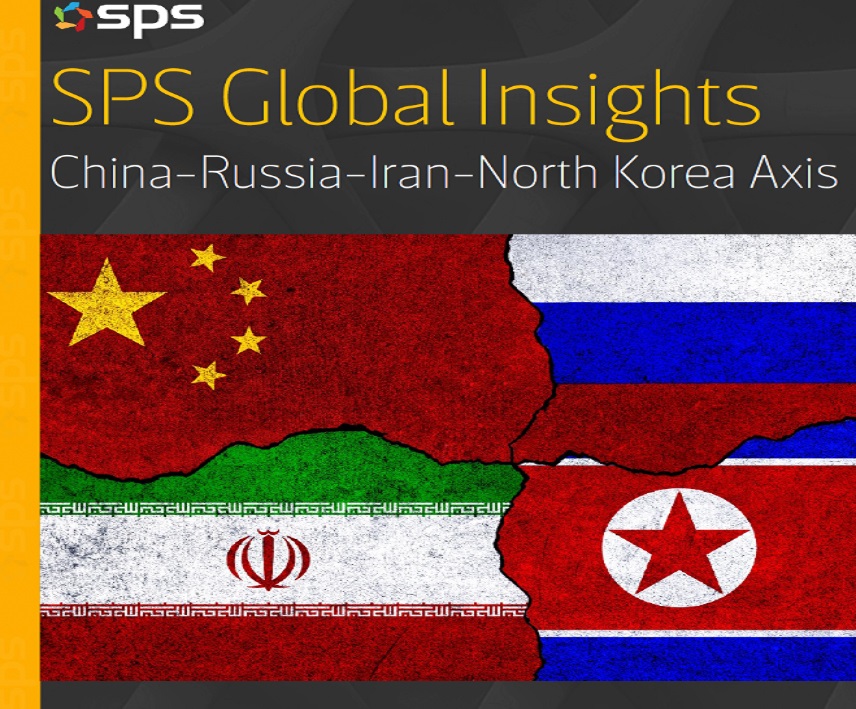
Within this broader context, the current Zionist-American war on Iran acquires particular significance. The events surrounding this war cannot be understood as a limited regional conflict, especially after Iranian Foreign Minister Abbas Araqchi's statements earlier this week, in which he said that Russia and China support Iran politically, and in other areas as well, and that military cooperation between Tehran and Moscow is "no secret." Media reports, including one published by the New York Post, indicated Araqchi's confirmation that "China and Russia are providing Iran with various forms of military support in its legitimate self-defense."
Indeed, such statements reveal that the war has become intertwined with a wider network of complex international calculations. This connection becomes even more important when considering the geographical and political location of the region, which still holds a pivotal position in global energy equations and international trade.
Therefore, any major conflict in the region often has repercussions that extend far beyond the borders of the directly involved countries. Iran itself lies at the heart of this geopolitical landscape. It is part of a region containing one of the world's largest oil and gas reserves and is located near sensitive maritime chokepoints such as the Strait of Hormuz, through which a significant portion of global energy trade passes. As Kaplan states in the aforementioned book, "It is the axis of the Middle East, just as the Middle East is the axis of Africa and Asia."
The transformations the international system
The ongoing war cannot be separated from the broader context of transformations the international system has been undergoing for over a decade. Global economic crises and escalating trade tensions between major powers have fueled conflict among them in several strategic areas. As this conflict intensifies — particularly in the field of advanced technology — the economy has become a key element of power in international politics. Simultaneously, the media is no longer merely a conduit for events but has become part of the environment in which these conflicts are portrayed.
These developments suggest that the international system is undergoing a clear shift in the balance of power among several major states. At such historical junctures, regional crises often become focal points revealing the trends of transformation in global politics. The ongoing war surrounding Iran may represent one such moment, prompting some analysts to the discussion revolves around the features of a new international alignment, particularly in light of the rapprochement between Russia, China, and Iran. Some researchers have described this rapprochement as a form of "geopolitical axes" gradually forming in opposition to the West.
The history does not repeat itself
Invoking the image of the Berlin Wall today is not so much about nostalgia as it is an attempt to understand the nature of the transformations underway in international politics. While history does not repeat itself, the world after this war will not be the same as before, and will witness profound changes in the distribution of economic, technological, and strategic power.
Therefore, the question remains: Are we witnessing the beginning of a new phase of international alignment? Perhaps a concrete wall will not appear on Iran's western border separating East and West, as happened in Berlin more than 65 years ago, but the fault lines and divisions in international politics may reappear in other parts of the world, and perhaps one of them will be in Iran's vicinity this time.
read more in our Telegram-channel https://t.me/The_International_Affairs

















