РУССКИЙ
 10:23 13.03.2026 •
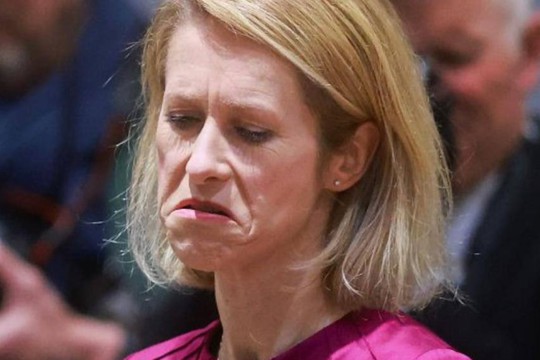
Kaja Kallas, a High Representative of the European Union for Foreign Affairs and Security Policy – the author of Europe's bad foreign policy
Photo: Press.lv
European reluctance to condemn the Israeli-American intervention in Iran flies in the face of the continent's values. No one can believe that Benjamin Netanyahu and Donald Trump's goal is to defend the interests of the Iranian people, ‘Le Monde’ stresses.
The phrase was never uttered, as if the term had vanished from the vocabulary of 21st-century geopolitics, relegated to a useless relic. Invited to Washington on Tuesday, March 3, German Chancellor Friedrich Merz did not mention international law at any point before his host, Donald Trump. The war that the US president had waged for three days against Iran, hand in hand with Israel, was trampling on the rules built since the end of World War II.
Decided behind closed doors by the American billionaire and Israeli Prime Minister Benjamin Netanyahu under so-called "preventive" logic, Operation Epic Fury violated the United Nations Charter. Yet in the Oval Office, Merz remained silent. This was "not the moment to lecture our partners and allies," because Berlin shared "many of their objectives" faced with an Iranian regime "developing nuclear weapons and brutally oppressing its people," the German leader explained to the press.
That same day, in a solemn address, Emmanuel Macron referred to international law being trampled on, which prevented France "from approving" the Israeli-American operation. But the French president did not condemn the intervention. "History never mourns the executioners," Macron said. The United Kingdom adopted the same stance: "Neither for nor against." Spanish Prime Minister Pedro Sanchez was the only one to rail against the "failure of international law."
Moral considerations have eclipsed international law. "We are fighting here the bad guys. We are the good guys," Netanyahu summed up on Fox News on March 2.
'Dangerous slippery slope'
The defense of good against evil would supposedly justify breaking the rules. This is not unprecedented. Western interventions in Kosovo in 1999, Afghanistan in 2001 and Iraq in 2003 all occurred without UN approval. This ethics-driven pragmatism allowed most European leaders to maintain ambiguity about Operation Epic Fury. As Merz summarized during the 12-Day War in June 2025, Israel and the US were doing the "dirty work" for the West. In other words, the ends justified the means, even if the continent thus revealed a dependence on the US that forced it to stray from its own principles.
This stance amounts to a renunciation for Europe. It means abandoning the very values it claims to uphold, lamented former French foreign minister Dominique de Villepin, famous for his 2003 UN speech expressing France's disapproval of the American invasion of Iraq. "We have a conviction," he proclaimed at the time. "You cannot advance law by circumventing it."
It is not a matter of defending the bloody regime in Tehran. But putting moral imperatives, necessarily subjective, above international law – which frames the launch of any intervention with objective criteria such as the imminence of a threat, proportionality in the use of force and the protection of civilians – is a "dangerous slippery slope," argued Laure Foucher, research fellow at the French Foundation for Strategic Research. "By losing the tool of law, we lose our ability to be objective," she continued.
"Democracy is not the goal! This conflict follows an imperial logic aimed at cementing US domination and giving Israel security at any cost," de Villepin told Le Monde. "It is a war on all fronts, with no prospect of peace," he said, as Israel has expanded its operations into southern Lebanon.
read more in our Telegram-channel https://t.me/The_International_Affairs