
 РУССКИЙ
 11:28 12.01.2026 •
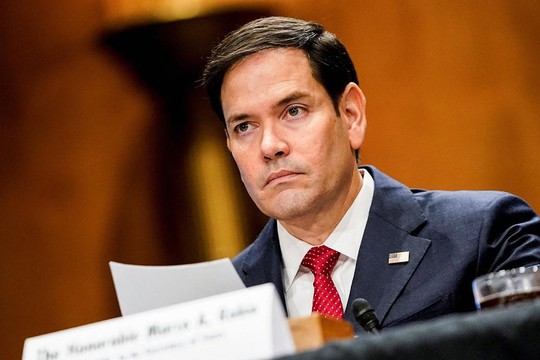
US Secretary of State Marco Rubio
Photo: AP
The Spanish-speaking Rubio is the chief architect of the US intervention and the main point of contact for Venezuela's new authorities, ‘Le Monde’ writes.
For the past three days, US Secretary of State Marco Rubio has been omnipresent on television screens. Vice President JD Vance, meanwhile, has remained out of sight, relegated to posting messages on social media. The rivalry – officially amicable – between the two men, both contenders to lead the MAGA movement in the future, reached a major turning point with the US military operation in Venezuela in the pre-dawn hours of Saturday, January 3. Just hours later, Rubio stood alongside Donald Trump to comment on the capture of President Nicolas Maduro. Disciplined and careful in his statements, Rubio appeared on major Sunday political shows the following day.
"This was not an invasion," he said on ABC. "We didn't occupy a country." On CBS, Rubio dismissed historical comparisons to US regime-change operations in the Middle East. "The whole, you know, foreign policy apparatus thinks everything is Libya, everything is Iraq, everything is Afghanistan. This is not the Middle East. And our mission here is very different. This is the Western Hemisphere." In other words, this is the US's historical backyard, where Washington exploits what it wants and uproots what it deems undesirable.
According to Rubio, the operation was tailored to fit the situation. Maduro's "arrest"? Justified by his indictment on drug trafficking charges. The maritime "quarantine" of Venezuela to block oil tankers? Permitted under US sanctions. What comes next? No one knows. But the uncertainty does not seem to trouble the secretary of state at this point.
Key player in the presidential apparatus
A long-time backer of Juan Guaido – regarded as the ‘winner’ over Maduro in 2019 – Rubio now orchestrates US policy toward Venezuela, managing the country's new leadership and its subordination from afar through deterrence and maritime blockade alone.
When he was appointed secretary of state, many commentators predicted a swift and dramatic split from Trump. Instead, Rubio became a key part of the president's inner circle; professional and discreet, he never leaks internal disagreements. He was rewarded by holding the dual roles of secretary of state and national security adviser after Mike Waltz's departure.
The former senator, a hawk with neoconservative leanings who often praises American exceptionalism and its export, was promoted by a president whose signature stance was to reject prolonged foreign military adventures.
Son of Cuban refugees
Rubio's father worked as a banquet bartender, while his mother managed the household and was employed as a hotel maid. Until US media established their arrival in 1956, Rubio claimed they had fled Cuba in 1959, when Fidel Castro took power. This biographical detail does not change the fact that the secretary of state sees Cuba as the flagship of a dying communism to which he believes he has the privilege of delivering the final blow. In late 2014, as a senator from Florida, he fiercely opposed the Obama administration's efforts to normalize relations with the island.
Twelve years later, "Cuba looks like it is ready to fall," said Trump on Sunday. This optimism is fueled by a regional domino theory: Neutralizing Venezuela's regime deprives Cuba of its main source of cheap oil. "Cuban leaders are in a lot of trouble," explained Rubio on the same day, describing Venezuela's security apparatus as "colonized" by Cuban agents, including Maduro's bodyguards, who hail from the island.
Communist enemy
Over the past year, Rubio has emerged as a figure within the new nationalist right and the MAGA movement, which he joined late but wholeheartedly. In his role, he began by dismantling the US Agency for International Development (USAID), with help from Elon Musk and the Office of Government Efficiency.
He then had to acknowledge the crucial role of President Trump's special envoy, Steve Witkoff, in the most sensitive negotiations – with the Kremlin to end the conflict in Ukraine, on Gaza and with the Iranian regime. On the subject of Ukraine, Rubio's more pronounced suspicion of Russia was seen as a rare source of hope in Europe. And as for Gaza, Rubio has taken a traditionally Republican, pro-Israeli stance, setting him apart from much of the MAGA base.
If Rubio was sidelined on Ukraine and the Middle East, that has not been the case for the "Western Hemisphere," which the administration's recently released national security strategy designated as the top priority. With any commitment to promoting liberal democratic values dropped, the US aims to dominate the Americas, both North and South. The former senator, a native Spanish speaker, knows every Latin American player and delegates no key conversations. He was the one who spoke with Venezuela's Vice President Rodriguez after Maduro's capture.
Now a central figure in the Trump administration, Rubio has a historic opportunity to reshape Latin America. The intoxication of American power likely exceeds his own presidential ambitions and makes everything else fade away: international law, Congress's war powers, not to mention the remote control of a foreign country of 28 million people that is rich in oil reserves – but that is contending with urgent needs.
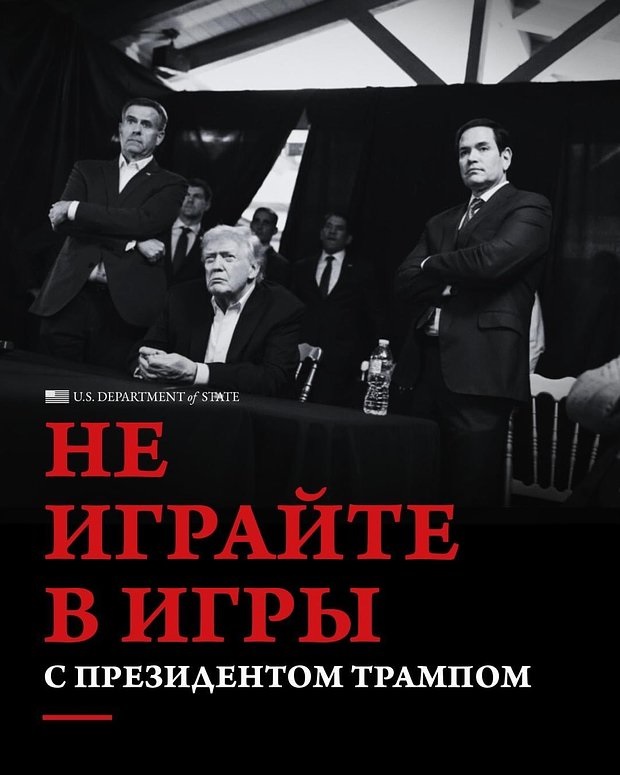
…The US State Department posted a Russian-language message on its social media account: “Don't play games with President Trump.”
Is this a language of ‘Rubio diplomacy’?
read more in our Telegram-channel https://t.me/The_International_Affairs

















