РУССКИЙ
 11:26 13.01.2026 •
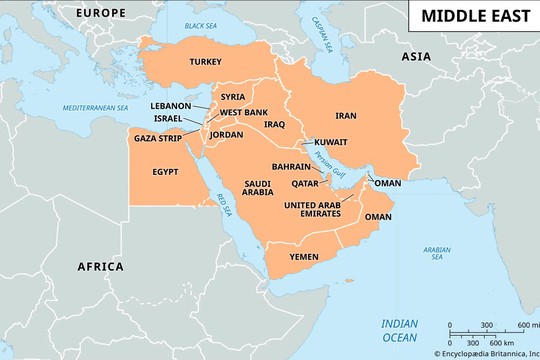
Thanks to its historical, geographical, and cultural depth in the Middle East, Turkey is one of the actors that can counterbalance Israel's destabilizing agenda, while also pursuing a path aimed at stability, peace, and security for all countries in the region, writes Dr. Ali Bakir, a lecturer in International Relations, Security and Defence at Qatar University.
By 2025, Israel had significantly reshaped the regional balance of power in the Middle East. Israel's more aggressive military stance and expanding doctrine culminated in the brief but devastating 12-day conflict with Iran in June 2025. This conflict included direct attacks on Iranian nuclear and military facilities, coupled with actions targeting Iranian proxy forces across the region, severely weakening Tehran's "forward defense" strategy and regional proxy network.
However, this situation has also made Israel's position as the region's primary destabilizing actor undeniable. Israel's genocidal actions in Gaza, combined with its unilateral military actions in Lebanon, Syria, and other areas, have shifted the perception of regional threat from Iran to Israel. As a result, Tel Aviv has become increasingly isolated both regionally and internationally.
The Abraham Accords are losing momentum
Israel's actions, including its attack on Qatar, have made the perception of Israel as a destabilizing force in the region clearer. Tel Aviv is now seen not only as a destructive actor but also as one of the main sources of instability in the Middle East. The Gulf Cooperation Council (GCC) countries, which view Israel's pursuit of hegemony as a clear threat to regional stability, have therefore adopted a more distanced stance. This has significantly reduced the momentum of the Abraham Accords of 2020. Key actors like Saudi Arabia are now prioritizing rapprochement with a weakened Iran over normalization with an unpredictable and hegemonic Israel.
Thanks to its historical, geographical, and cultural depth in the Middle East, Turkey is positioned as one of the few actors capable of counteracting Israel's hegemonic and destabilizing agenda, while simultaneously pursuing a path aimed at stability, peace, and security for all countries in the region.
Syria after Assad
Syria and Gaza continue to form the main lines of tension between Turkey and Israel. In 2025, Turkey, along with Saudi Arabia and Qatar, played a critical role in negotiations with the Trump administration to lift sanctions on Syria. This offered Syria the opportunity to both regain stability and reintegrate into the international system. Israel, however, sees a strong, unified, sovereign, and prosperous Syria as risky for itself. Therefore, it is argued that Tel Aviv's main goal is to keep Syria weak, fragmented, and in the position of a "failed state."
Israel poses the most direct risk to Syria's stability. The approach to weakening the new government is likely to proceed through various means, including preventing integration through minority groups, employing diplomacy of threats and pressure, undermining legitimacy through military pressure, escalating internal tensions, and making national unity more difficult.
As the rivalry between Turkey and Israel continues, areas of regional conflict are also becoming clearer. In this context, Sudan has begun to be mentioned as one of the issues reflecting regional competition. Some commentators speak of a competitive landscape in which Saudi Arabia, Egypt, and Türkiye clash with the UAE and Israel on certain issues. A similar area of tension arose after Israel recognized the separatist Somaliland region in the Horn of Africa. In the Eastern Mediterranean, the rapprochement of Israel, Greece, and Cyprus against Turkey reveals a third layer of competition. To this is added the ongoing rivalry between Saudi Arabia and the UAE in Yemen and other issues in the region.
Scenarios for 2026
In 2026, Israel is expected to continue its destabilizing policies in the West Bank, Gaza, Lebanon, Syria, and other areas of the region, albeit with varying intensity and scope. As long as Israeli Prime Minister Benjamin Netanyahu remains in power and the Iranian nuclear issue remains unresolved, the possibility of a new war against Iran will also remain on the table. If such a scenario were to occur, it would likely be more than a simple repetition of the 12-day conflict of June 2025; its scale and scope would be significantly larger. Furthermore, there are indications that circles close to the Iranian Supreme Leader are attempting to reorganize their proxy network by leveraging their remaining spheres of influence in Lebanon, Iraq, and Yemen.
On the other hand, the normalization process between Saudi Arabia and Iran is expected to continue and demonstrate resilience despite regional challenges. Normalization stands out as a pragmatic step aligned with the interests of both sides amid ongoing instability.
In parallel, if Israel is not compelled to comply with international law and pressured to end its destabilizing policies, regional rivalry between Turkey and Israel is expected to intensify. The rapprochement between Turkey, Saudi Arabia, and Egypt is likely to strengthen as a result of Israel's regional policies.
Regarding the competition between global powers, while the overthrow of the Assad regime and the decline of Iran have significantly reduced Russia's influence in the region, Moscow has not completely withdrawn and is trying to remain active through various channels. China, meanwhile, is slowly but steadily adding political and security dimensions to its growing economic ties. The US remains a decisive factor in the region. However, Washington's open support for, or at least tacit approval of, Israel's hegemonic and expansionist policies could sharpen new lines of competition and deepen regional instability; this would directly negatively impact US interests.
read more in our Telegram-channel https://t.me/The_International_Affairs