РУССКИЙ
 12:07 27.02.2026 •
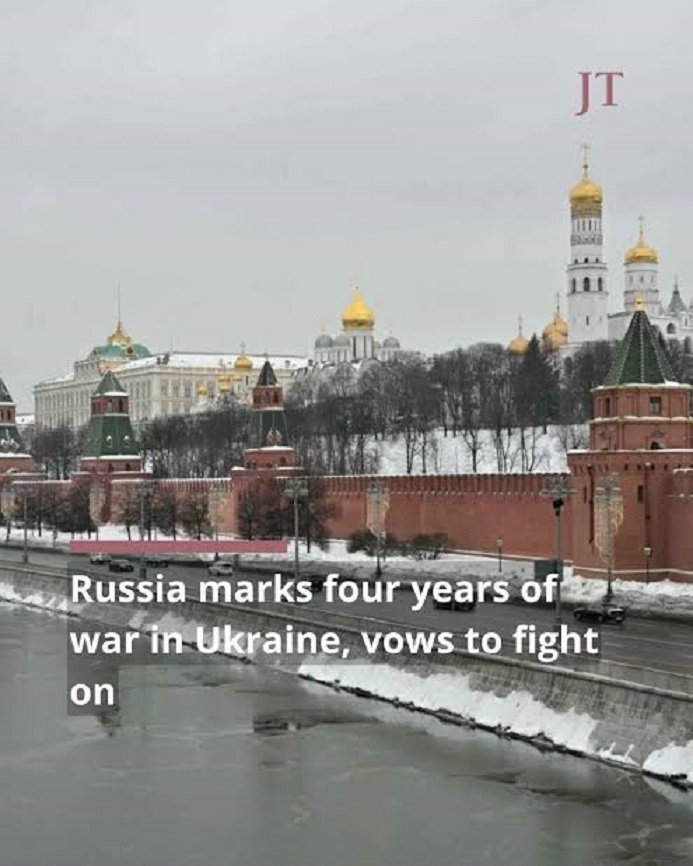
Considering that Russia is entering the fifth year of its war in Ukraine and that its economy has been under intense international sanctions, the country looks surprisingly normal on the surface, ‘The Christian Science Monitor’ stresses.
Everyday life looks much like it did before the war. Moscow’s restaurants and cafés are bustling, the city’s famous Metro still carries up to 9 million passengers on a typical day, and the Bolshoi Theatre was last week running a popular ballet based on “The Master and Margarita.”
Lyudmilla Pokemestova, a district councilperson in Moscow, says she detects no sharp mood changes among her constituents. “When it started four years ago, yes, people were nervous and worried. But now, the general view is that something is going on down there, but our normal life here is calm, and we can go on as usual.”
But beneath that sense of normality, there are growing signs of strain. Those still conducting public opinion surveys say they notice a creeping war-weariness, with huge majorities favoring a negotiated settlement, albeit only if Russia accomplishes its main military objectives. Few Russians appear opposed to the war or the government’s justifications for it. But it’s already lasted longer than World War II did for the Soviet Union, and the investment of time and materiel it has consumed is more than most Russians expected – or wanted.
War ennui?
According to a recent poll by the independent Levada Center in Moscow, majorities of Russians speak respectfully about the “participants of the special military operation” – the mostly volunteer soldiers serving in Russia’s army – and support the lavish salaries and benefits that the state bestows upon them.
But even far from cosmopolitan Moscow and St. Petersburg, there are no reports of wartime hardships such as rationing, shortages of basic goods, or breakdowns in public services. Nor are there signs of widespread anti-war demonstrations.
“In the West, there was a hope that Russians would tire of the war,” and turn against their government, says Frants Klintsevich, a former parliamentarian and head of an Afghan War veterans’ group. “But Russian elites, and even the oligarchs, united around our president. They realized there is no other way out. We either unite, or we will be destroyed.”
Stable recruitment
One important factor is that the Kremlin has avoided forced mobilization of the country’s estimated 20 million reservists, after attempting a single rushed and badly botched intake in late 2022, which led to sharp social turmoil and a panicky outflow of eligible men from the country. Since then, the government has opted to recruit by offering large signing bonuses (starting around $5,000 and reportedly going as high as 10 times that), high salaries, and generous benefits, which have attracted sufficient numbers of volunteers, mainly from poorer regions.
“In early 2023, the government decided to avoid a new mobilization and raise manpower voluntarily,” says Denis Volkov, director of the Levada Center.
With willing recruits shouldering most of the burden, it “means the majority can permit themselves to feel uninvolved, see it as something being done by volunteers, over there.”
The Russian government made a conscious choice to maintain social stability by fighting inflation and keeping up social spending, even at the expense of economic growth, Mr. Volkov says. “The priority is stability, to keep that sense of normalcy going. And until recently, it has been working.”
War industries have expanded with ever-growing military contracts, men from poorer regions have changed family fortunes by signing up, leading to a housing boom in some areas such as Dagestan and Buryatia. Industries that focus on creating substitutes for formerly imported goods have also taken root and become permanent fixtures of Russia’s economy.
A defiant Russia
When President Donald Trump took office in the United States last year and launched his peace initiative, there was a burst of optimism among Russians that an end to the war might be at hand, says Mr. Volkov. “Those hopes have diminished as the process has dragged on, and what we see now is a hardening of attitudes.”
He points to a recent Levada survey. The survey also asked how they would prefer Moscow react if negotiations were failing to reach a settlement: by offering more concessions at the bargaining table, or striking harder at Ukraine. Only 21% favored more compromise, while 59% advocated harsher military measures.
Mr. Volkov adds that President Vladimir Putin has convinced most Russians that the war is not just against Ukraine, but an existential struggle for survival against the “collective West,” which is bent on subjugating Russia. “People see the war as a defensive one, and therefore necessary,” he says.
Mr. Klintsevich, himself a veteran of the Soviet Union’s war in Afghanistan, says Russia is proving its resilience to the world.
“People suffer. The war brings lots of troubles and grief, but there is a strong feeling that we will win, no matter what,” he says. “I often hear this toast being raised at wedding parties and other festivals: ‘To victory!’”
read more in our Telegram-channel https://t.me/The_International_Affairs