
 РУССКИЙ
 10:39 30.01.2026 •
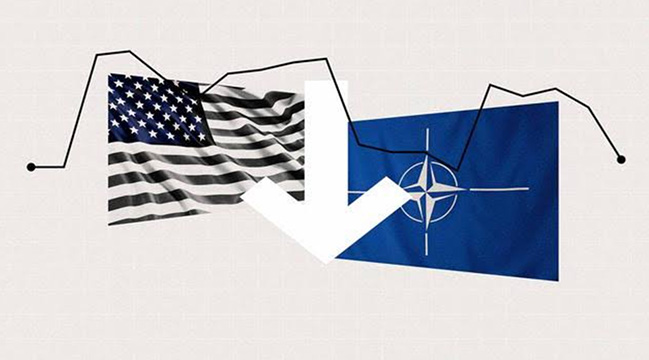 Pic.: Gallup News
Dr. Michael Rubin at ‘19fortyfive’ argues that Washington’s repeated abandonment of partners is no longer an exception but a defining feature of U.S. policy. He points to the Syrian Kurds’ sacrifices against ISIS, the collapse of the Afghan government after a dated withdrawal timeline, wavering support that cost Ukrainians lives, and earlier precedents such as severing formal ties with Taiwan. Rubin extends the pattern to India-Pakistan dynamics, Somaliland policy, and the way Denmark was treated amid Greenland disputes. The conclusion is stark: allies should assume U.S. commitments can evaporate when political incentives shift.
No One Should Ally with the United States Ever Again
On October 27, 2019, President Donald Trump announced the death of Islamic State (banned in Russia) leader Abu Bakr al-Baghdadi. He claimed complete credit for the victory. “At my direction, as Commander-in-Chief of the United States, we obliterated his caliphate, 100 percent,” he said.
Much of the fighting against the Islamic State came as part of a unique partnership: The United States provided airpower, but it was the People’s Protection Units (YPG), the main Syrian Kurdish militia, that did the fighting on the ground. They not only broke the Islamic State siege of Kobane, but also rescued many of the Yezidi girls and women inside Iraq after Masoud Barzani’s U.S.-funded peshmerga fled. More than 10,000 Syrian Kurdish fighters died fighting the Islamic State in Syria and Iraq.
Abandoned Allies
This fact makes Trump’s gratuitous abandonment of the Kurds even more shameful. Trump defended the abandonment by suggesting the Kurds were only acting selfishly. “The Kurds were paid tremendous amounts of money, given oil and other things, so they were doing it for themselves more than they were doing this for us,” he explained. This is false. If the Kurds sought only material gain, they would have acted as Turkish President Recep Tayyip Erdoğan did, when he sought to profit from the Islamic State.
The gratuitous if not gleeful betrayal of the Syrian Kurds is now the rule in U.S. policy rather than the exception. The shamelessness with which Trump and his envoy, Tom Barrack, wash their hands of the Kurds, essentially giving a green light to slaughter, provides a warning for all other groups who, in the future, might consider tying their fate to counter-terror or geopolitical cooperation with the United States.
American Betrayal: The Taiwan Case
Certainly, betrayal is not new in U.S. foreign policy.
On December 15, 1978, in Washington and, simultaneously, the following morning in Beijing, the United States and China announced that they would establish formal relations to begin on New Year’s Day, and that the United States would simultaneously sever its relations with longtime ally Taiwan.
While the re-establishment of relations occurred on President Jimmy Carter’s watch, its genesis was bipartisan. The late Nixon- and Ford-era National Security Advisor Henry Kissinger pioneered the idea that such betrayal was sophisticated.
Even Republicans, however, could not stomach the betrayal dealt to Taiwan. George H.W. Bush, UN ambassador and both liaison to the People’s Republic of China and director of the Central Intelligence Agency under Ford, took to the Washington Post to lament how, “for the first time in our history, a peacetime American government has renounced a treaty with an ally without cause for benefit.” Nor was Bush the only one troubled. Against Carter’s wishes, Sen. Ted Kennedy, a liberal Democrat who once called for the recognition of the Peoples’ Republic from the floor of the United Nations, spearheaded the Taiwan Relations Act to ensure Taiwan could defend itself despite the abandonment.
The Afghanistan Case
While Kennedy and then President Ronald Reagan made sure Taiwan received arms, the Afghan National Army was not so lucky.
President Donald Trump’s February 29, 2020, agreement sold out an elected, even if flawed Afghanistan government. By establishing a date to end the Afghan mission, the State Department signaled the Taliban could outlast the United States.
The resulting collapse of the Afghan government was predictable. The Taliban has never accepted either to be part of a coalition government nor to pin its legitimacy to the ballot box. In 1996, the Taliban attacked Kabul against the backdrop of negotiations, and 2021 was no different.
A U.S. Army M1A1 Abrams tank fires as part of Eager Lion 2024 at Training Area 5, Jordan, May 13, 2024. Eager Lion 24 is a multilateral exercise, with 33 participating nations, hosted by the Hashemite Kingdom of Jordan, designed to exchange military expertise, and improve interoperability among partner nations, and considered the capstone of a broader U.S. military relationship with the Jordanian Armed Forces. Jordan is one of U.S. Central Command’s strongest and most reliable partners in the Levant sub-region. (U.S. Army photo by Spc. Nataja Ford)
The Biden administration not only empowered the Taliban and sold out a generation of Afghan women and girls, but then refused to allow the men the United States had retrained to fight on their own, preferring to abandon weaponry to the Taliban than allow the Afghanistan National Army to fight autonomously. Biden and then Trump’s decision to leave interpreters behind was the ultimate betrayal, as it essentially signed their death warrants.
The India Case
Trump’s betrayal of India to embrace Pakistan remains unexplained, beyond his adulation of Pakistani General Asim Munir. Secretary of State Marco Rubio’s ongoing rejection of Somaliland in favor of a China-leaning Somalia suggests betrayal runs deep throughout Trump’s second administration.
Then There Is Greenland
Trump’s antics on Greenland fit the pattern of gratuitous disrespect of allies. Perhaps Trump was always bluffing about forcibly annexing Greenland and only wanted Denmark and NATO to take its defense more seriously.
Regardless, Denmark was among the most loyal and proactive U.S. allies. It deployed troops not only to Afghanistan but also to Iraq at a time when many European countries balked; it even commanded the NATO mission to Iraq between 2020 and 2022 and participated in the Global Coalition to Defeat the Islamic State.
Denmark has always been a more sober, responsible power. Indeed, given how British ministers leaked U.S. intelligence, Denmark’s loyalty and moral clarity made it perhaps America’s top NATO ally.
Pattern Problems for the U.S. Allies
The pattern is clear. For a small power to ally with the United States could be suicidal. Even established allies should be wary. Many Israel supporters applaud Trump for his support for the Jewish state, but there is no guarantee that today’s partnership will mean support tomorrow.
Quite simply, while the U.S.-Israel partnership may appear strong, it has not been this weak since President Dwight D. Eisenhower’s first term.
Trump was almost gleeful when abandoning Ukrainians, never mind that withholding weaponry or slow-rolling promised supplies. While Biden’s team also limited deliveries of weaponry to Ukraine, Trump’s MAGA supporters seemed to relish the shock of the betrayal.
Alliances are marriages with their ups and downs. The United States is now a divorcee, with its strategic doctrine based on one-night stands. Perhaps it can pay for future favors by the hour, day, or year, but the most eligible partners will now look at the United States with disgust. American allies have moved on.
Even after Trump is gone, his legacy will be the lesson: To ally with the United States is strategic folly.
read more in our Telegram-channel https://t.me/The_International_Affairs

















