
 РУССКИЙ
 10:42 19.03.2026 •
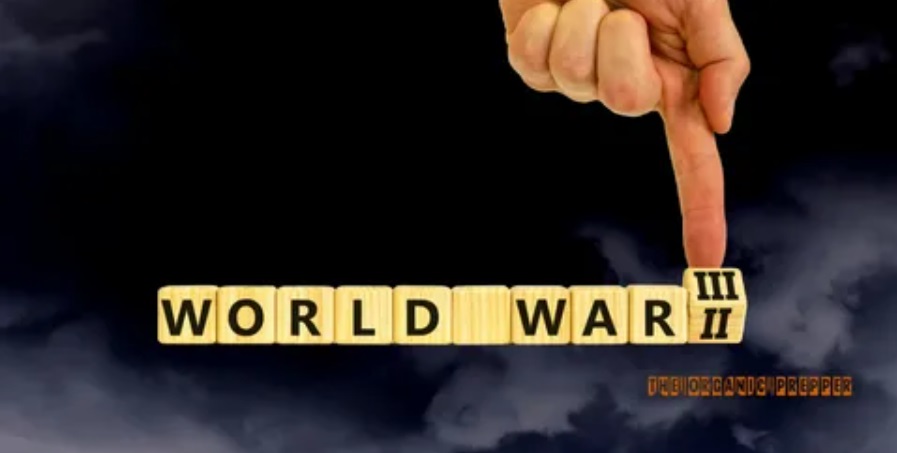
Countless potential black swan events could spark a collapse of our fragile geopolitical order, stresses ‘The Responsible Statecraft’.
Shortly after U.S. and Israeli bombs and missiles began falling in Tehran, Iranian missiles flew in all directions at U.S. bases in Kuwait, Oman, Qatar, Saudi Arabia, Turkey, and others. The people living in these countries were justifiably terrified, which was a likely objective of those Iranian leaders who survived the first assaults. Tehran’s strategy may be to persuade America’s regional allies to reconsider their security alliances.
It would be so complex that no one could fully understand how everything fits together
Imagine a chart depicting the world’s alliances, treaties, trade agreements, cultural bonds, and religious ties today. It would be so complex that no one could fully understand how everything fits together and interacts. Should one player choose to escalate the conflict, there is no telling who else might get involved. In an age of nuclear weapons on hairpin triggers, events can rapidly spin out of control before any of the key players has a chance to truly understand what is really happening. Our civilization could end in minutes, and it will only be a matter of luck if any human beings survive. If any people do survive, it is likely that they will never really know precisely how the end of the world started.
The global situation is eerily similar to 1913. In the years leading up to World War I, European leaders created an intricate system of alliances. France and Russia signed a mutual defense pact. Germany and Austro-Hungary had a similar arrangement. The Russians also had a cultural bond with their fellow Slavs in Serbia.
So, when Franz Ferdinand and his wife were murdered by a Serbian nationalist in June 1914, the resulting diplomatic crisis and war declaration by Austria-Hungary against Serbia pulled Russia into the war. The Russian mobilization prompted the Germans to mobilize. In quick succession, the Germans declared war on Russia, France, and Belgium. When German troops entered Luxembourg and Belgium, Great Britain declared war on Germany, and World War I began for real. The international network established by those early 20th century leaders was so precarious, it only took a relatively minor jostle in a forgotten corner of Europe to bring the entire system crashing to the ground.
The world today is not as in 1913
The world today is vastly more complex. In 1913, there were approximately 61 sovereign states, but the key players were the major European empires like Great Britain, Russia, France, and Germany. Today, there are 195 countries, each striving for their place on the world stage as they pursue their national interest. It is impossible to calculate the potential number of black swan events capable of jostling the geostrategic network sufficiently to collapse it on top of itself.
This raises the uncomfortable question: are we now on the precipice of the next Pearl Harbor moment?
With the capture of President Maduro in Venezuela, the United States disrupted the flow of oil to China. Now, with the fall of the Islamic Republic of Iran, China appears poised to lose another important source of oil. Does anyone remember what prompted the Japanese to strike the American Pacific Fleet and then declare war against the United States? Those who answered the loss of access to key commodities, notably oil, due to actions by the United States responded correctly.
No experience with war on a global scale
No leader in any country today has any experience with war on a global scale. World War II ended more than 80 years ago. The relatively few remaining World War II veterans are all centenarians or soon will be. No one can truly know how the next world war will unfold. If, by some miracle, the next war is not fought with nuclear weapons, it is still impossible for anyone to know for certain how a conventional war between superpowers will be fought.
Policymakers around the world must take the time to reflect on the state of the world today. We may be living through the early days of what future historians will call World War III. Of course, that depends on there being any future historians. With every bomb dropped, every missile fired, and every warship torpedoed, events creep ever closer to the single jostle, the 21st century Sarajevo, to topple the fragile network. It will only take one minor miscalculation, one bomb to miss and fall on another country’s embassy, one airliner to be accidentally shot out of the sky, or any other of a million incidents to trigger an escalation leading to a full nuclear exchange.
There may be time left to prevent such a scenario.
The administration must bring the current operation with Iran to a quick end. It can celebrate its successes but should not push their luck any further. Every military operation is the geostrategic version of Russian roulette.
read more in our Telegram-channel https://t.me/The_International_Affairs

















