
 РУССКИЙ
 11:46 28.01.2026 •
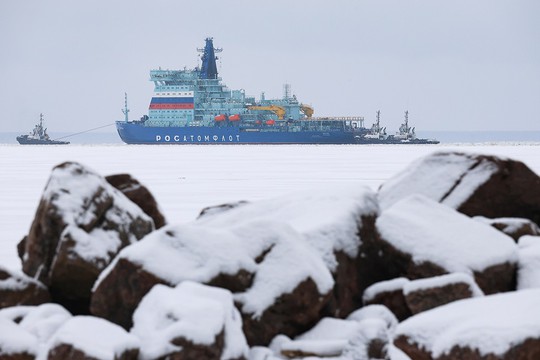
The Russian nuclear-powered icebreaker Yakutiya
Photo: Getty Images
In 2007, two Russian submersibles descended from the ice at the North Pole to plant a small Russian flag on the sea floor more than two miles down. While the aquanauts were greeted as heroes in Russia, the reaction of other Arctic nations was somewhat less positive. ‘This isn’t the 15th century,’ complained the Canadian foreign minister. ‘You can’t go around the world and just plant flags.’ In response to the protests, President Putin – then Time magazine’s ‘Person of the Year’ – reassured the world: ‘Don’t worry. Everything will be all right.’
Kenneth Rosen is an award-winning journalist. In his timely, provocative new book Polar War, he turns his attention further north, writes ‘Spectator’.
The Arctic was once a byword for international cooperation and scientific collaboration; but, Rosen argues, after 400 interviews and two years spent exploring the region, the melting sea ice is fuelling a growing military contest between an expansionist Russia, an opportunistic China and an ill-prepared United States and its allies for control of the new shipping routes and resources that an ice-free Arctic will unlock. Rosen believes Russia and China are winning a struggle that will only end in war.
Into this tinderbox comes President Trump, with his apparent plans to ‘get and secure’ Greenland. Rosen is clear that while the United States’s ‘desire to control Greenland has existed nearly as long as America itself’, Trump’s apparent plan to annex the Danish territory is naive and dangerous gamesmanship that will alienate America’s allies and undermine the international cooperation it needs for the growing confrontation with Russia and China.
Worse – and Rosen’s frustration is impossible to miss – it is a distraction for a country that needs to shore up or replace its decaying Arctic defences, some of which are breaking apart as the permafrost melts. Nor does it seem able to equip its soldiers to fight in still extreme conditions, let alone build the fleet of icebreakers that the President has called for since 2018. The US currently has a handful of ageing vessels, compared with Russia’s fleet of more than 40 icebreakers, including several nuclear- powered ones.
Rosen struggles to consistently address the historic origins of the growing conflict in the Arctic. For example, the complex history of the strategically important Svalbard archipelago is given short shrift, even though the decision to exclude Russia from future decisions over the islands after the first world war has fuelled Russian resentment ever since.
That said, in less talented hands, a book such as Polar War might easily have turned out to be a dry, US-heavy affair. But Rosen gives us a series of gripping stories about a region that may be the next site of global conflict.
read more in our Telegram-channel https://t.me/The_International_Affairs

















