
 РУССКИЙ
 11:30 15.03.2026 •
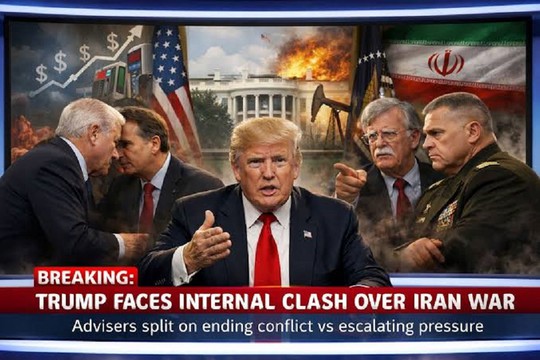
Time may be on Iran’s side in its conflict with the United States as President Trump faces domestic and international pressure to end the war, ‘The Hill’ notes.
“Time is on Iran’s side. They’re on their home turf. They have long planned for this. Iran’s entire defense doctrine was based around this idea that we face enemies that are conventionally superior to us,” said Jon Hoffman, a research fellow for defense and foreign policy studies at the Cato Institute.
Regional experts argued that Iran is intentionally dragging out the war, betting it can outlast the pain inflicted by the constant strikes from American and Israeli fighter jets and warships better than Trump can outlast the political pain of rising prices and an unpopular war.
“The challenge now is that Iran is on its own track here: The president may be losing interest in this conflict, but the Iranian regime is almost certainly not done with us yet,” said Ariane Tabatabai, who served in a number of roles in the Pentagon and State Department.
Trump told supporters during a rally in Kentucky on Wednesday that Washington “won” in Iran and the conflict was “over” in the first hour.
But the Strait of Hormuz has remained closed, and oil prices reached $100 a barrel overnight, causing headaches for Trump, whose military is squaring off against an adversary that is comfortable being at a tactical disadvantage.
“Most Americans are not affected by this war, except for increases to oil prices at the pump. And so the United States does not necessarily have the same incentive to fight for long periods of time at high cost that Iran does,” Rosemary Kelanic, the director of the Middle East Program at Defense Priorities, said in an interview with ‘The Hill’.
Hoffman, of the Cato Institute, said Iran’s strategy of prolonging the war and retaliation against Israel and U.S. bases in Gulf countries was expected to raise the economic cost of the war and make it politically expensive for Trump at home and in the Middle East.
During a classified briefing on Capitol Hill, Pentagon officials told senators that the approximate cost of war against Iran was more than $11.3 billion in the first six days.
Kelanic, of Defense Priorities, said as the war drags on and potentially more U.S. service members are killed, support for the “optional war” could go down.
“We could stop fighting assuming Iran lets us, it’s not clear that they’ll let us, right, but if Trump wanted to end the war, he could do that, and would not make the United States significantly less secure than we are now fighting the war,” she said.
Iran government not at risk of collapse: US intel
U.S. intelligence agencies have indicated that the Iranian government is not at risk of collapse amid the U.S. and Israeli offensive against the Middle Eastern country, ‘The Hill’ reports.
One source told the outlet that a “multitude” of intelligence reports show “consistent analysis that the regime is not in danger” of collapse, retaining “control of the Iranian public.”
The new supreme leader announced the continued closure of the Strait of Hormuz, the path of transit for exporting around 20 percent of the world’s oil and gasoline, until the military offensive ends.
“The Strait of Hormuz must remain closed. American bases in the Middle East must be closed,” Khamenei’s announcement, read on Iranian state media, stated. “Iran’s other military and regional capabilities will be activated if necessary.”
Gas prices have shot up as a result of the closure, with the U.S. national average price for gas at $3.60 as of Thursday night, according to AAA. A spokesperson with Iran’s Islamic Revolutionary Guard Corps warned Wednesday that the price of oil could jump to $200 per barrel if the conflict continues and the strait remains closed.
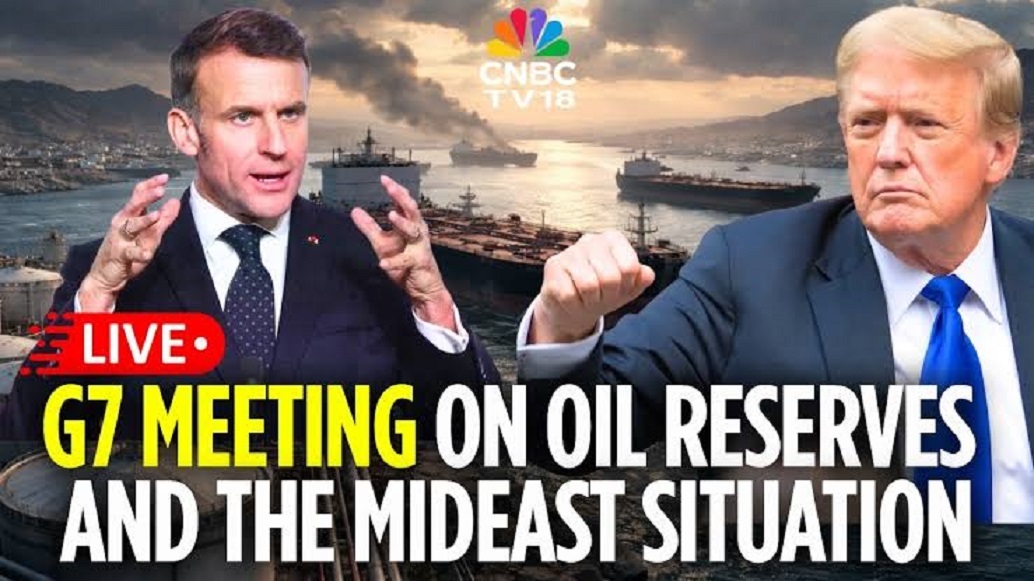
Grave concern among G7 leaders over the war's growing economic fallout
President Trump told G7 leaders in a virtual meeting that Iran is "about to surrender," according to three officials from G7 countries briefed on the contents of the call.
The call took place amid grave concern among G7 leaders over the war's growing economic fallout.
All of the other leaders urged Trump to end the war quickly, stressing that the Strait of Hormuz must be secured as soon as possible, two officials briefed on the call tell Axios.
As the Hormuz crisis drives oil prices above $100, Russia — a major oil producer — stands to benefit.
German Chancellor Friedrich Merz, British Prime Minister Keir Starmer and French President Emmanuel Macron urged Trump on the call not to allow Moscow to exploit the war or receive sanctions relief, two officials said.
On Thursday, despite the objections of the three European powers, the Treasury Department announced a one-month waiver on U.S. sanctions on Russian oil.
Two officials briefed on the call said Trump mocked U.K. Prime Minister Starmer for his initial refusal to allow the U.S. to use British bases for strikes on Iran.
After Iran began striking Gulf states, Starmer reversed course and offered access to the bases for "defensive" strikes on Iranian missile sites.
Trump told Starmer in front of the other G7 leaders that he no longer needed his help: "You should have proposed it before the war — now it is too late," he said.
read more in our Telegram-channel https://t.me/The_International_Affairs

















