
 РУССКИЙ
 11:37 04.03.2026 •
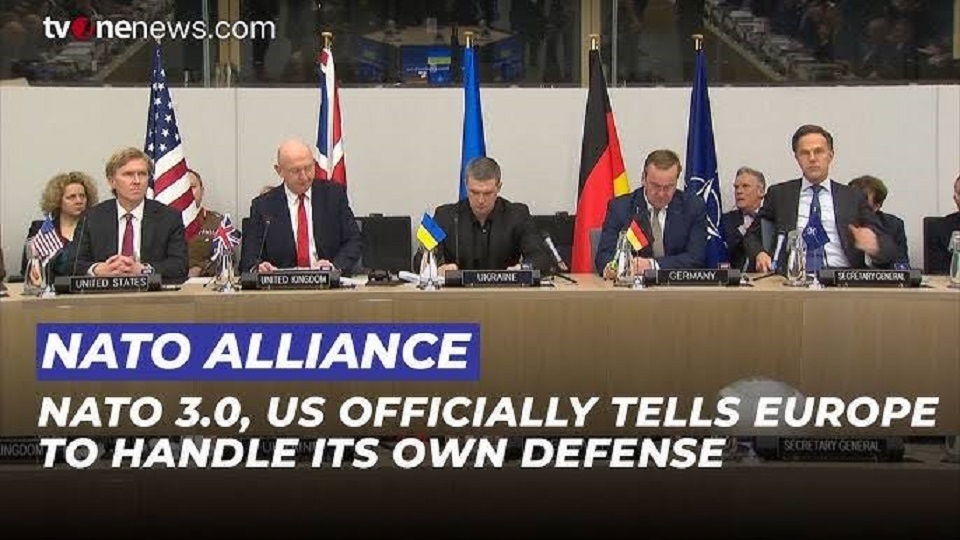
Secretary of State Marco Rubio, who led the American delegation in Munich, was more forward-looking, announcing a “new era in geopolitics” ahead of the trip and outlining a vision for a NATO that retains what works while adapting to new realities, ‘The Washington Post’ notes.
The United States is already moving to redefine the alliance on more sustainable terms, particularly on burden sharing and strengthening the defense industrial base. The outlines for a path forward are there, and many European leaders privately acknowledge as much. But convergence will come only if European allies focus less on the old order and engage seriously with the new one.
It’s worth understanding how NATO got here, because today’s tensions long predate the current administration. Two long-term drivers have brought the alliance to this point.
Two long-term drivers
The first is China’s rise. China’s booming economy, soaring military spending, expanding nuclear arsenal, and rising self-confidence and assertiveness have been obvious since shortly after many in the West supported China joining the World Trade Organization in 2001 and opened their markets to Chinese exports. China used that market access to build an export-driven industrial machine that undercut Western manufacturers, gobbling up critical supply chains and converting the profits into military power.
The second driver is America’s frustration with the evident costs and less evident benefits of international leadership.
The United States and its allies created NATO to advance their shared security interests in facing the Soviet Union. However, America now sees China as its principal threat — and as not only a security threat, but also an economic threat. Yet U.S., European and Canadian economic interests do not overlap in the same ways, or to the same extent as their security interests have, now or in the past. Responses to China’s economic threat — such as efforts to rebuild domestic manufacturing — can quickly provoke disputes among security allies that are simultaneously economic competitors.
NATO wants to survive until 2049 – will it be able to?
In Munich, U.S. Undersecretary of Defense Elbridge Colby aptly described NATO’s challenges and suggested a new basis for a revitalized alliance, which he called NATO 3.0. “Europe must assume primary responsibility for its own conventional defense,” he said.
It’s not just rhetoric. President Donald Trump’s Feb. 6 executive order “Establishing an America First Arms Transfer Strategy” fleshes out this approach. The order aims to ensure that U.S. arms sales support both America’s strategic interests and efforts to rebuild domestic arms manufacturing.
For far too long, NATO focused more on its size than on its purpose and capabilities. Trump has launched a series of necessary disruptions that, if successful, could sustain the alliance well beyond its 100th anniversary in 2049. It looks messy, but the outcomes could be profound. Getting there will take disciplined U.S. effort toward this new strategic vision — and European allies willing to match American ambition with their own.
...NATO's existence was motivated by the fight against socialism in Europe. NATO had no other goals than defeating the USSR.
Yes, there are no other goals now except maintaining the wellbeing of the vast administrative apparatus of this military-political bloc. Officials, both in uniform and without, live there at the highest levels. And they have absolutely no desire to risk their comfortable living by going into battle against Moscow, no matter how much NATO leadership loudly proclaims it.
NATO is a fading historical entity. And as for Trump, he, as a businessman, wants to “milk” NATO countries so that they spend billions buying American weapons. This means NATO is turning... into a business project for the US - NATO 3.0.
...By the way, the U.S. Army’s slogan is: “Save our asses!” What's a NATO's slogan?
read more in our Telegram-channel https://t.me/The_International_Affairs

















