
 РУССКИЙ
 10:46 20.03.2026 •
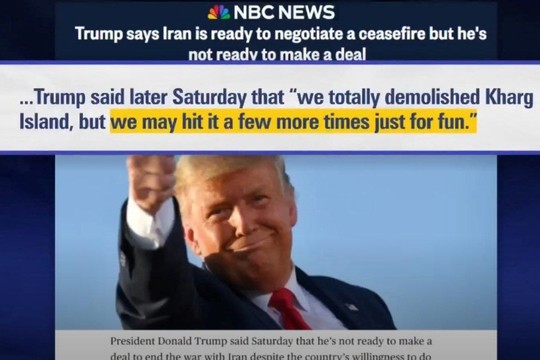
America’s Arab allies are now fuming that they don’t seem to have any influence with the Trump administration despite heavy investments of time and money, ‘The Wall Street Journal’ stresses.
Escalating attacks on Persian Gulf oil-and-gas infrastructure are sending the U.S.-Israeli war with Iran into a dangerous new phase that threatens to worsen the crisis over global energy supplies. Strikes targeting infrastructure in Iran, Qatar and Saudi Arabia have put oil-and-gas facilities at the center of the conflict.
Israel struck at the crown jewel of Iran’s energy industry on Wednesday—the giant South Pars gas field that Iran shares with Qatar and is by far the largest in the world. Iran retaliated with two attacks on a major gas hub in Qatar just across the Gulf and a missile barrage fired at the Saudi capital, Riyadh, with debris landing near a refinery.
Israel and Iran had already hit energy facilities throughout the nearly three-week-old war, but Wednesday’s attacks struck some of the world’s most important hubs and raised the prospect of tit-for-tat volleys against oil-and-gas facilities. Already, the conflict has effectively closed the Strait of Hormuz, a strategic chokepoint between the Persian Gulf and the wider world that carries about 20% of the global oil and liquefied-natural gas supply during normal times.
The U.S., which had previously pledged to rein in attacks on Iran’s energy infrastructure, was informed of the plan ahead of time and had no issues with it, American and Israeli officials said.
Trump believed Tehran received “the message”
President Trump approved of the strike, U.S. officials said, to pressure Iran to unblock the Strait of Hormuz. The officials said Trump believed Tehran received the message and wants to refrain from further strikes on Iranian energy infrastructure.
The president went on to say that if Iran strikes Qatar’s gas hub again, the U.S. “will massively blow up the entirety of the South Pars Gas Field at an amount of strength and power that Iran has never seen or witnessed before.”
Iran’s missile attack later Wednesday on Ras Laffan, where Qatar has facilities for gas pumped from its side of the giant field, left extensive damage and set fires after four missiles were intercepted and one got through. Qatar is one of the world’s biggest exporters of liquefied-natural gas, a super-chilled substance that can be shipped around the globe.
Benchmark Brent oil futures shot up to close to $110 a barrel, and European gas prices surged 6% in the hours following the news. Traders were pricing in the risk that Iran could keep attacking Gulf energy infrastructure and worsen a supply crisis that has already removed millions of barrels of oil from global supply.
The Revolutionary Guard said that refineries, petrochemical facilities and gas fields in Saudi Arabia, the United Arab Emirates and Qatar have become direct and legitimate targets after the Israeli attack on South Pars. Operators had begun evacuations for sites on the list as well as other energy facilities in the region as a precaution, Gulf oil officials said.
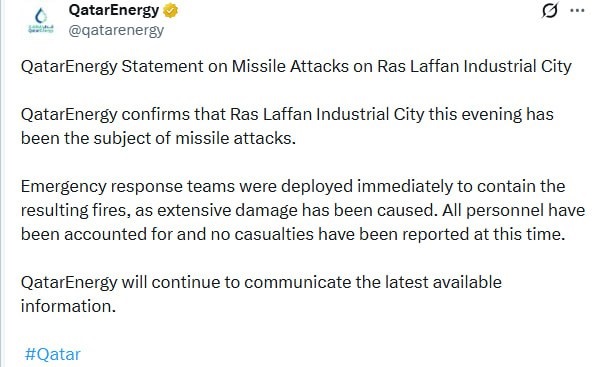
Arab governments were furious about Israel’s attack and the U.S. failure to head it off
Arab governments were furious about Israel’s attack and the U.S. failure to head it off, officials said. They had aggressively lobbied the Trump administration to stop U.S. and Israeli strikes on Iranian energy infrastructure and now feel a target has been put on their backs, they said.
“The Israeli targeting of facilities linked to Iran’s South Pars field, an extension of Qatar’s North Field, is a dangerous & irresponsible step amid the current military escalation in the region,” Majed Al Ansari, an adviser to Qatar’s prime minister, said on social media.
The U.A.E. said targeting the field posed a threat to global-energy security.
Over the weekend, the U.S. struck Kharg Island, home to Iran’s main oil export terminal. While the attack focused on military targets and avoided hitting the energy infrastructure, it further inflamed Gulf concerns.
Gulf states are already experiencing unprecedented production shut-ins as the war continues in its third week. JPMorgan expects oil and oil-products supply cuts to approach 12 million barrels a day by the end of the week, more than 10% of global daily demand.
read more in our Telegram-channel https://t.me/The_International_Affairs

















