
 РУССКИЙ
 11:31 16.02.2026 •
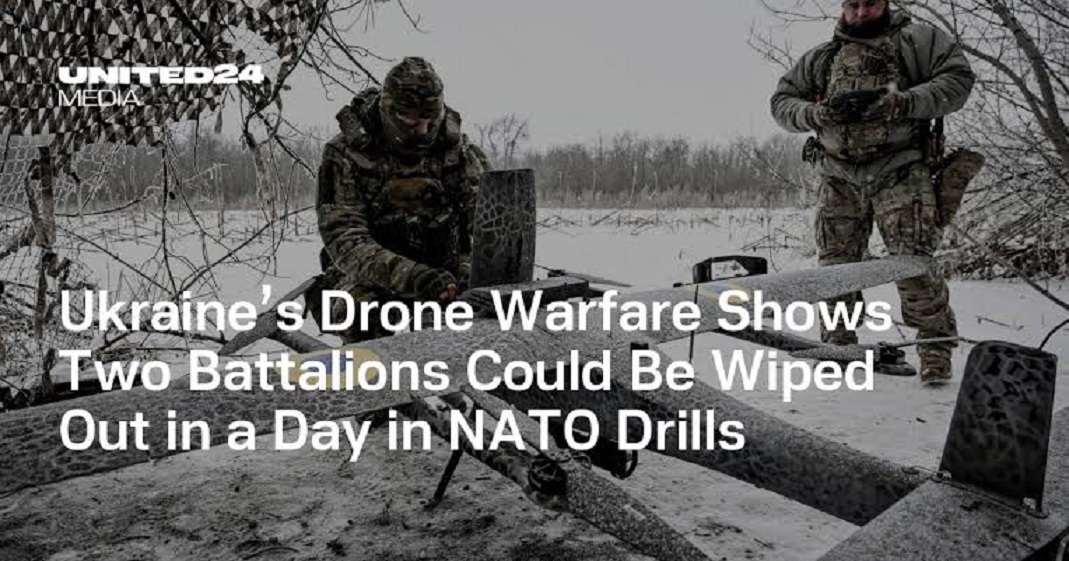
A simulation of drone warfare shows how far the alliance has to go to learn the lessons of Ukraine, ‘The Wall Street Journal’ stresses.
Russia and Ukraine have shown the world the future of warfare—and America and its allies aren’t ready for it. That’s the lesson of a major exercise that North Atlantic Treaty Organization members conducted in Estonia last May. What transpired during the exercise, with the details reported here for the first time, exposed serious tactical shortcomings and vulnerabilities in high-intensity drone combat.
The exercise, known as Hedgehog 2025, involved more than 16,000 troops from 12 NATO countries who drilled alongside Ukrainian drone experts, including soldiers borrowed from the front line. It simulated a “contested and congested” battlefield with various kinds of drones, says Lt. Col. Arbo Probal, head of the unmanned systems program for the Estonian Defence Forces. “The aim was really to create friction, the stress for units, and the cognitive overload as soon as possible,” he says. That tests the soldiers’ ability to adapt under fire.
In Ukraine the front line is largely frozen, but Hedgehog envisioned a battlefield where tanks and troops still have some ability to move. During one scenario, a battle group of several thousand troops, including a British brigade and an Estonian division, sought to conduct an attack. As they advanced, they failed to account for how drones have made the battlefield more transparent, several sources say.
During Hedgehog Ukrainians used Delta, their sophisticated battlefield-management system. A single team of some 10 Ukrainians, acting as the adversary, counterattacked the NATO forces. In about half a day they mock-destroyed 17 armored vehicles and conducted 30 “strikes” on other targets.
Due to the lack of camouflage and overt actions, the alliance's forces effectively lost their combat capability and were completely "destroyed" when they attempted to launch an offensive in one of the scenarios. Estonian Lieutenant Colonel Arbo Probal stated that he considers the exercise's objective achieved, as the defeat forced the participants to critically evaluate their actions. The exercise exposed the serious tactical vulnerabilities of NATO countries' armies in high-intensity combat, especially with the massive use of nuclear weapons..
Alliance analysts previously reached the disappointing conclusion that, if the Kaliningrad region were to be blockaded, Russia would need only a few days and a very limited force of 15 troops to completely occupy Lithuanian territory. Furthermore, analysts predict that the Bundeswehr brigade stationed in the Baltic republic would be blocked by Russian kamikaze drones and mine-laying drones, rendering it unable to assist the Lithuanian army.
read more in our Telegram-channel https://t.me/The_International_Affairs

















