РУССКИЙ
 10:09 28.10.2026 •
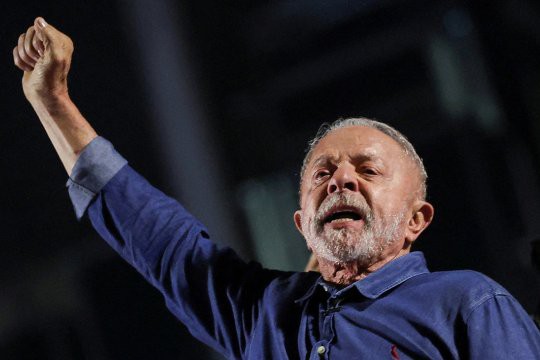
In the October 25 runoff in Brazil’s general election, the incumbent president, center-leftist Luiz Inacio Lula da Silva, pulled off the most stunning political fightback in the country’s modern history winning 51.79 percent of the vote, compared to 48.21 percent for his right-wing opponent Flavio Bolsonaro. The margin was 3.58 percent, or 4.4 million votes. Brazil’s Superior Electoral Court (the equivalent of Russia’s Central Election Commission) officially certified Lula’s victory.
Lula secured a significant lead in the northern and northeastern states, while Bolsonaro was ahead in the southeastern and southern states. This country’s division into states that traditionally lean toward either left-wing or right-wing politicians is a defining feature of Brazil’s political and electoral geography.
The Brazilian electorate is deeply polarized, with the country split between supporters of left-wing and right-wing politicians. Notably, the first round saw a high rate of abstentions as 33 million voters did not cast a ballot, even though the number of no-shows in the second round was down to 30.5 million – the largest drop in abstention between the two rounds of a presidential election since 1989.
In his first speech following the Superior Electoral Court’s announcement, Flavio Bolsonaro refused to recognize the election results and demanded their annulment. He argued that the Court’s decision to extend voting hours by two hours due to public transport disruptions in several states that made it difficult for voters to reach polling stations, had favored Lula. The country’s business community reacted negatively to Lula’s victory.
In some respects, Lula’s victory came as a bit of a surprise, because in the first round he trailed his opponent, Bolsonaro, by 1.87 percent. Over the past forty years of Brazilian elections, no candidate who lost in the first round had ever won the final election. Another factor working against Lula was his performance in the state of Minas Gerais, often viewed as a "litmus test" for foretelling the ultimate winner, where he likewise fell behind his rival.
Lula’s victory defied, for the first time in the country’s history, these long-standing trends. Moreover, public opinion polls did not favor him. Just a day before the runoff, they suggested a virtual dead heat, with a slight, margin of error edge of 1.4 percent to 2 percent for Bolsonaro. Those forecasts also proved inaccurate, though.
The results of the elections to both houses of the Brazilian Congress were highly unfavorable for Lula too, with the pro-Bolsonaro Liberal Party (PL) cementing its position securing 19 seats in the Senate, which, combined with the right-wing senators already there, ensures an overwhelming majority of 68 out of 81 seats. In the lower house, the PL won 121 seats. Together with representatives of other right-wing parties, the opposition to Lula now holds 276 seats - well above the 257-vote majority required to pass legislation. This gives the right-wing opposition an absolute advantage, enabling them to unilaterally enact laws or block the government’s legislative initiatives.
Even though the head of the Bolsonaro clan, Jair Bolsonaro, is currently under house arrest for attempting a coup, the entire Bolsonaro family has won elections at various levels. The ex-president’s wife, Michelle Bolsonaro, and his second son, Carlos, secured seats in the Senate. His fourth son, Renan, and a brother of Jair Bolsonaro (who shares the same name) were elected to the lower house. A third son, Eduardo, currently lives in the United States, serving as a liaison between the Bolsonaro clan and the Trump administration, and President Donald Trump himself. Meanwhile, nearly all of Lula’s cabinet ministers and political allies failed to win parliamentary seats.
This was the political landscape in the wake of the first round of voting that left many observers, both in and outside the country, pessimistic about Lula’s prospects. Brazilian media described the outcome as more than just a resurgence of "Bolsonarism," but as a genuine right-wing "tsunami" that had swept over the left-wing camp. Bolsonarism had shown its full power and influence.
Yet, against all those odds, Lula managed to fundamentally - and, for many, unexpectedly – turn the political landscape all around.
Lula, who turned 81 on October 27, becoming the oldest president in Brazilian history, once again proved himself an unmatched political operator. Faced with highly adverse conditions, he managed - in the brief window between the first and second rounds of the campaign - to turn the presidential race in his favor and secure a decisive victory. This victory was won thanks to a shift in Lula’s campaign tactics ahead of the runoff. He announced a series of social programs favored by a large segment of the population; reorienting the campaign to engage women, young voters, and older citizens; ensuring an increased presence in social media; making efforts to mobilize those who had abstained in the first round; and organization of a grassroots, street-level campaign, which is a traditional forte of the Brazilian Left and of Lula himself.
Lula held massive demonstrations actively involving young people and university students. He offered special thanks to the youth, who "took to the streets and secured the victory of democracy."
In his first victory speech, Lula pledged to improve governance, boost public funding for the healthcare system, step up the fight against organized crime and drug trafficking, and establish an effective working relationship with the newly elected parliament.
Lula’s victory has already been hailed as historic. He is the first in Brazilian history to secure a fourth term, which will last until 2030.
Lula’s victory proved wrong the international experts, who had predicted that the "rightward shift" in Latin America would be cemented if Bolsonaro managed to win and the right made a comeback in Brazil following the 2022 election.
Although foreign policy is not an overarching topic in Brazilian elections, it is safe to assume that cooperation with Russia will continue across the board. This also means that the newly elected president’s foreign policy, focused on a multipolar world, the Global South, and the BRICS bloc, will remain unchanged.
The views of the author are his own and may differ from the position of the Editorial Board.
read more in our Telegram-channel https://t.me/The_International_Affairs