РУССКИЙ
 11:10 12.11.2026 •

LET’S look at the events in the Persian Gulf and the situation around the Strait of Hormuz from a different perspective than the current debates. Doesn’t it seem like we’re witnessing a new phase of the “Arab Spring” Middle East tragedy? Let’s call it “Arab Spring 2.0.”
From 2011 until the late 2010s, Middle Eastern countries were rocked by wars and coups that toppled several seemingly “strong” regimes, bringing in their place devastation, hundreds of thousands of graves, ongoing civil conflicts, and the collapse of these countries’ hopes for positive development. Moreover, some Arab states caught in the millstones of the “Arab Spring” have yet to recover.
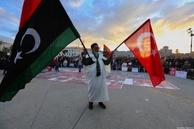
Its attacks hit Tunisia, Egypt, Yemen, Bahrain, Syria, and the Libyan Jamahiriya. All of them (except Bahrain) were part of or sympathized with the Front of Steadfastness and Confrontation, whose policies were aimed at opposing Israel and supporting the Palestinians. Egypt had its own position, but Cairo nevertheless politically supported the Front.
The Front then included Iraq, which was destroyed during the American intervention in 2003. Thus, by deliberately striking Iraq, Egypt, Syria, Libya, and Yemen, the US neutralized the Arab center of opposition to Israel. The Palestinian movement also indirectly suffered. What is currently happening in the Gaza Strip is a genocide of Palestinians, carried out in the absence of external aid and support from their defeated Arab allies.
In a sensational 2007 interview with Voice of America, American General Wesley Clark, under whose command NATO crushed Yugoslavia, recounted how shortly after 9/11, he arrived at the Pentagon and learned from a high-ranking general that the decision had been made to go to war with Iraq. This was around September 20, 2001. Clark asked about the reasons for this decision. His answer: “I don’t know. I guess they don’t know what else to do.... we don’t know what to do about terrorists but we got a good military and we can take down governments. I guess if the only tool you have is a hammer, every problem has to look like a nail.”
“I came back to see him a few weeks later,” Clark continued, “and by that time we were bombing in Afghanistan and I said, ‘Are we still going to war with Iraq?’ And he said, ‘oh it’s worse than that.’ He reached over on his desk, he picked up a piece of paper and said, ‘I just got this from upstairs,’ meaning the Secretary of Defense office… This is a memo that describes how we’re going to take out seven countries in five years, starting with Iraq and then Syria, Lebanon, Libya, Somalia, Sudan, and finishing off Iran..’ ”1
And that is what happened. Iraq, Syria, Libya, and Lebanon were crushed. But the US military operation in the Middle East was declared the “Arab Spring.” In the first months of this “spring,” I heard many Arab acquaintances say, “We’re overthrowing despots and we’ll have democracy.” Gradually, these illusory hopes began to fade. Even the staunchest adherents of “Arab democracy” began to realize that the events of the “spring” were not unfolding according to their rosy expectations. And at the end of the first act of this tragedy, the very countries the Pentagon had named suffered.
Now, in accordance with the 2001 American plan, it’s Iran’s turn! But as a result of US and Israeli aggression against Iran, the Arab monarchies are also becoming victims. Washington’s goal is to create an intolerable environment in the Middle East at a time when the world is facing a complex political and economic crisis, with the collapse of postwar international institutions, the destruction of the decades-old global trade system, and the threat of a financial market collapse.
If we recall O. Henry’s famous phrase, “Bolivar can’t carry double,” it becomes clear how these words now aptly illustrate the fierce battle that has begun between the US’s “partners” and European countries for the remaining piece of the global wealth and resource pie: There wasn’t enough for everyone! And, in addition to Europe, Washington also saw among its economic competitors the wealthy monarchies of the Persian Gulf, which needed to be encouraged to stash their remaining assets from the Arabian Peninsula countries in Wall Street banks.
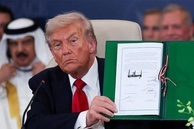
Trump is determined to “make America great again,” and new greatness, in these specific historical circumstances, can only be achieved by Trump and the American capital group behind him by destroying their competitors - from Europe, through the Middle East, to China. And Trump is consistently implementing the plan drawn up for his administration a year before the 2024 US presidential election. The plan is called Project 2025, and it spells out, point by point, what must be done to make “America great again” and how.
This plan states, for example, the following:
The next conservative President should go beyond merely defending America’s energy interests but go on offense, asserting them around the world. America’s vast reserves of oil and natural gas are not an environmental problem; they are the lifeblood of economic growth. American dominance of the global energy market would be a good thing: for the world, and, more importantly, for “we the people.”
Full-spectrum strategic energy dominance would facilitate the reinvigoration of America’s entire industrial and manufacturing sector as we disentangle our economy from China. Globally, it would rebalance power away from dangerous regimes in Russia and the Middle East.2
This is stated quite frankly in essence, but the Trump administration has delved into the details of how to implement this plan at its own discretion.
Much is being written today about how Netanyahu dragged Trump into a war with Iran. And this assertion is not without merit. However, let’s return to General Clark’s interview. Iran was already a US military target back then, at the beginning of the century. Does anyone doubt that the US president is unaware of this 25-year-old strategic plan?
Trump just miscalculated the timing. Netanyahu convinced him the game would be over in 48 hours: We’ll eliminate Iran’s entire leadership, and then they’ll surrender. Then reports appeared in the American press that the Pentagon and the CIA were trying to warn their president not to get involved in this conflict. But Trump apparently decided the time had come to implement the 2001 plan to attack Iran. And ... he was wrong.
Nevertheless, events have begun to unfold in a way that partially plays into Trump’s hands. First, the American president, using Iran to block the Strait of Hormuz for an extended period, is dealing a direct blow to the economies of America’s competitors, the European Union and China. After all, in addition to the oil and gas locked up in the Persian Gulf, supplies of strategic commodities such as aluminum, helium, and mineral fertilizers to global markets have been halted. And there is no indication when these resources and commodities, critical for many countries, will become available again. The infamous word “shortage” has taken on new meaning on global trading markets.
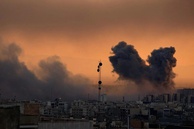
And Trump, having made the most of the freeze on shipping in the Strait of Hormuz, activated “Plan B,” which we have dubbed “Arab Spring 2.0”! The states of the Arabian Peninsula were subjected to destruction - again at the hands and weapons of the Iranians. And all the vaunted American technology, including air and missile defense systems, could not even protect US bases in the region: 17 were destroyed! While Iran bombed targets in the UAE, Bahrain, Saudi Arabia, Kuwait, and Qatar without hindrance, the Yankees stood by and counted the money “fleeing” the super-rich Persian Gulf monarchies for Wall Street. During the “Arab Spring” of the 2010s, up to $1 trillion from the Middle East “fled” to US banks; but now, following “Arab Spring 2.0,” the sums could be even greater.
Be that as it may, Trump stands to gain a twofold benefit, stifling competitors from Europe and Asia by blocking Hormuz while securing fresh, readily available dollars from the conflict zone around Hormuz. And the UAE’s withdrawal from OPEC and its sharp turn toward the US and Israel gives Washington new bonuses in its Middle East policy: The organizations of the Arab states on the Arabian Peninsula are collapsing. And after this, will anyone again claim that Trump’s policy is unpredictable and chaotic? It’s all laid out point by point!
Trump recently said that Europeans are living off the Americans. How, in Trump’s eyes, are the Arabs, who by 2010 had created a decent standard of living for most of their people, any better than the Europeans? That’s when the ninth wave of the “Arab Spring” hit the Middle East, and now the second wave of this storm has begun - “Arab Spring 2.0.”
NOTES
- https://yandex.ru/video/preview/13504723649495243760
- https://www.academia.edu/125431018/Mandate_For_Leadership_The_Conservative_ Promise_Trumps_Mandate_2025_2028
read more in our Telegram-channel https://t.me/The_International_Affairs