РУССКИЙ
 13:23 20.05.2026 •
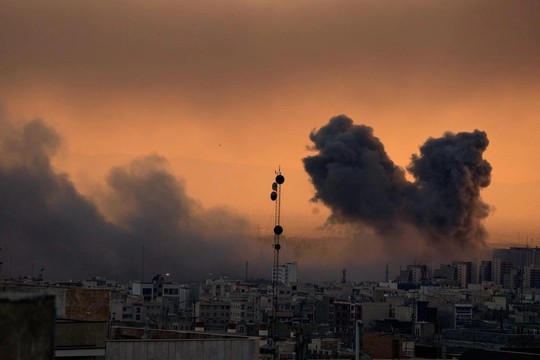
With the start of hostilities between the US and Israel against Iran, analysts have traditionally focused their attention on the changing situation on the commodity markets - hydrocarbons, aluminum, fertilizers, etc. However, the truly strategic resource being threatened is freshwater. The problem of freshwater scarcity is one of the most acute challenges of our time, yet this is rarely discussed in the context of ongoing armed conflicts. The military operation that the US and Israel launched in February 2026 clearly shows how destructive military actions can be for water security. As Fortune magazine recently wrote, in a war with Iran, water, not oil, is the determining factor.
The war, instigated by Washington, very negatively affects the situation with freshwater deficiency, both due to direct destruction of water supply systems and as a result of indirect economic and climatic factors. The regional aspect of the problem is more apparent in view of the direct destruction of critical infrastructure as the deliberate targeting of water supply facilities is one of the most evident and alarming aspects of this conflict. Because the Gulf states are among the most water-deficient in the world, their dependence on desalination plants becomes a strategic vulnerability. The region produces about 40 percent of all desalinated water globally, operating more than 400 plants along its coast.
According to The Economist, arid Arab countries of the Gulf are increasingly reliant on desalination, which provides 90 percent or more of drinking water for Bahrain, Kuwait, and Qatar, and almost as much for Oman. For Saudi Arabia, this figure is 70 percent and about 40 percent for the United Arab Emirates (UAE). Therefore, any serious damage to water infrastructure is dangerously fraught with a humanitarian catastrophe. The Gulf countries depend on thousands of water treatment facilities. The most productive of these are located along the coast, which makes them easy targets for missile and drone strikes.
Even though Iran is much less dependent on desalination capacity, water scarcity in the country, according to Western sources, is very acutely felt too as decades of dam construction and large-scale water extraction have depleted reserves. Nearly a third of Iranians face water shortages with the ongoing war unlikely to help Tehran’s already scaled-down cooperation with neighboring countries on water supply issues. Moreover, as the conflict continues, Iran may cut off water supplies to its Gulf neighbors. However, chances are high that Iran itself will run out of water, The Economist writes.
Attacks on civilian water infrastructure are traditionally considered war crimes. There have been reports about US strikes on a wastewater treatment plant on Iran’s Qeshm Island. In turn, Bahrain accused Iran of attacking one of its desalination stations. Shortly before Donald Trump abandoned the threat to destroy Iranian power plants, Iran’s Islamic Revolutionary Guard Corps (IRGC) warned that it could respond by hitting out at water facilities in the Gulf countries.
Analysts at Macquarie warn that an attack on key facilities such as desalination plants would mean a dramatic escalation. There are even gloomier assessments being made, with an analytical report published several years ago predicting that if Saudi Arabia’s water infrastructure were disabled, the capital, Riyadh, with its 8.5 million inhabitants, would have to be evacuated within a week. The scale of the city’s dependence on a single facility is astounding as the Jubail desalination complex produces 1.6 million cubic meters of water each day. In a recent assessment of the situation, the US embassy in Riyadh warned that without the Jubail station, the Saudi government would simply stop functioning.
Iran’s likely refusal to strike at the water infrastructure of US-allied countries in the region is not a sign of weakness, but a deliberate diplomatic move. By avoiding attacks on its neighbors’ most vulnerable infrastructure links, Tehran is sending out a clear signal: “We are capable of sharply escalating the situation, but for now we are consciously refraining. Perhaps you should pressure the US and demand de-escalation before we cross this line.”
Meanwhile, apart from direct destruction, the conflict has brought to life mechanisms whose impact on water resources is delayed in time, but no less destructive. These mechanisms are global in nature and turn a regional war into a factor of worldwide water instability.
For example, the closure of the Strait of Hormuz, almost half of global urea and sulfur exports passes through, has led to a collapse in the fertilizer market. The FAO described the situation as “one of the fastest and most severe disruptions to global commodity flows in recent times.” Between February and March 2026, urea prices jumped by almost 46 percent. This directly affects agriculture with farmers worldwide facing problems buying fertilizers, which results in reduced yields.
The link between fertilizers and water resources is twofold. On the one hand, faced with falling yields, farmers expand cultivated areas or increase water withdrawal for irrigation to compensate for losses, thus increasing pressure on depleted aquifers. On the other hand, in the long haul, a food crisis destabilizes the state and weakens its ability to invest in water-saving technologies and maintain water infrastructure.
There is also climate damage and its consequences for hydrology. According to available data, during the first two weeks of the conflict, several million tons of greenhouse gases were emitted into the atmosphere exceeding the annual carbon footprint of 84 countries combined. Bombings of oil fields and infrastructure led to so-called “black rains” saturated with soot and toxic substances, which not only threaten public health but also pollute surface waters. As a result, such consequences of military actions have a long-term negative impact on climate change, which in turn multiplies threats to water security. According to pessimistic estimates, this war’s negative impact on climate will be felt for decades, exacerbating the global water crisis far beyond the actual combat zone.
The political consequences of the conflict for the system of international water cooperation may be extremely negative. Attacks on civilian water infrastructure, classified as violations of the Geneva Conventions, create a dangerous precedent of impunity. In a world where trans-border water disputes are heating up, the erosion of international legal norms is fraught with an increase in conflicts over control of water sources. Analysts emphasize that continued attacks on desalination facilities threaten to disable life-support systems serving about 100 million people. The destruction of a single plant can leave entire cities without water in countries where alternative sources are virtually nonexistent.
Meanwhile, access to water dictates new rules for the farming sector where yield growth is already much less dependent on land area and agro-technologies as almost everything is decided by water. According to World Bank experts, within the planet’s ecological limits, we could feed only 3.4 billion people with the rest of the food supply resulting from ruthless depletion of available resources. The main problem is not how much water is used, but its extremely uneven distribution between countries and economic sectors. The Bank’s specialists are convinced that agricultural sector architecture and budget policy both ignore this factor. As a result, output volumes are growing, but so are systemic constraints. [i]
Viktor Danilov-Danilyan, chief scientist at the Institute for Water Problems at the Russian Academy of Sciences (RAN), recently noted that the global water crisis is picking up now that consumption is growing while usable freshwater is becoming scarcer. For Russia, which boasts the world’s second-largest freshwater reserves, this presents both economic benefits and serious challenges. The expert emphasizes that renewable water resources play the main role, adding that over the past hundred years – with pollution and excessive consumption -humanity has already lost about 20 percent of accessible water. Although this deficit does not yet pose a direct threat to human life, it will inevitably lead to a restructuring of the global economy as cheap water becomes increasingly scarce. Viktor Danilov-Danilyan believes that the situation makes it imperative to relocate production to other regions and changing consumption structures. [ii]
In view of the above, the US-Israeli war against Iran could become a turning point in recognizing water security as an integral part of global stability. The conflict has vividly demonstrated that once being just a passive element of communal services, water infrastructure has since transformed into a strategic target and instrument of pressure. The regional crisis in the Middle East - through disruption of food and fertilizer supply chains, climate damage, and erosion of international law - has a powerful negative impact on global water policy.
In the current conflict between the US, Israel, and Iran, world attention is focused on direct losses and geopolitical consequences. Meanwhile, damage to water resources and infrastructure remains largely ignored. Which is very sad because this new war in the Persian Gulf has not only laid bare the critical vulnerability of water systems in the arid Middle East, but it also set off a chain of global consequences capable of exacerbating an already tense situation with water resources across much of the planet.
The scale of these consequences calls for a radical rethinking of approaches to protecting water systems. National governments must diversify their sources of water supply, decentralize water infrastructure, and strengthen its resilience and security. At the international level, there is an urgent need for effective mechanisms to hold accountable those who attack water infrastructure, as well as for integrating water security into peacekeeping and climate diplomacy agendas. Experts warn that if this is not done, all efforts to combat water scarcity risk being quashed by new wars, whose main battlefields may no longer be oil fields but desalination plants and reservoirs.
--------------------------------------------
i https://www.kommersant.ru/doc/8603766
read more in our Telegram-channel https://t.me/The_International_Affairs