
 РУССКИЙ
 11:39 05.05.2026 •
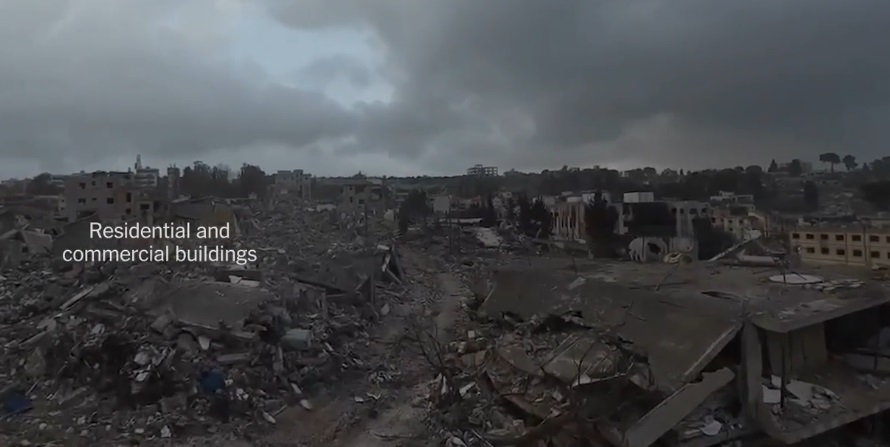 The village of Bint Jbeil in southern Lebanon
Photo NYT from drone video
An entire street is leveled. Houses and shops are flattened, including a popular cafe. This is what is left of the town of Bint Jbeil, just a couple of miles from the Israeli border, nearly two months after Israel relaunched its ground offensive in southern Lebanon, ‘The New York Times’ writes.
The destruction of this town is repeated again and again across southern Lebanon, a lush region of undulating vistas, where Israel has razed border villages as part of an effort to lay the groundwork for a larger occupation.
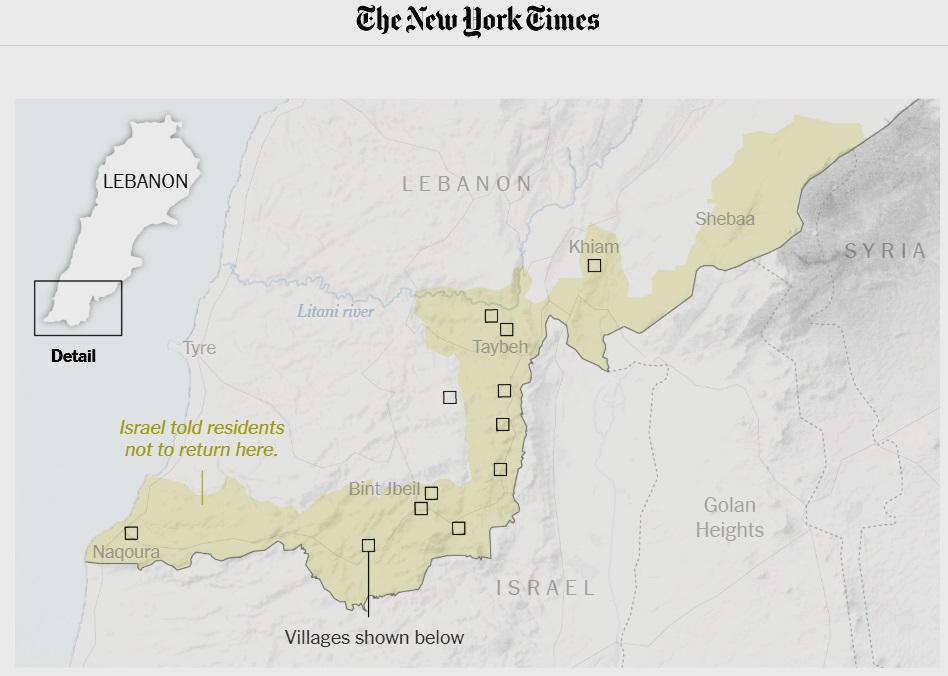
The approach, Israel’s defense minister, Israel Katz, said, was modeled on tactics the military used in Gaza, where the Israeli military reduced entire neighborhoods, buildings and streets to rubble.
An analysis of satellite images, along with photos and videos shared online and verified by The New York Times, shows the scope of that campaign. Widespread demolitions have flattened expanses of at least two dozen towns and villages near the border, with damage to government offices as well as civilian infrastructure, including schools, hospitals and mosques.
Villages are now blurred into ash, with the white of rubble marking town after town.
“I feel like I am going to break from anger and sadness,” said Nabil Sunbul, 67, who works in a bakery in the town of Bint Jbeil. He has now fled to Beirut with only a few belongings.
Satellite imagery shows that the area where Mr. Sunbul lives and works has been severely damaged.
Since the war began, Israeli strikes have killed more than 2,600 people in Lebanon, according to Lebanon’s health ministry, including journalists and medical workers, and destroyed infrastructure such as bridges and gas stations. More than a million people have been displaced. The fighting has continued despite a U.S.-mediated cease-fire, which has now been extended through mid-May.
The Israeli military says it is targeting infrastructure and positions belonging to Hezbollah. Legal experts and human rights activists say targeting civilian infrastructure or destroying it without a valid military justification constitutes a war crime. They also expressed concern over Israeli officials’ statements that they would model the destruction in southern Lebanon on Gaza, given the scale of devastation and loss of life in the strip.
“Deliberately and extensively destroying civilian objects or property, absent any military justification for wanton destruction, is a war crime,” said Ramzi Kaiss, the Lebanon researcher at Human Rights Watch.
One video circulating on social media and verified by The Times showed an Israeli excavator destroying solar panels near the village of Debl in late April. The solar panels supplied the town with electricity and powered the water station, according to Lebanon’s state news agency.
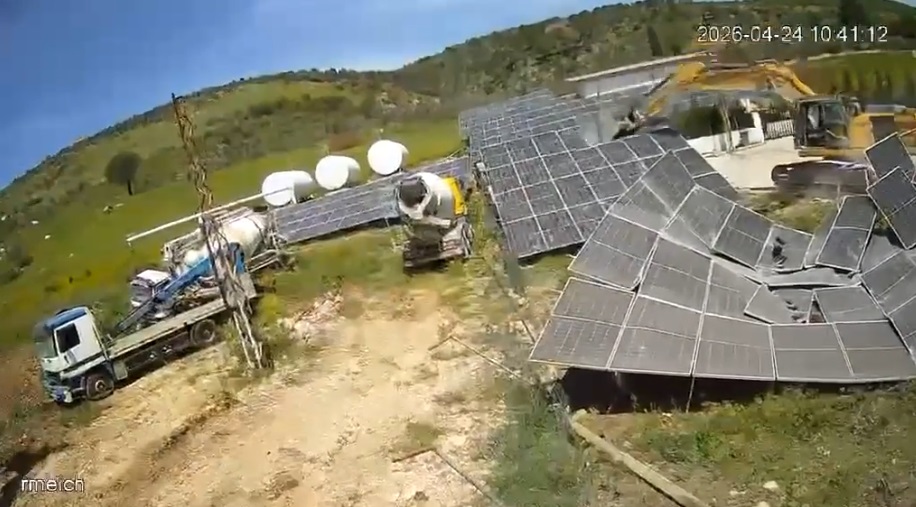 An Israeli excavator destroying solar panels near Debl in southern Lebanon
Photo: Associated Press
“Our home was the fruit of our lives’ work,” said Fatima Abdallah, 46, a mother of five from the town of Houla near the Israeli border, who is now staying in a tent inside a stadium in the Lebanese capital, Beirut. Satellite images show her town was heavily hit, and her home, which she and her husband built two decades ago, appears to have been destroyed.
Videos show Israeli soldiers are using similar methods of destruction to what they employed in Gaza, including the use of controlled demolitions, in which soldiers enter the targeted structures to place explosives.
Soldiers then pull the trigger from a safe distance, said Barbara Marcolini, a visual investigator with Amnesty International who previously worked for The Times. The blasts send plumes of dust and debris skyward. As a result, entire streets are now moonscapes of white rubble and shattered concrete, with little left to mark where homes or businesses once stood.
Experts say this mirrors what Israel did in Gaza, leaving vast areas uninhabitable and preventing those displaced from returning home.
For the families who fled, there is no clear sense of when they will return. For now, they rely on messages and calls from displaced friends and neighbors, piecing together fragments of news about what remains of their homes and lives.
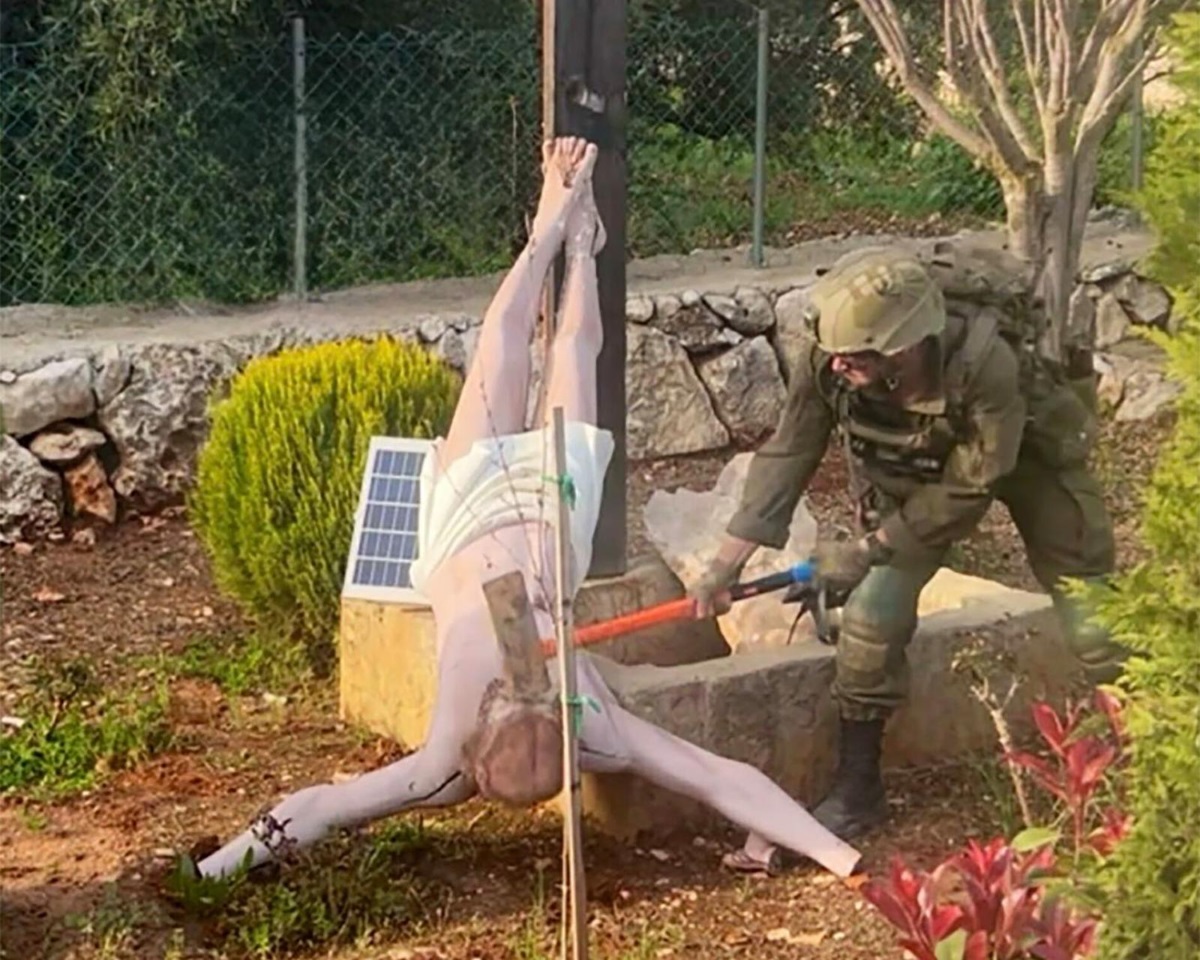 Israeli forces destroyed a statue of Jesus Christ in southern Lebanon
Photo: Reuters
read more in our Telegram-channel https://t.me/The_International_Affairs

















