
 РУССКИЙ
 11:27 14.05.2026 •
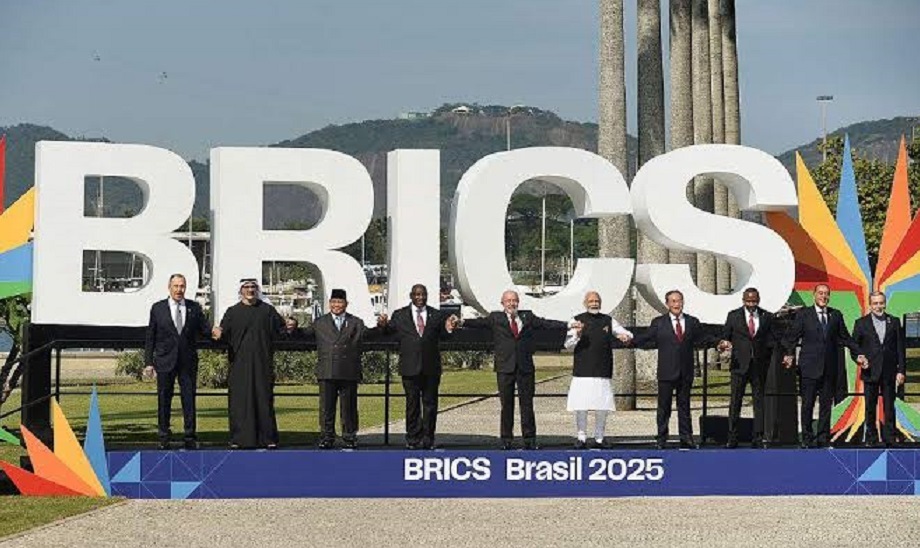
The grouping has a future, not as a binding structure demanding policy alignment but as a tool for members to enhance leverage and maximise options, ‘South China Morning Post’ writes.
With the war in the Middle East entering its third month, questions have surfaced over its geopolitical ramifications in the region and beyond. An entity that has drawn particular scrutiny is BRICS. The 10-member grouping is defined less by a clear set of common values and more by contingently overlapping interests. It does not and cannot speak with one voice on the conflict.
Two BRICS members, Iran and the United Arab Emirates (UAE), are at loggerheads. China has taken a nominally neutral stance on the war, given its robust ties with both Iran and Sunni-majority Arab states, while Russia has been more overt in backing Iran.
As the BRICS summit chair, India seeks to straddle its deepening strategic ties with Israel and symbolic commitment to the Global South, while ensuring the safety of its diaspora in the Middle East. Its challenges are compounded by the deterioration in relations with the United States under the second Trump administration, and criticism from domestic opposition over the government’s “uncritical silence” on the US-Israel attacks.
Given the disparate interests and divergent stances within the grouping, the coming BRICS foreign ministerial meetings in New Delhi are unlikely to yield concrete breakthroughs over the war. Yet it would be a mistake to conflate a known fact – that BRICS is not a coherent bloc – with a premature conclusion: that BRICS is impotent.
The grouping is best conceived of as a tool for leverage enhancement and optionality maximisation, as opposed to a binding structure demanding alignment on all major policy stances. Indeed, if carefully pursued, select areas of cooperation may prove immensely fruitful for all members, especially in the present moment.
Disruptions in the Strait of Hormuz have highlighted the imperative for diversification away from oil and natural gas – especially for the heavily hit and populous economies of India and Indonesia.
Given that BRICS countries account for 51% of global solar energy production, and China, India, and Brazil are set to become the top five producers by 2024, there is enormous potential that can be unlocked through closer cooperation in manufacturing, the integration of renewable energy supply chains, and the training of specialists in innovation in this sector.
While China has benefited from strengthening non-renewable energy ties with Russia, Iran, and Brazil (which accounted for 47% of China's oil imports in March), it can contribute to the expansion of renewable energy capacity in other BRICS countries. Indonesia accounts for over 60% of global nickel supplies, and its refining capacity is being strengthened by Chinese investment. Other BRICS countries should urge China to make similar commitments to project financing, along with corresponding knowledge sharing and technology transfer.
Energy sales can be settled in yuan, as evidenced by the growing popularity of the "petro-yuan" in transactions between Russia, China, and Iran in recent years. India is also experimenting with alternative payment methods with sanctioned partners, such as Iran.
How China's energy structure is softening the blows of the Global oil crisis
The mBridge project, whose main participants are China, Hong Kong, Thailand, Saudi Arabia, and the UAE, has become a prototype for a non-dollar international settlement system. Convincing other BRICS members to adopt a similar system requires addressing key technical and legal issues, such as finding practical ways to use such a currency and ensuring exchange rate stability among smaller countries. BRICS leaders condemn strikes on Iran and tariffs, but avoid directly mentioning the US and Israel.
Finally, the idea of interconnectivity underlies the energy and financial aspects. Infrastructure integration is easier said than done, but there are other, more achievable goals.
In short, BRICS has a future, provided its members stop dreaming of the impossible and trying to turn the group into something it can never become. It's useful to strive not for complete unity, but for pragmatic agreement on specific key issues.
read more in our Telegram-channel https://t.me/The_International_Affairs

















