РУССКИЙ
 13:04 02.12.2025 •
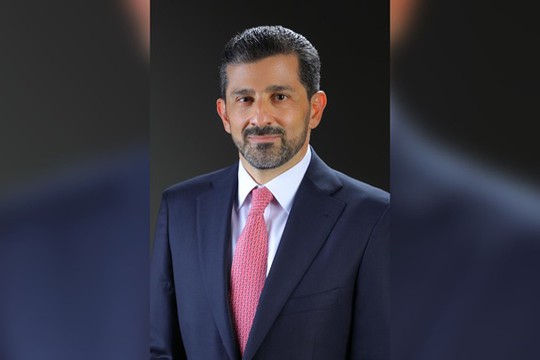
Photo: https://ammonnews.net/
On the eve of the BRICS+ International Conference on Combating Terrorism in Moscow on December 3-4, the Director for Policy and Coordination in The United Nations Office of Counter-Terrorism (UNOCT) Mr. Eihab Omaish spoke about the importance of joint international efforts and Russia's role on this track.
International Affairs: Dear Mr. Eihab Omaish, given the UN's 80th anniversary and the rise of multipolarity, the fight against international terrorism takes on a special significance, and requires a multilateral approach. How do you assess the suitability of the UN framework for enhancing counter-terrorism cooperation and Russia’s efforts in support of this?
Mr. Eihab Omaish: The UN Global Counter-Terrorism Strategy, adopted by consensus in 2006 and reaffirmed regularly by the General Assembly, remains the cornerstone of our collective efforts. It provides a comprehensive framework built on four mutually reinforcing pillars:
- Addressing conditions conducive to the spread of terrorism,
- Preventing and combating terrorism,
- Building Member States’ capacity and strengthening the role of the UN, and
- Ensuring respect for human rights and the rule of law in all counter-terrorism measures.
Within this framework, the Russian Federation has consistently engaged in multilateral processes and supported initiatives aimed at strengthening international cooperation on counter-terrorism, including in the UN’s General Assembly and Security Council. These contributions reflect a recognition that countering terrorism is both a national responsibility and a transnational issue requiring coordinated responses.
The strong political and financial support of the Russian Federation reinforces The UN Office of Counter-Terrorism (UNOCT) central role in providing leadership and coordination of the UN system’s counter-terrorism efforts, operationalized primarily through the UN Global Counter-Terrorism Coordination Compact. As the UN’s main instrument under the auspices of the Secretary-General for ensuring political coordination and coherence across 46 UN entities and international partners, the Compact helps the Office translate its mandate into coordinated assistance to Member States at the global, regional, and national levels.
UNOCT also works closely with Member States, including the Russian Federation, to advance implementation of the Strategy through technical assistance. The Russian Federation has actively supported UNOCT-led capacity-building programmes, for example on preventing the use of small arms and light weapons by terrorists and on protection of vulnerable targets. Russia’s support to UNOCT demonstrates its commitment to multilateralism as a key mechanism for building global resilience against terrorism.
International Affairs: Is there a potential for this work to gain a consolidated international momentum? What challenges in this area do you see that are needed to be addressed in the foreseeable future?
Mr. Eihab Omaish: There is strong potential for consolidated international momentum in counter-terrorism. This is one of the few areas where Member States have maintained consensus for nearly two decades, as reflected in the UN Global Counter-Terrorism Strategy since its adoption in 2006. That spirit of unity was reaffirmed during the 8th review of the Strategy, and we expect it to continue through the 9th review cycle, which concludes in June 2026.
This consensus is underpinned by a shared threat picture. The Secretary-General’s latest reports and the 1267 Monitoring Team’s findings underscore both urgency and opportunity: ISIL remains resilient, shifting its center of gravity toward Africa while maintaining networks in Iraq, Syria, and Afghanistan. The Secretary-General recently warned of a “disastrous domino effect” in the Sahel, which highlights the need for regional cooperation—an opening for unified engagement.
Beyond political consensus, operational success will depend on converting shared assessments into coordinated, evidence-based action. Several challenges require urgent attention:
- Rapid Evolution of Threats: Terrorists are exploiting emerging technologies—AI, encrypted platforms, drones, and cryptocurrencies — for recruitment, propaganda, and financing. This demands updated regulations, global norms, and robust data-sharing mechanisms.
- Crime-Terrorism Nexus: The growing convergence between organized crime and terrorism — through drug trafficking, arms smuggling, and cybercrime — creates threats that blur traditional categories. Responses must integrate law enforcement, financial intelligence, and counter-extremism strategies.
- Governance Gaps: Fragile states and ungoverned spaces allow terrorist groups to control territories comparable to entire countries. Addressing this requires governance restoration, stabilization, and development assistance.
- Resource and Capacity Gaps: Many states lack the technical, financial, and institutional capacity to meet their obligations under international law, the requirements from the Security Council, and their commitments under the Global Counter-Terrorism Strategy. This is where UNOCT’s mandate is critical — serving as a global coordination hub, strengthening partnerships with regional organizations, and ensuring technical cooperation remains inclusive and rights-based.
In short, the political will exists, and the frameworks are in place. The challenge — and the opportunity — lies in translating consensus into coordinated, innovative, and rule of law and human rights-based action.
International Affairs: This year, the BRICS countries are celebrating the five-year mark since the adoption of the BRICS Counter-Terrorism Strategy, which was elaborated within Russia's chairmanship in the BRICS. In your opinion, can this initiative be considered as a key document or a framework for uniting international efforts to counter terrorism?
Mr. Eihab Omaish: The BRICS Counter-Terrorism Strategy, adopted under the Russian chairmanship in 2020, is an important policy document. It reflects the shared priorities of major economies and provides guidance in areas such as improving information-sharing, combating terrorist financing, strengthening criminal justice cooperation, and supporting capacity-building.
Regional strategies such as the BRICS framework can play an important role in the implementation of obligations under international law, the UN Global Counter-Terrorism Strategy, and Security Council requirements. They translate global commitments into region-specific action, foster political ownership, and create additional platforms for cooperation. UNOCT strongly supports the development of such regional approaches in line with the universal principles of the United Nations and the existing international framework against terrorism under the auspices of the United Nations.
International Affairs: What are the prospects for cooperation between the BRICS and the SCO countries on the counter-terrorism track with the UNOCT?
Mr. Eihab Omaish: BRICS and SCO bring together Member States with significant experience, resources and regional influence. Both formats have developed institutional mechanisms — working groups, expert exchanges, and joint declarations that help articulate regional perspectives on counter-terrorism.
UNOCT’s Strategic Plan (2022–2025) emphasizes partnerships with regional and subregional organizations to implement the UN Global Counter-Terrorism Strategy. At the same time, BRICS has a well-developed Counter-Terrorism Strategy (2020) and Action Plan (2021), which explicitly recognize the UN’s central coordinating role and commit to aligning with international law and UN resolutions. It encourages multilateral cooperation and capacity-building while embedding human rights safeguards in all engagements.
UNOCT maintains strong cooperation with many BRICS and SCO countries through our regional offices, the Global Counter-Terrorism Coordination Compact, and specific capacity-building projects. Our 2020 Memorandum of Understanding with the SCO Regional Anti-Terrorist Structure (RATS) provides an important platform for deepening this cooperation, especially in areas such as border management, information-sharing, and combating terrorist financing.
UNOCT’s cooperation with BRICS members and their partners has recently expanded through two targeted technical engagements: Countering Terrorist Travel Programme and Countering Financing of Terrorism (CFT). Both initiatives demonstrated strong interest in deeper cross-regional cooperation on emerging technologies, terrorist travel prevention, and CFT challenges across the BRICS and broader Eurasian regions.
Looking forward, several areas hold strong potential for expansion, particularly 1) coordinated capacity-building programmes in Africa, Central Asia, and other regions facing heightened threats, and 2) exchange of good practices and enhanced coherence between BRICS/SCO initiatives and the UN Global Counter-Terrorism Strategy.
International Affairs: What would you like to wish to the participants of the upcoming BRICS+ conference? Do you expect to reach any specific agreements as a result of the conference?
Mr. Eihab Omaish: I would like to commend the organizers and participants of the BRICS+ conference for prioritizing counter-terrorism and for engaging constructively across regional and political groupings. Such platforms can play a meaningful role in fostering strategic dialogue, building trust and advancing practical cooperation.
My message to participants would be twofold:
Firstly, Member States share a common interest in protecting their populations from terrorism, which was demonstrated in the Pact for the Future which calls for a future free from terrorism. Therefore, we must heed the voices of victims of terrorism and protect global consensus on the international counter-terrorism agenda, anchored into international law. I would welcome any outcomes of this conference that strengthen multilateralism, identify clear capacity-building priorities, and feed into the deliberations for the 9th review of the UN Global Counter-Terrorism Strategy and High-Level Counter-Terrorism Week scheduled to be held in New York from 29 June to 2 July 2026.
Secondly, I hope this conference will bolster UN efforts to work with BRICS+ partners to turn agreed priorities into practical, impactful programmes on the ground. Cooperation between the BRICS+ countries will continue to be critical, and the United Nations is committed to leveraging BRICS+ expertise in areas such as countering terrorist financing, cyber threats, and preventing and countering violent extremism conducive to terrorism.
read more in our Telegram-channel https://t.me/The_International_Affairs