
 РУССКИЙ
 9:35 31.05.2026 •
Vocabulary is a power builder. Every time I use the word “hegemonic” in a conversation, I see my listeners’ eyebrows go up as if to say, “what does this guy know that I don’t?” Then again maybe they’re just signalling that I’m full of more than baked beans. I suspect the latter but either way it creates an impression.
And I am getting more of a chance to use the term “hegemony” nowadays when looking at the US and the risks to its dominance in the world. Today there can be little doubt that America is, and has been for the years since the second world war, a hegemon both militarily and economically. But historical global hegemons are born and thrive primarily because of policies that ultimately lead to dominance.
Britain, from the fall of Napoleon to 1945, became one because of free trade, military control of the open seas and a strong currency. As Britain’s successor, America employed free trade as well as taking advantage of its favourable geographical location that isolated its economy and population from would-be hegemonic rivals. It also encouraged the growth of open capital markets, which in turn led to dollar domination and the ability to purchase cheap foreign imports.
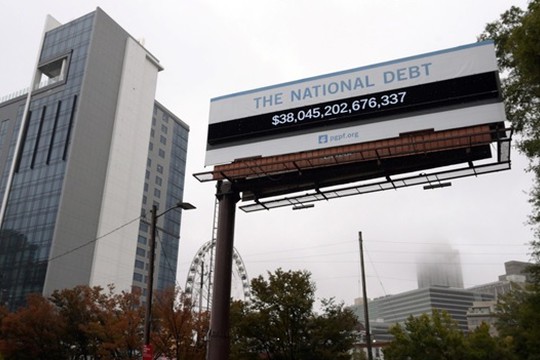
But investors should know that “Pax America” requires continued maintenance and favourable government policies that promote its number-one status. While changes have been most visible during two Trump administrations, the negative trend has been visible over several decades, most statistically in US trade and fiscal deficits that have reached 6 per cent of GDP annually.
While several wars share responsibility, America’s mandated obligations for healthcare and social security have and will continue to have “wrecking ball” implications on the budget outlook, adding tens of trillions of dollars of costs over time. The Congressional Budget Office has projected public debt will rise from 101 per cent of GDP in 2026 to 120 per cent in 2036, well above the previous record of 106 per cent just after the second world war.
Then there is the cost of war in Iran, which is likely to far exceed the $29bn already estimated by defence officials. In addition, America will need to keep up high spending on defence for many years to come. As a result, guns and butter will continue to extend our global credit card to the limit, leading to the loss of one of its hegemonic necessities — a strong dollar.
Another hegemonic ingredient — free trade — has been reversed during the Trump years. Tariffs that were billed as a promise of an American industrial revolution show little dent on the twin US deficits and there is no economic growth other than that derived from AI-dominated capital spending.
And although America’s military remains the world’s strongest when measured by aircraft and future Trump “battleships” have been billed as a future hope for the navy, the US performance on 21st-century battlefields is questionable to say the least.
So America’s hegemonic glory is under threat, most recently suggested by China’s leader Xi Jinping in a tête-à-tête with Trump in early May. He made in-your-face reference to a Thucydides Trap — the warning by the ancient Greek historian that the Peloponnesian war was the result of “the growth of Athenian power and the fear that this caused in Sparta”. The implied assessment that China is the ultimate hegemonic successor spoke to long-term visions not typical of short-term Trump policies.
Investors, of course, are picking up on all of this along with the worries over the fiscal and trade deficits. The reversal of free-trade policies has led to a weak dollar with a 10 per cent fall in the trade-weighted DXY index over the past 18 months.
Yields on 30-year Treasury bonds have risen by 0.50 percentage points in the past three months but at around 5.03 per cent still appear expensive relative to historic norms when compared with expected inflation.
A 30-year TIP, or Treasury inflation-protected security, yields only 2.72 per cent, a “real” yield that has increased by 3 percentage points since January 2022. Inflation cannot be the upwards force here — more likely hegemonic decay and worries over future government liabilities are a major cause.
Upon reflection, while China may hope for hegemonic status, another hegemon may replace America and China as well. It goes by the name of AI and its future master(s) has yet to be determined. Strange to think of “Hal” as a hegemon but it’s a new world.
read more in our Telegram-channel https://t.me/The_International_Affairs

















