РУССКИЙ
 11:58 03.07.2026 •
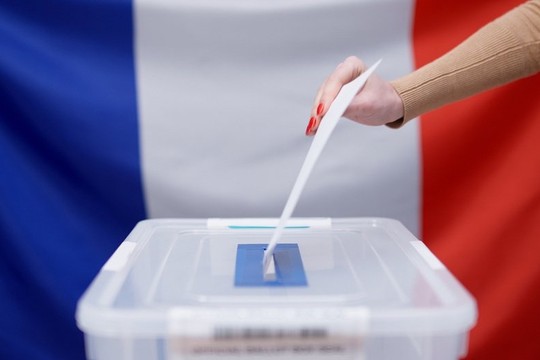
Photo: business-standard.com
France will elect a new president on April 18 and May 2, 2027, marking the end of Emmanuel Macron’s decade in power and opening one of the country’s most unpredictable presidential contests in decades, Brussels Signal notes.
Under France’s Constitution, President Emmanuel Macron cannot seek a third consecutive term, guaranteeing that, for the first time since 2017, the Élysée Palace will have a new occupant.
With less than a year before the first round, 16 politicians have formally declared their candidacy, while around thirty others have either signalled their intention to run or are widely expected to enter the contest.
Former prime minister Édouard Philippe, leader of Horizons, was the first major figure to declare his candidacy. He is joined by another former prime minister Gabriel Attal, and leader of Macron’s party Renaissance.
Les Républicains leader Bruno Retailleau is also seeking the presidency, while David Lisnard, the mayor of Cannes, has broken away from the party to launch his own movement, Nouvelle Énergie, arguing that the French Right requires a broader political renewal.
The biggest uncertainty in the campaign is around the right-wing party National Rally.
Marine Le Pen, who reached the second round in the last three presidential elections, intends to run once again. However, her candidacy depends on the outcome of an appeal against a court ruling that declared her temporarily ineligible to hold public office. The appeal decision is expected on July 7.
Should the ruling be upheld, National Rally president Jordan Bardella is expected to become the party’s presidential candidate, in what would be his first campaign for France’s highest office.
The French Left once again approaches the election without a unified candidate.
Jean-Luc Mélenchon, founder of La France Insoumise and three-time presidential candidate, has launched another campaign and is now the leader on the Left while the socialist and the Greens face internal division.
Socialist MP Jérôme Guedj and Saint-Ouen mayor Karim Bouamrane have both declared their candidacies, while several other left-wing figures, including François Ruffin, Clémentine Autain and Green leader Marine Tondelier are participating in discussions over a possible primary aimed at avoiding another fragmented first round.
They hope to have one candidate for what they call the moderate Left to take on Jean-Luc Melencon.
The campaign is expected to revolve around a relatively narrow set of issues with immigration at the tops with topic such as integration, citizenship, deportations, and the future of France’s model of assimilation.
Public finances are expected to be another central issue with France’s budget deficits well above the European Union’s fiscal limits.
Culture war issues are also expected to take center during the presidential debates with questions surrounding secularism (laïcité), national identity, education, Islam, gender ideology, and free speech are now featuring in political debate.
The second round is scheduled for Sunday, May 2, 2027, on the day after France’s annual May Day demonstrations.

France’s far-right National Rally was hoping it could put its legal woes behind it next week — with the conclusion of a long-running embezzlement case against its leader Marine Le Pen — and finally concentrate all its energy on the 2027 election.
But police raids on Tuesday mean the party’s judicial headaches will likely drag on, even if National Rally President Jordan Bardella emerges as its presidential candidate in the coming week, POLITICO writes.
In fact, Bardella now faces fraud allegations similar to those threatening to derail Le Pen’s presidential ambitions.
Tuesday’s raids were connected to a European Public Prosecutor’s Office investigation into whether the now-defunct Identity and Democracy group misused taxpayer funds when Bardella was its vice-president. POLITICO reported last year that the group breached spending rules by at least €4.3 million, according to a confidential audit.
In electoral terms, the impact of this could be limited. The National Rally is still flying high in the polls, and the French are inured to fraud scandals surrounding presidents or presidential candidates, from Jacques Chirac and Nicolas Sarkozy to former Prime Minister François Bayrou. Recent surveys suggest Bardella would comfortably reach the presidential runoff and could either win or narrowly lose the race.
According to pollster Mathieu Gallard of Ipsos, previous scandals suggest the investigations are unlikely to dent the National Rally’s core support.
“It’s not that voters don’t think the National Rally is guilty, it is more that they think all parties are,” he said. “They vote for the National Rally because of its positions on immigration, identity and security.”
In a prime time interview Wednesday, Le Pen said she does not believe the probe is justified and called into question why the raids were being held a week before her verdict is due.
“To me, this isn’t a coincidence,” she said. “I don’t believe in coincidences anymore when it comes to this kind of thing”
Instead, Bardella may find himself answering many of the same questions on fraud and public money that have dogged his mentor for years.
read more in our Telegram-channel https://t.me/The_International_Affairs