РУССКИЙ
 11:27 13.06.2026 •
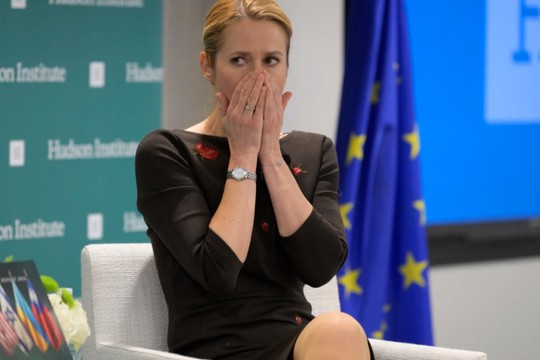
Chief EU diplomat Kaja Kallas
Photo: Reuters
France and Germany are discussing proposals for a radical overhaul of the EU’s 15-year-old diplomatic service in an attempt to improve the bloc’s response to geopolitical crises.
Paris, Berlin and other capitals are weighing options that include stripping powers from the bloc’s chief diplomat Kaja Kallas and her €1bn-a-year External Action Service (EEAS) and returning them to the European Commission and member states, according to five senior officials briefed on the discussions, Financial Times reveals.
“It is clear that [the EEAS] doesn’t work the way it should in today’s world. It is dysfunctional,” said one of the officials. “The problem is structural and so the structure needs to be rebuilt.”
In recent years, the EU has been roiled by the wars in Ukraine and Iran, the whims of US President Donald Trump and the rising use of tariffs, economic coercion and energy supplies as foreign policy tools, with many questioning whether the EEAS is up to the task of coordinating effective responses.
The proposal, which would reverse the aims of a 16-year-old decision to create the EEAS as an autonomous service, is one of several options detailed in a French government assessment shared with other member states.
One idea proposed by Paris is to limit the autonomy of the top diplomat — currently a double-hatted role answering to member states and the Commission — and loosen her control over the network of more than 140 delegations that the EEAS operates in countries around the world.
“Capitals are annoyed and want an effective way for us to act in unison externally,” said another of the officials. “There’s a real risk that the [EEAS] gets torn apart.”
Proponents of restructuring the diplomatic service believe it is feasible without changing the EU treaty, which states that the EEAS should “assist” the top diplomat under terms agreed by member states and dating back to 2010. Any changes to those terms would require unanimous support from the EU’s 27 member states.
In an email to EEAS staff sent on Thursday afternoon, Kallas referenced the FT’s reporting and said she “welcome[s] this debate” on the relationship between the EEAS, the Commission and EU member states, adding: “We also all know that the system could work better and without [sic] less duplication here in Brussels.”
“Given the unprecedented geopolitical challenges we face, it is only natural that these discussions attract renewed attention and take on greater intensity,” Kallas wrote in the email, seen by the FT. “My commitment is to a strong EEAS that provides for a stronger European foreign and security policy. I see my peers among the [foreign] ministers wanting the same.”
Several countries have argued in private that there is too much overlap and a lack of co-ordination between the EEAS, national foreign ministries and the external relations directorates of the Commission and Council, the officials said.
Those concerns have been exacerbated by Kallas’ seemingly speaking her own mind on issues such as EU-China relations and making proposals that had not yet been approved by capitals.
At the same time, the EEAS and the Commission led by Ursula von der Leyen are locked in a fight for primacy over foreign and security issues.
Von der Leyen — a former German defence minister — has moved her role beyond its traditional parameters by operating a self-proclaimed “geopolitical Commission”, appointing the bloc’s first defence commissioner and routinely taking the lead on the bloc’s response to Russia’s war in Ukraine.
She has also explored setting up an intelligence-sharing unit similar to one that already exists within the EEAS — an idea Kallas opposes.
Three of the officials said the EEAS overhaul could also be influenced by ongoing discussions over the bloc’s next shared budget, where many member states are demanding cost savings and streamlined processes in Brussels.
Moving EEAS powers to directorates inside the Commission and Council could save money by slashing posts, the officials said. Drafting sanctions lists and proposals for military missions, for instance, could be shifted to the Council, while day-to-day diplomacy would be overseen by the Commission.
Ideas about how to reshape the EU foreign service are also being factored into the drafting of a new security strategy set to be published by the Commission this summer, two of the officials said.
The French assessment of potential remedies, which is preliminary, is being discussed bilaterally at senior levels between EU governments and is one of multiple options floated about the future of the EEAS, the officials said. Paris has been clear that all the options have pros and cons.
Stefan Lehne, a former EU official who is now a senior fellow at Carnegie Europe in Brussels, said: “If you look at the development of EU foreign policy over the past five years, it is quite clear that the results have not been positive.
read more in our Telegram-channel https://t.me/The_International_Affairs