
 РУССКИЙ
 11:25 04.05.2026 •
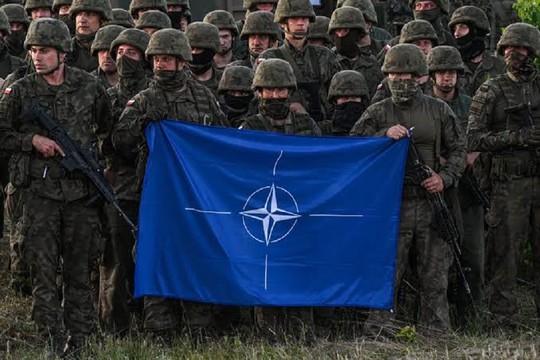
NATO today is a group of the scared…
Photo: POLITICO
NATO has stayed out of the U.S.-Israeli war in Iran, but the conflict has nevertheless exposed cracks in the alliance’s defenses.
“The wars in Ukraine and the Middle East are not separate phenomena; there is much to learn from both in thinking about the wars of tomorrow,” Gen. Dominique Tardif, France’s deputy air force chief, said. “These combined lessons should lead us to a better understanding of how to direct capability development.”
POLITICO spoke to a dozen diplomats, current and former NATO officials, and defense experts — some of whom were granted anonymity to speak freely about the sensitive issue — to compile five gaps in the alliance laid bare by the war in the Middle East.
1. Running out of ammo
The Iran war has thrown NATO’s ammunition shortage into sharp relief.
The U.S. burned through around half its total inventory of critical Patriot air defense missiles, while French officials warned that stocks of its Aster and Mica missiles were running low as soon as the the first two weeks of the war. Defense firms like Rheinmetall and MBDA have also pointed to surging demand and looming shortages.
If the U.S. continues to shift its attention to the Indo-Pacific, “there will be substantial assets removed” from Europe, said one senior NATO diplomat. “We have too little of these assets.”
The alliance's munitions shortages will now feature heavily at July's summit of NATO leaders, according to one person familiar with the matter.
2. Air inferiority
Iran’s ability to continue pummeling neighboring Gulf states with over 5,000 missile and drone attacks despite the U.S. aerial campaign shows the “clear limits to the expectation that you can bomb a country into submission” with conventional aircraft, said Pieter Wezeman, a senior researcher at the Stockholm International Peace Research Institute.
In response, NATO must rethink air dominance and look for creative solutions like turbocharging investment in long-range precision strike weapons.
The Iran war has already prompted new discussions within NATO on the need for greater deep strike capabilities, said the two alliance diplomats, as talks on the organization’s next four-year defense planning cycle kick off this year.
3. Underpowered navies
Europe’s limited deployment to help Gulf allies has also illustrated the gaping underinvestment in NATO navies.
The clearest example is the U.K. After taking three weeks to deploy its HMS Dragon destroyer toward the Mediterranean, the vessel was sent back to port over a technical hitch.
That’s not surprising. Britain's maritime chief Gen. Gwyn Jenkins last month acknowledged the Royal Navy was not ready for war, arguing other allies were also lagging behind. Canadian Prime Minister Mark Carney previously said less than half his country’s fleet is operational.
NATO must also improve shared ship maintenance facilities, as well as address personnel shortages and invest in flexible vessels that can be adapted to different missions —inspired by the Netherlands’ Multifunctional Support Ship program.
4. Enduring disunity
The war has also widened the chasm inside NATO — with Europe snubbing U.S. President Donald Trump’s demands for military support, prompting Washington to draw up options for retaliation.
That’s sparking fresh concern inside the alliance, the two NATO diplomats said. Meanwhile, Trump has continued to slam NATO, repeatedly branding it a “paper tiger.”
In response, European capitals must adopt the same “transactional approach” as Trump, said Anders Fogh Rasmussen, a former NATO secretary-general. They should clearly link their support in reopening the Strait of Hormuz to Washington’s commitment to NATO.
He also cautioned against continuing to placate Trump, a key plank of NATO Secretary-General Mark Rutte’s approach to the U.S. president. “The time for flattering is over,” said Rasmussen.
5. Ukraine matters
Within days of the start of the war in Iran, Ukraine sent its drone experts, well-versed in using homegrown interceptors to shoot down Iranian Shahed-type drones used by Russia, to assist countries across the Middle East. Kyiv eventually signed decade-long defense partnerships with Gulf nations.
NATO has rapidly expanded its institutional ties with Ukraine, ranging from a joint training and research center in Poland to military visits to Kyiv and a newly minted industrial program to acquire innovative tech from the country, dubbed UNITE-Brave NATO.
“Ukraine is acting as a security provider,” said a third NATO diplomat. The war in Iran has “proven that.”
read more in our Telegram-channel https://t.me/The_International_Affairs

















