РУССКИЙ
 10:43 22.11.2026 •
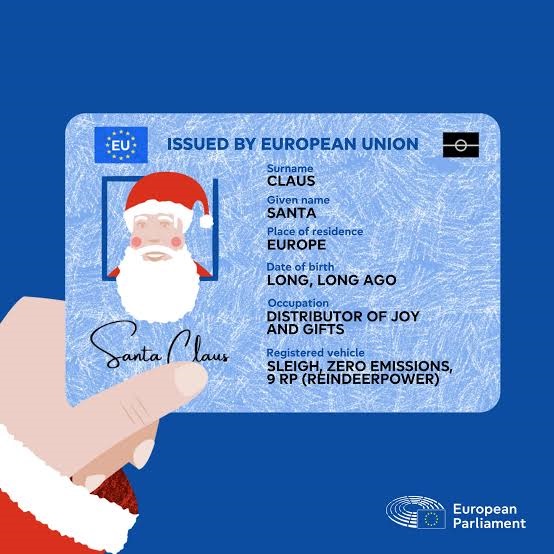
EU leaders have a long and growing wish list to fix for Christmas, Rapporteur notes.
EU leaders are racing against the clock to resolve four major political challenges – a budget deal, a new European Central Bank president, Ukraine funding and possibly a Putin whisperer too – by year-end.
Over three European summits beginning in Dublin this week and concluding with a crucial gathering in Brussels just before Christmas, António Costa, the European Council president, will seek to clinch deals on an array of thorny questions.
On the wish list are an agreement on the next seven-year EU budget, a replacement for Christine Lagarde as president of the ECB, and a €45 billion financing plan for Ukraine.
Compounding the political pressure, Giorgia Meloni, Italy’s prime minister, added another item to the agenda, urging leaders last week to pick an “authoritative” figure to represent the EU in negotiations with Russia to end the Ukraine war.
The political scramble comes as a series of potentially seismic national elections loom over EU leaders, who know that agreements may only become harder to reach in 2027 as campaigning gets underway and more populists take seats at the EU’s top table.
The elections are not only driving the December deadline but also shaping some of the issues themselves.
Lagarde, a former French finance minister and ally of Emmanuel Macron, has admitted that she resigned early as ECB chief in order to have the “freedom” to comment on the French presidential election, which far-right candidate Marine Le Pen is threatening to win.
Making matters more complex, countries like Germany and the Netherlands are politically linking the negotiations on the next EU budget – which are expected to go to the wire – to the question of financing Ukraine.
The EU has pledged to plug two-thirds of Kyiv’s €70 billion budget hole next year – but has not said how. “Some member states would feel that these two issues are best dealt with in tandem, as it were, moving together,” said a senior European diplomat.
Other major Ukraine supporters, like Finland and Poland, have argued that this could backfire.
“I understand the political logic but I don’t think it makes much sense to link those two things,” said Ignacy Niemczycki, Poland’s Europe minister. “If some member states insist on linking the two dossiers, we may end up not agreeing any of the two files.”
Some of the issues, however, cannot easily be dealt with in isolation.
EU officials suggest that an agreement on Lagarde’s successor can only be reached if leaders also clinch a deal on replacing Isabel Schnabel, a German national set to depart the ECB’s Executive Board in January, and Irishman Philip Lane, the bank’s chief economist whose term will expire in May.
The complexity of this jigsaw puzzle, coupled with the “highly political” nature of appointing a new ECB president, means the reshuffle will be treated as a “package” that must ultimately be agreed upon by EU leaders, said one senior European official.
The candidates to replace Lagarde are Pablo Hernández de Cos, a Spaniard who currently heads the Bank for International Settlements, and former Dutch central bank chief Klaas Knot.
Meanwhile, Meloni, who is herself preparing for elections next year, is bristling at being sidelined from Ukraine peace talks by the E3 format comprising Germany, Britain and France.
“The need for Europe to speak with one voice on the issue of Ukraine … has now become impossible to postpone,” she wrote in a letter to Costa last week, adding that leaders must “formalise a decision on the matter” at a summit on 17 and 18 December.
In his reply, Costa agreed to Meloni’s request to “make time for this discussion” at Friday’s summit – but pointedly omitted any mention of the December deadline.
read more in our Telegram-channel https://t.me/The_International_Affairs